Sign Up
School Account Sign Up

Lesson ID: 14396
Discover what your brain does when puzzles get tricky—and why mistakes actually help you solve them.




Welcome to Your Puzzle-Loving Brain
Picture this: you stare at a riddle, a maze, or a tricky pattern. At first, it feels confusing. Then something clicks. Suddenly, the answer pops out, and your brain feels oddly proud, like it just won a tiny trophy.

That good feeling is not an accident. Your brain is built to enjoy puzzles, even the hard ones.
This lesson explains what your brain is doing while you solve puzzles and why confusion, guesses, and mistakes are not problems. They are part of the plan.
Why Your Brain Looks for Patterns
Your brain loves patterns. Patterns help you make sense of the world fast. When you see a puzzle, your brain immediately starts searching for things that repeat, things that look similar, or things that change in a regular way.
If you see a number puzzle like 2, 4, 6, ?, your brain notices the pattern of adding two. If you see a word puzzle, your brain looks for familiar letter groups or sounds.

Even when the pattern is not obvious, your brain keeps scanning and comparing.
Finding patterns saves energy. Instead of starting from scratch every time, your brain uses what it already knows to make smart guesses. That is why puzzles feel interesting instead of random.
How Your Brain Makes Predictions and Tests Them
Once your brain spots a possible pattern, it makes a prediction.
A prediction is a guess based on what you notice so far. In a puzzle, your brain might think, “I bet the next shape is a triangle” or “This number probably goes up again.”
Then your brain checks the guess.
If the guess works, your brain keeps it. If it does not, your brain changes the guess and tries again.
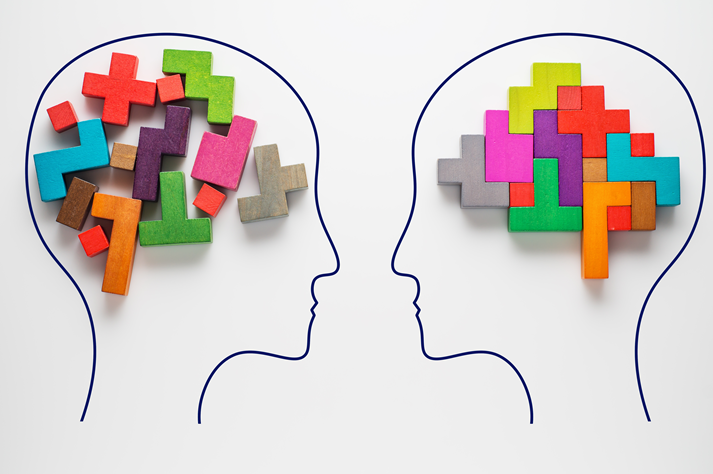
This happens quickly and quietly in your head. You might not even notice it. Every prediction is like a small experiment, and every puzzle gives your brain a chance to test ideas safely.
Why Trial and Error Helps Your Brain Learn
Trial and error means trying something, seeing what happens, and adjusting. Your brain uses trial and error all the time during puzzles.
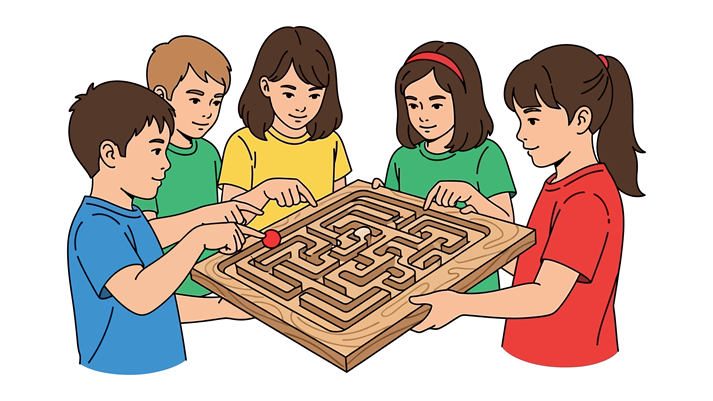
Imagine solving a maze. You turn left. Dead end. Your brain notes that path does not work and backs up. You turn right. That path moves you closer to the exit. Your brain remembers that success.

Mistakes matter here. When something does not work, your brain does not waste the effort. It stores the information: “Not that way.”
Each mistake removes one wrong option and makes the next choice smarter.
Without mistakes, your brain would not know which ideas to keep and which to drop. Errors help your brain narrow the path toward the solution.
What Happens When You Finally Solve the Puzzle
When a puzzle clicks into place, your brain releases a strong “that worked!” signal. This signal feels good and grabs your attention. It tells your brain, “Remember this strategy. It helped.”
That reward feeling is not about being perfect. It comes from effort paying off.
The longer or trickier the puzzle, the stronger that signal often feels. Your brain links the good feeling to the steps you took, not just the final answer.
That is why solving puzzles feels satisfying and why your brain wants to try again later.
Why Struggle Is Part of the Process
If a puzzle feels easy right away, your brain does not learn much from it. When a puzzle feels challenging, your brain stays alert. It looks harder for patterns, tests more ideas, and pays closer attention to feedback.
Struggle does not mean failure. It means your brain is actively working. Confusion shows that your brain has not finished sorting the information yet.
Each attempt, even the wrong ones, adds useful data.
Puzzles give your brain a safe place to struggle, adjust, and improve without real-world consequences. That is why brains of all ages enjoy them.
How All of This Fits Together
When you solve puzzles, your brain:
Searches for patterns to understand the problem.
Makes predictions based on what it notices.
Tests those ideas through trial and error.
Learns from mistakes by ruling out what does not work.
Feels rewarded when a solution finally fits.
This cycle repeats over and over, strengthening how your brain thinks, plans, and solves problems.
Up next in the Got It?, you will check your understanding and practice noticing what your brain is doing while you work through puzzle-style thinking.

Supplies




 FAVORITE
 Like
Like