Sign Up
School Account Sign Up

Lesson ID: 14394
How can simple objects float across oceans? Explore buoyancy, density, and moving water to uncover the hidden science behind floating journeys.




Why a Tiny Duck Can Cross an Ocean
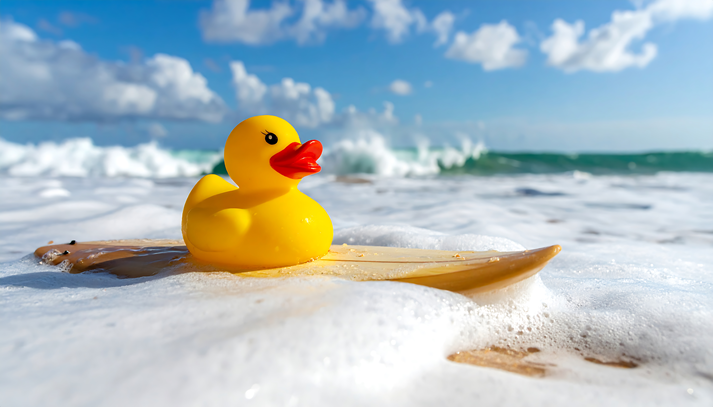
Picture a small yellow rubber duck dropped into the ocean. It looks harmless. It looks simple.
Now imagine that same duck showing up months or even years later on a beach far away. No motor. No map. Just water and motion.
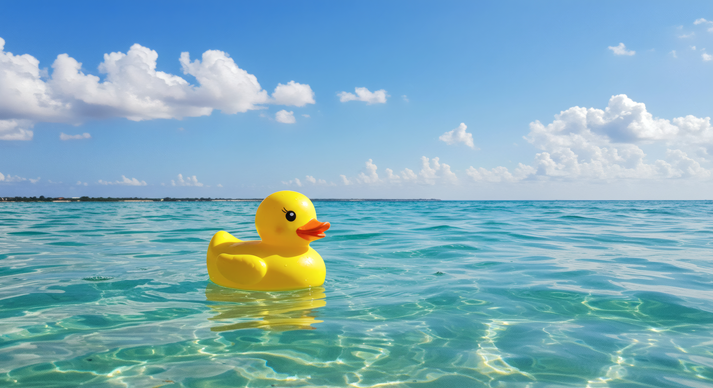
This has happened. Not just with ducks, but with shoes, toys, bottles, and all kinds of everyday objects. These drifting items have helped scientists understand how water moves across the planet.
A floating toy can reveal secrets about the oceans that satellites cannot clearly see.
That mystery starts with one big question: why does the duck float at all?
Before understanding how objects travel across oceans, you need to understand why some objects stay on the surface while others sink straight down.
Floating Is Not About Size
Many people think heavy objects sink and light objects float. That idea sounds right, but it is not always true.
A giant ship made of steel floats. A small metal coin sinks. The difference is not weight. The difference is density.
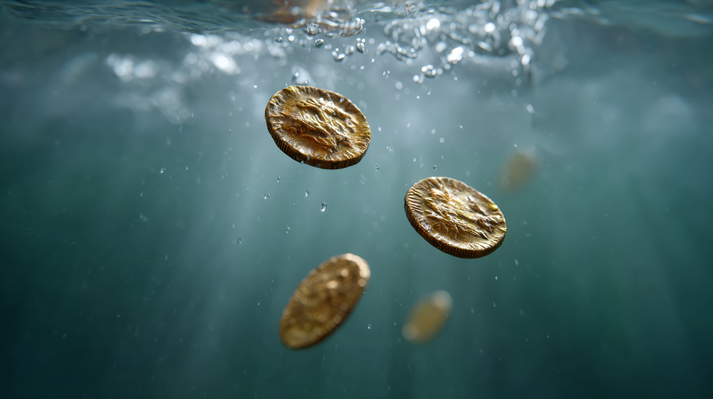
Density describes how much matter is packed into a certain amount of space. If an object packs a lot of matter into a small space, it has high density. If the matter spreads out, the density is lower.
Water has its own density. When an object is less dense than water, it floats. When an object is more dense than water, it sinks.
A rubber duck floats because its average density is lower than that of water. Air trapped inside the duck takes up space but does not add much mass. That lowers the duck’s density enough to keep it on the surface.
Cause and effect matter here. The air inside the duck lowers its density. Lower density causes floating.
Buoyancy: The Upward Push
Floating does not happen by accident. Water pushes back.
Buoyancy is the upward force water applies to objects placed in it. When you put an object in water, the water pushes up against it. At the same time, gravity pulls the object down.
If the upward push from the water is stronger than gravity, the object floats. If gravity wins, the object sinks.
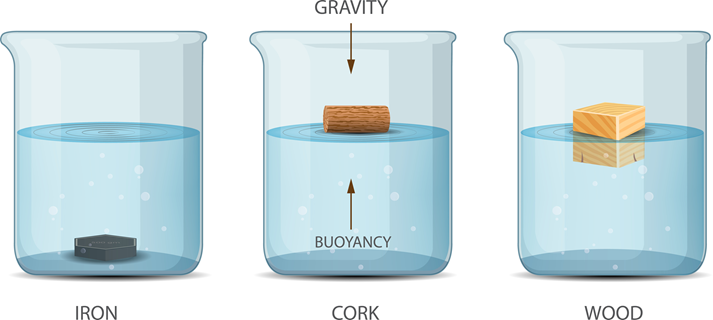
The strength of that upward push depends on how much water the object displaces. Displacement means pushing water out of the way.
When the duck enters the water, it pushes water aside. The displaced water pushes back upward. Because the duck displaces enough water to balance its weight, it stays afloat.
More displacement creates more upward force. That is why wide objects float better than narrow ones, even if they weigh more.
Cause and effect again: More displaced water creates a stronger upward push. A stronger upward push keeps the object floating.
Floating Objects Do Not Stay Still
Once an object floats, it becomes part of the moving water system.
Oceans do not sit quietly. Wind pushes across the surface. Temperature differences move water in slow, steady paths. Earth’s rotation bends those paths into large looping patterns.
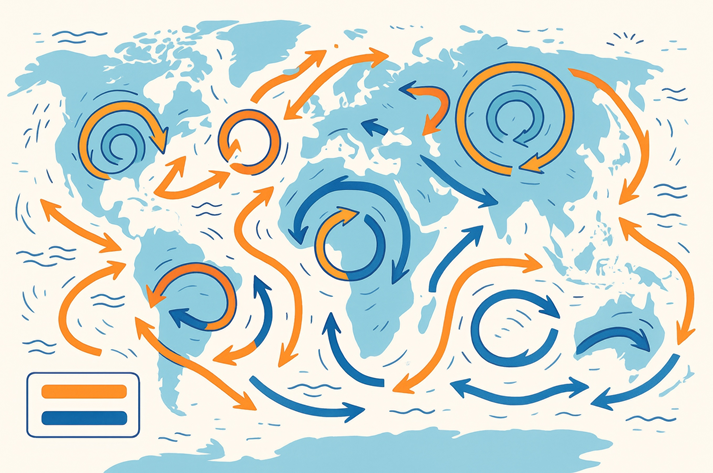
Floating objects ride along with these moving waters. They do not choose a direction. They go where the water goes.
A floating duck can drift thousands of miles without paddling once. Shoes can split up and land on different continents. Plastic bottles can circle entire ocean basins before reaching land again.
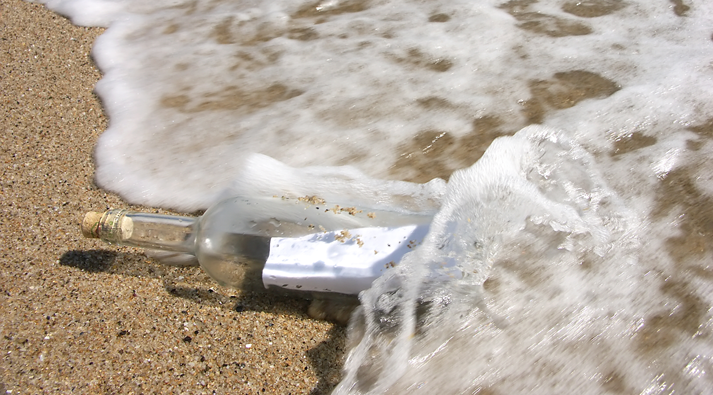
The object does not power the journey. Water movement causes the travel.
Cause and effect stay in charge. Water moves because of wind, heat, and Earth’s motion. Floating objects move because water carries them.
Simple Objects, Complex Systems
A rubber duck looks like a toy. In water, it becomes a data point.
By tracking where floating objects appear, scientists learn how surface water travels across oceans. These paths affect weather, food chains, and the movement of materials across the planet.
The same rules apply whether the object is a duck, a leaf, or a piece of lost cargo. Density determines floating. Buoyancy provides support. Water movement controls direction.
Understanding these ideas explains why floating objects can connect distant places without engines or instructions.
Now that you understand why objects float and how water carries them, it is time to test that understanding.
In the Got It? section, you will practice applying these ideas and check how well you can explain floating, sinking, and movement in water.

Supplies





 FAVORITE
 Like
Like