How to Find a Z-Score

Lesson ID: 13773

Turn confusing scores into clear comparisons using z-scores—then test your skills with real-life data challenges.

30To1Hour
categories

Measurement and Data, Statistics and Probability

subject
Math
learning style
Visual
personality style
Beaver
Grade Level
High School (9-12)
Lesson Type
Quick Query

Lesson Plan - Get It!

Audio: Image - Button Play
Image - Lession Started Image - Button Start

How Do You Compare the “Uncomparable”?

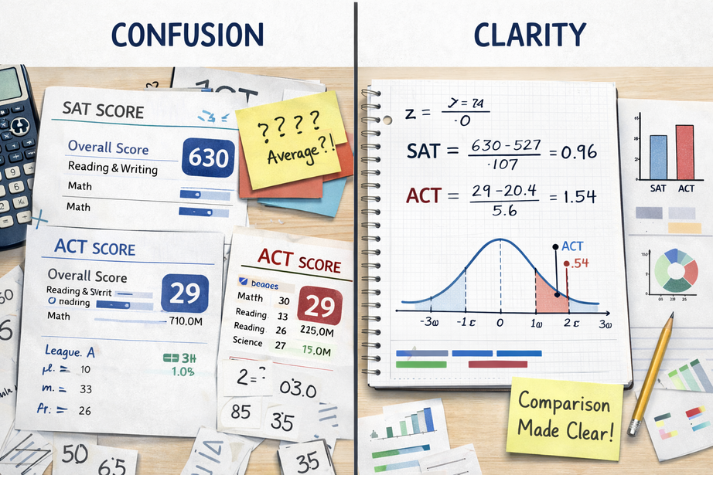
Imagine this: one student scores a 740 on the SAT math section. Another scores a 33 on the ACT math section.

  • Both sound impressive—but which one actually did better?

Test score showdown: SAT vs. ACT

Here’s the problem: those scores live on completely different scales. Comparing them directly is like comparing inches to miles. It just doesn’t work.

  • So how do you make a fair comparison?

You use something called a z-score.

What Is a Z-Score, Really?

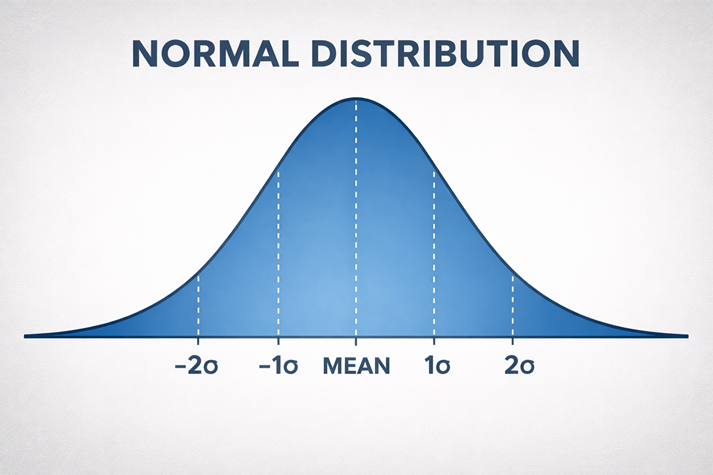
A z-score tells you how far a value is from the average (mean), measured in standard deviations.

In plain terms, a z-score answers this question: How unusual is this value compared to everything else?

A z-score of 0 means the value is exactly average.

A positive z-score means the value is above average.

A negative z-score means the value is below average.

The bigger the number (positive or negative), the farther the value is from the mean.
How to Find a Z-Score.pdf PDF This chat is for revising and updating an existing self-guided, remote-learning online lesson.  Goals for this revision:  * Update content for accuracy, relevance, and neutrality appropriate for 2026. * Remove all outside links and summarize their information directly in the lesson text. * Remove videos whenever possible. If a video must remain, fully integrate the transcript into the written content. * Align the lesson tightly to a structured format with clear instruction, practice with feedback, and project-based application. * Ensure the lesson stands alone and requires no teacher facilitation.  Writing requirements:  * Write at a 12th-grade level. * Use active voice throughout. * Write directly to the student using “you.” Do not use “we.” * Keep the tone informative, fun, and engaging. This should not read like a textbook. * Do not use bold, italics, icons, graphics, or unusual formatting. * Keep all content unbiased and inclusive. * Be thorough without being bloated.  Structure requirements:  * The lesson must follow this order:   1. Hook and instruction   2. Guided review and practice   3. Real-world application through projects * Each section must include clear transitions at the beginning and end.  Do not begin rewriting until instructed. Start with Section 1 only unless otherwise specified.  ---  SECTION 1 PROMPT: HOOK & INSTRUCTION (“Hook and Get It!”)  Revise and improve the opening section of this lesson.  Requirements:  * Open with a strong, engaging hook that grabs the student's attention and motivates them to continue. Include an image prompt. * Teach all instructional content in this section. Nothing instructional should appear later. * Use catchy, student-friendly headings. * Integrate any information from removed links or videos directly into the text. * Pull in additional accurate, age-appropriate information as needed to make the instruction complete. * Ensure examples and references feel current and relevant. * Keep the content inclusive, engaging, and easy to follow without oversimplifying. * Include rectangular image prompt suggestions where beneficial.  End this section with:  * A clear transition that prepares the student to practice what they just learned. ___ The current lesson only really has a video and link which are no longer available. We need a whole new one.  SECTION 1: Hook and Get It!  How Do You Compare the “Uncomparable”?  Image Prompt: Two students standing on different podiums—one labeled SAT and one labeled ACT—with different score scales shown on each side.  Imagine this: one student scores a 740 on the SAT math section. Another scores a 33 on the ACT math section. Both sound impressive—but which one actually did better?  Here’s the problem: those scores live on completely different scales. Comparing them directly is like comparing inches to miles. It just doesn’t work.  So how do you make a fair comparison?  You use something called a z-score.  What Is a Z-Score, Really?  A z-score tells you how far a value is from the average (mean), measured in standard deviations.  In plain terms, a z-score answers this question: How unusual is this value compared to everything else?  • A z-score of 0 means the value is exactly average. • A positive z-score means the value is above average. • A negative z-score means the value is below average.  The bigger the number (positive or negative), the farther the value is from the mean.  Image Prompt: A bell curve labeled “normal distribution” with points marked at -2, -1, 0, 1, and 2 standard deviations.  Why Z-Scores Matter  Z-scores allow you to: • Compare values from completely different data sets • Understand how extreme or typical a value is • Analyze data that follows a normal distribution (the classic bell curve)  This is why z-scores show up everywhere—test scores, sports stats, psychology studies, and even business predictions.  The Formula You Need  To calculate a z-score, use this formula: z=x???z=?x??? xx ?? ?? z=x????1.2z=?x????1.2 ?(z)?88.5%?(z)?88.5% Standard score controls adjust x, mu, and sigma, then recompute z and the percentile.  Here’s what each part means: • x = the value you are analyzing • ? (mu) = the mean (average) • ? (sigma) = the standard deviation  This formula measures how far your value is from the mean, then scales it based on how spread out the data is.  Step-by-Step: How to Find a Z-Score  Follow this process every time:      Identify the value (x)      Find the mean (?)      Find the standard deviation (?)      Subtract the mean from the value      Divide by the standard deviation  That’s it. No shortcuts needed.  Let’s Apply It  Go back to the test score example.  SAT math scores: Mean = 527 Standard deviation = 107 Student score = 740  ACT math scores: Mean = 20.4 Standard deviation = 5.6 Student score = 33  Now calculate:  SAT: (740 ? 527) ÷ 107 ? 1.99 This score is about 2 standard deviations above the mean.  ACT: (33 ? 20.4) ÷ 5.6 ? 2.25 This score is more than 2 standard deviations above the mean.  Even though 740 looks bigger than 33, the ACT score is actually more impressive relative to its distribution.  That’s the power of z-scores—they level the playing field.  Real-Life Thinking  Z-scores are not just about tests. They help answer questions like: • Is this athlete performing above average? • Is this company financially stable compared to others? • Is this data point typical or unusual?  Once you understand z-scores, raw numbers stop being confusing—and start telling a clear story.  Wrapping It Up  Now you know how to: • Define a z-score • Use the formula correctly • Interpret what the result means • Compare values across different scales  Next, it’s time to put this into action. You’ll calculate z-scores, interpret results, and test your understanding with guided practice.  create this Image Prompt: Two students standing on different podiums—one labeled SAT and one labeled ACT—with different score scales shown on each side.  Generated image: Test score showdown: SAT vs. ACT  create this Image Prompt: A bell curve labeled “normal distribution” with points marked at -2, -1, 0, 1, and 2 standard deviations.  Generated image: Normal distribution infographic in blue  can you create an image to match this:  Generated image: Z-score and bell curve analysis  Can you create a diagram showing the steps being completed in the practice SAT and ACT problem?  Generated image: Finding z-scores: SAT vs. ACT  Edited image Make the background white and the writing black.  Generated image: Z-score diagram with normal distribution   Normal distribution infographic in blue Normal distribution infographic in blue
Why Z-Scores Matter

Z-scores allow you to:

Compare values from completely different data sets.

Understand how extreme or typical a value is.

Analyze data that follows a normal distribution (the classic bell curve).

This is why z-scores show up everywhere—test scores, sports stats, psychology studies, and even business predictions.

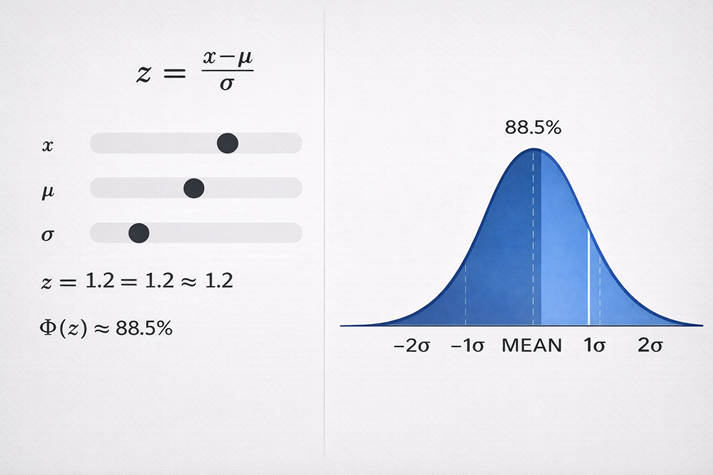
The Formula You Need

To calculate a z-score, use this formula:

Z-score diagram with normal distribution

Here’s what each part means:

x = the value you are analyzing

? (mu) = the mean (average)

? (sigma) = the standard deviation

This formula measures how far your value is from the mean, then scales it by the spread of the data.

Step-by-Step: How to Find a Z-Score

Follow this process every time:

  1. Identify the value (x).
  1. Find the mean (?).
  1. Find the standard deviation (?).
  1. Subtract the mean from the value.
  1. Divide by the standard deviation.

That’s it. No shortcuts needed.

Let’s Apply It

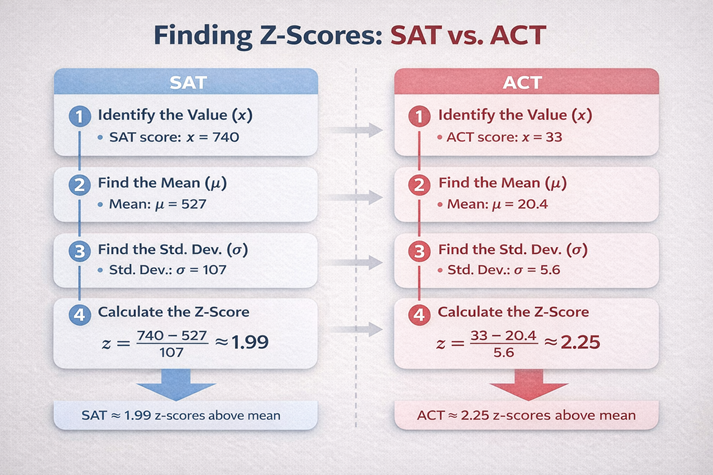
Go back to the test score example.

SAT math scores:

  • Mean = 527
    Standard deviation = 107
    Student score = 740

ACT math scores:

  • Mean = 20.4
    Standard deviation = 5.6
    Student score = 33

Now calculate.

SAT:

  • (740 ? 527) ÷ 107 ? 1.99
  • This score is about 2 standard deviations above the mean.

ACT:

  • (33 ? 20.4) ÷ 5.6 ? 2.25
  • This score is more than 2 standard deviations above the mean.

Finding z-scores: SAT vs. ACT

Even though 740 looks bigger than 33, the ACT score is actually more impressive relative to its distribution.

That’s the power of z-scores—they level the playing field.

Real-Life Thinking

Z-scores are not just about tests. They help answer questions like:

  • Is this athlete performing above average?
  • Is this company financially stable compared to others?
  • Is this data point typical or unusual?

Once you understand z-scores, raw numbers stop being confusing—and start telling a clear story.

Wrapping It Up

Now you know how to:

Define a z-score.

Use the formula correctly.

Interpret what the result means.

Compare values across different scales.

Next, it’s time to put this into action. You’ll calculate z-scores, interpret results, and test your understanding with guided practice.

Image - Button Next