Sign Up
School Account Sign Up

Lesson ID: 13000
Transform your writing from rough draft to ready-to-share! Learn how to reread, rethink, and rewrite your work to make every sentence shine.




The Power of the Pencil
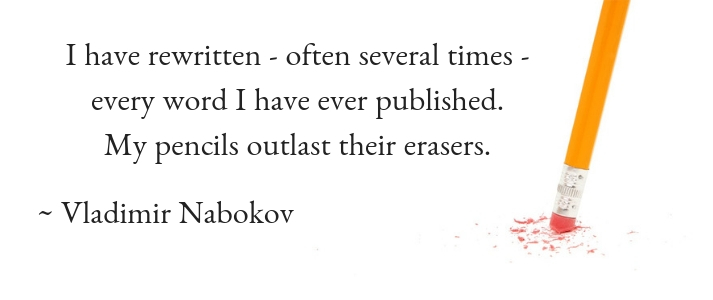
Every great writer knows this truth: good writing doesn’t just happen. It’s crafted.
Revision is where good ideas grow into great ones—where words sharpen, sentences shine, and your writing finally starts to sound like you.
Think of revising like polishing a gemstone or editing a movie—you already have something solid, but now you’re cutting, shaping, and improving it until every part sparkles.
It’s where the magic happens.
Revising Is Rethinking
You’ve written your draft—congratulations! Now, it’s time to look at your work through a new lens.
Revising means rereading, rethinking, and rewriting to make your ideas stronger and your message clearer.
When you revise, you’re not fixing grammar (that’s for editing). You’re shaping meaning. Revising includes adding information, reorganizing ideas, and removing anything that doesn’t belong
It’s about making your best points stand out.
The Four R’s of Revision
Professional writers often follow the “Four R’s” when they revise.
Revising isn’t about erasing mistakes—it’s about re-creating your writing to make it the best version it can be.
Show, Don’t Tell: A Quick Example
Before: I planted some seeds in the dirt.
After: With a small shovel, I scooped dark, crumbly soil into my flowerpot, poked tiny holes, and dropped in three shiny seeds.
The second version doesn’t just tell—it shows. Adding details, action, and description brings writing to life.

Use Tools That Help You Rethink
Use these Downloadable Resources found in the right-hand sidebar to guide your revision.
Revising Checklist – Check your writing for clear ideas, transitions, and strong word choice.
Partner Proofing – Trade papers with a classmate and give each other constructive feedback.
These tools help you see your writing from a new perspective—something every great author does!
Make It Personal
Your writing should sound like you. As you revise, ask yourself these questions.
Does this match what I wanted to say?
Can I add details or transitions to make it clearer?
Are there parts that don’t sound like my voice?
Writers often take a short break between drafting and revising to come back with fresh eyes and new ideas.
Quick Tips for Stronger Revisions
Read your writing out loud. If it sounds awkward, fix it.
Highlight your best sentences—then improve the ones that don’t stand out.
Ask a friend or teacher to read it and tell you what they notice most.
Don’t panic if it takes multiple tries. Great writers revise again and again.
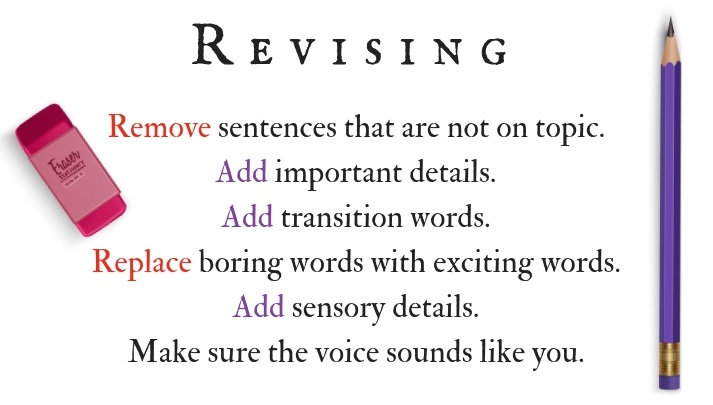
You’ve now learned how revision transforms your first draft into something worth sharing.
In the Got It? section, you’ll practice identifying what to keep, what to improve, and what to change—so your writing shines as brightly as your ideas.

Supplies
Additional Resources






 FAVORITE
 Like
Like