Sign Up
School Account Sign Up



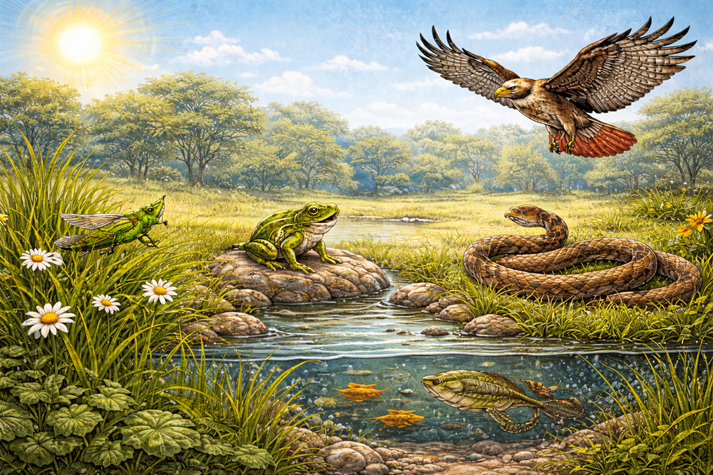
Picture this.
A grasshopper munches on a leaf.
A frog snaps up the grasshopper.
A snake slithers in and eats the frog.
Then a hawk swoops down and catches the snake.
That’s not random.
That’s a food chain.
What Is a Food Chain?
A food chain shows how energy moves from one living thing to another.
It answers one big question.
Each step in the chain shows:
what gets eaten
what does the eating
Energy starts at the beginning and moves through each living thing.
It All Starts With the Sun
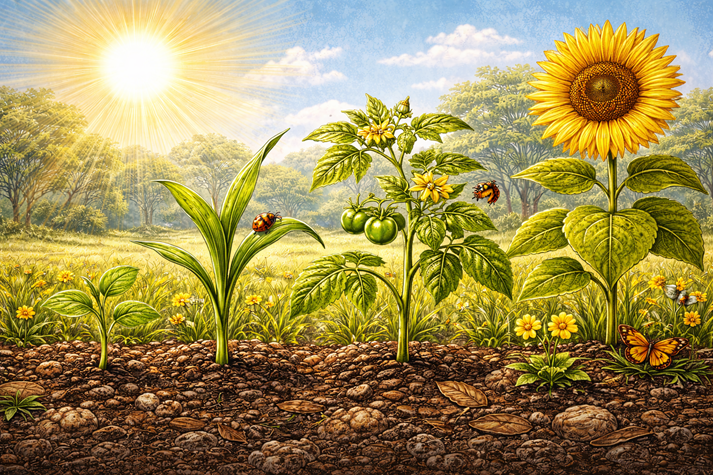
Every food chain begins with the sun.
Plants use sunlight to make their own food. These are called producers.
Examples of producers:
grass
trees
algae in water
They do not eat other living things. They make their own food using sunlight.
The First Eaters: Consumers
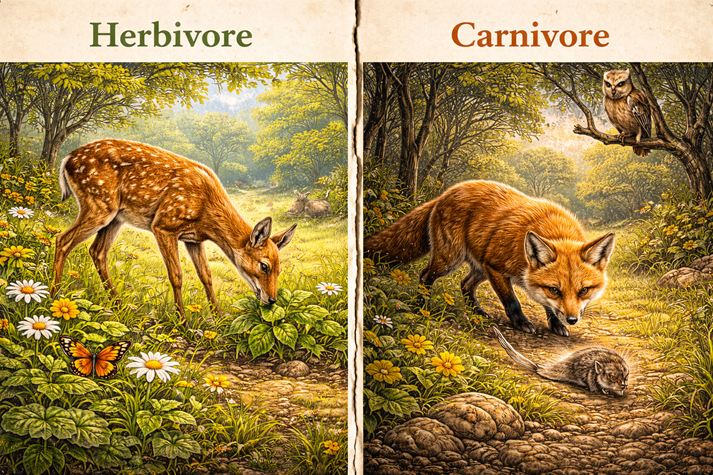
Animals cannot make their own food, so they must eat other living things. These are called consumers.
There are different kinds of consumers.
Herbivores (plant eaters):
deer
rabbits
caterpillars
Carnivores (meat eaters):
snakes
hawks
lions
Omnivores (eat both plants and animals):
bears
humans
raccoons
Breaking It Down
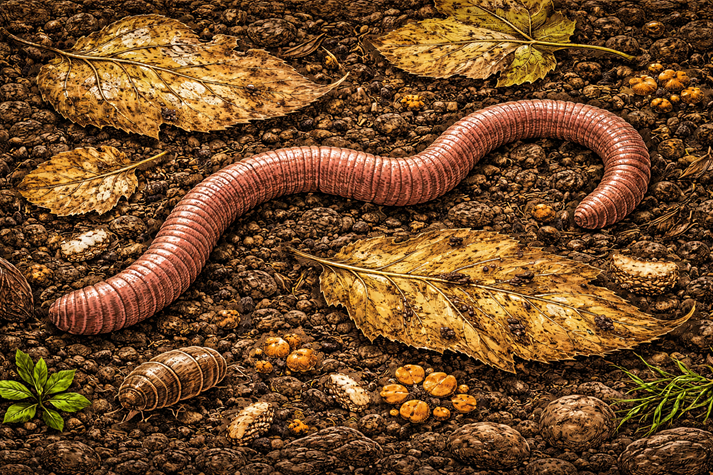
At the end of every food chain are decomposers.
These living things break down dead plants and animals.
Examples:
worms
fungi (like mushrooms)
bacteria
They return nutrients to the soil so plants can grow again.
The cycle continues.
A Simple Food Chain
Here is one example:
grass — grasshopper — frog — snake — hawk
The grass makes its own food.
The grasshopper eats the grass.
The frog eats the grasshopper.
The snake eats the frog.
The hawk eats the snake.
Each step passes energy along.
Food Chains Are Connected
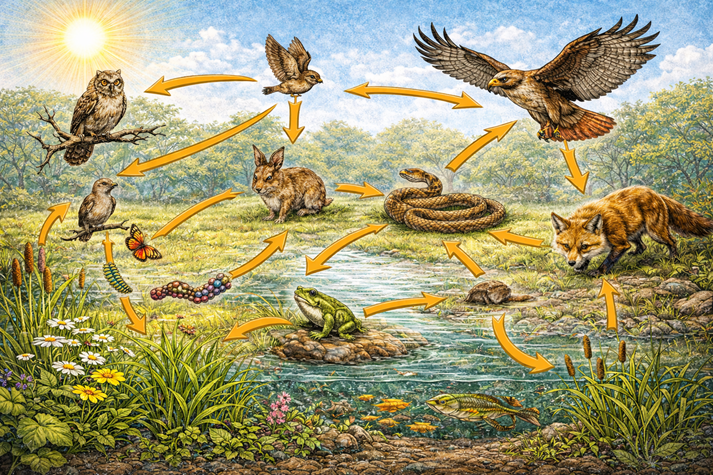
In real life, food chains do not stand alone.
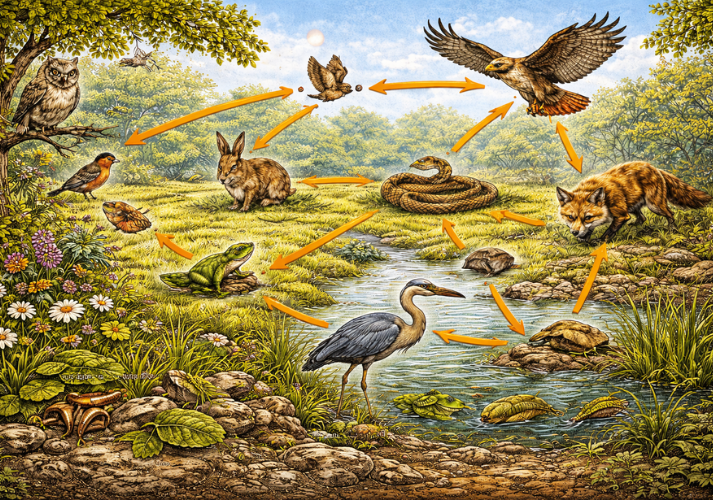
Most living things eat more than one kind of food. That means many food chains connect together.
These connections form a food web.
A food web shows many feeding relationships at once.
For example:
A bird might eat insects, seeds, or small animals.
A fox might eat rabbits, berries, or insects.
Everything is linked together.
What Happens When Something Changes?
If one part of a food chain changes, the whole system can shift.
For example:
fewer frogs — more insects
fewer plants — less food for herbivores
more predators — fewer prey animals
Food chains help keep nature balanced.
Big Idea to Remember
A food chain shows how energy moves from one living thing to another, starting with the sun and moving through plants, animals, and decomposers.
Everything is connected, and every link matters.
You just learned how energy flows through living things and how food chains connect.
Next, it’s time to practice building and understanding food chains on your own.

Supplies
Additional Resources




 FAVORITE
 Like
Like