Sign Up
School Account Sign Up

Lesson ID: 11046
Travel back to Colonial America! Explore real jobs, try hands-on challenges, and find out what your life would’ve been like in the 1700s, if survivial depended on you.




Time Zapped!
One minute, you're scrolling on your phone. The next?
Boom—you're in the middle of a dusty road with wooden buildings, chickens wandering around, and people giving your sneakers weird looks. Your phone has zero signal. Nobody's heard of tacos or pizza. Your hoodie? Total fashion mystery!
This is your life. It's not a vacation. You're not visiting. This is your daily life.
What Is Colonial America?
Colonial America was a period in American history that comprised colonies — lands controlled by another country. During the 1600s and 1700s, these lands were under the rule of Great Britain.
The people living there weren't part of an independent country yet; they came from Europe to settle the land, grow crops, trade goods, and build lives, but all under British rule.
When Was Colonial America?
Colonial America refers to a time before the United States existed, when the 13 colonies were still under British rule. People lived in small towns or on farms and had to grow, build, or trade almost everything they needed.
There was no Constitution, and a distant government made rules to follow; life was shaped by survival, close communities, and hard physical work (for example, chopping wood for the fire, plowing fields by hand, and carrying buckets of water from a stream).
This period set the stage for major changes ahead, including the American Revolution, freedom, and the birth of a new nation.
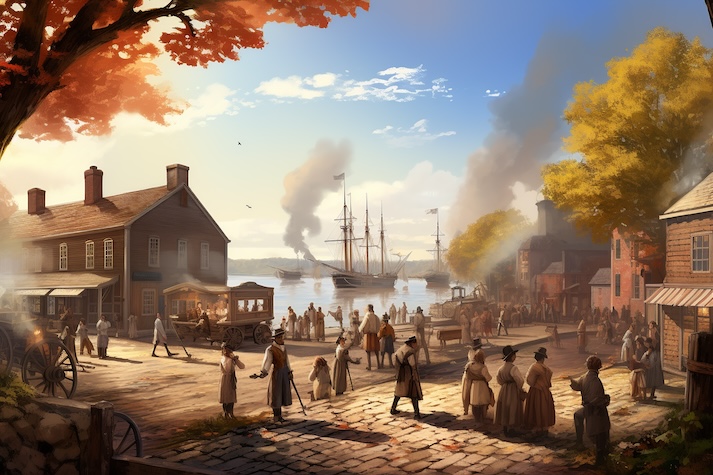
Colonial Home — Every Object Had A Job
In a colonial home, nothing came from a store or factory. If you needed something, like a blanket, chair, or candle, it was made by hand, either by your family or someone in your town.
Your feet crunch on the dirt floor of your new home. It smells like wood and something bubbling in a pot over the fire. All around you are tools, fabrics, and wooden furniture — nothing fancy, but everything is made with care and skill.
In Colonial America, people didn't shop for what they needed; they made it, grew it, or traded it. Every object told a story, and every job was a piece of the puzzle that kept the community going.
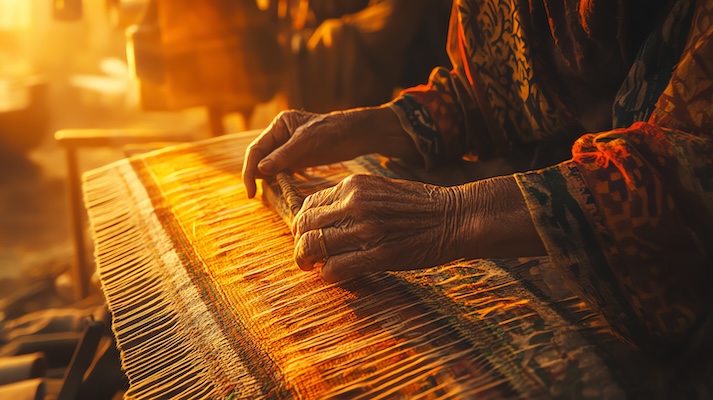
Here are some of the jobs people had.
A colonial apprentice was usually a kid around 10 to 15 years old who lived and trained with a skilled worker to learn a trade like blacksmithing, weaving, or printing.
Their day began early with chores such as feeding the animals and gathering firewood. Most of the day was spent helping in the workshop, learning hands-on skills.
After a long day, they might study letters or numbers before sleeping in a loft above the shop. It was hard work, but it was how kids learned a job.
Understanding this world is unlocking a secret level in history. It helps you see how people lived without modern machines or stores, and how those old ways still connect to life today.
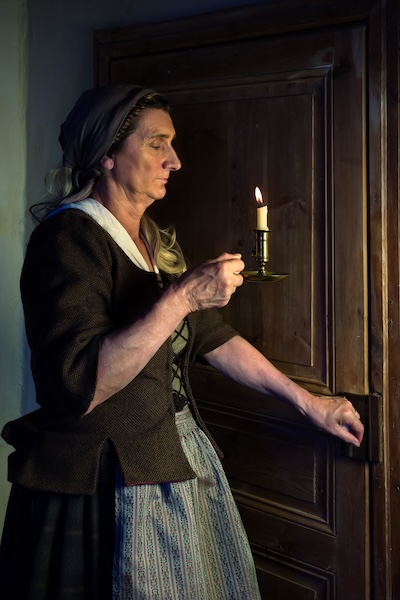
Then Vs. Now — The Stuff That Built Daily Life
| Then | Now |
| lantern | flashlight or phone light |
| quill and ink | texting or typing |
| tin or gourd cup | insulated water or coffee cup |
| candle | electric light |
In Colonial America, everyday objects looked and worked differently, but they served similar basic needs we still have today.
Below is an explanation of the chart above, which compares a few common items to those we use now.
Lantern — A candle or oil lamp helped people find their way in the dark. Flashlights or phone lights provide quick, bright light with the push of a button.
Quill and Ink — Writing meant dipping a feather into ink and slowly forming each letter by hand. Typing, tapping, or using voice text allows the message to be sent much faster.
Tin or Gourd Cup — People drank from simple metal or wooden cups, often shared among family members. Insulated bottles and modern drinkware are designed for personal use, keeping drinks hot or cold.
Candle — Candles were a main source of light after sunset. Electric lights brighten a room instantly, while candles are mostly used for scent or decoration.
Living in colonial times wasn’t about making things easy—it was about knowing how to get things done. People had to work together, use their skills, and find a way to make or trade for what they needed. Nothing was wasted, and everyone had a job to do.
Plow ahead to the Got It? section to explore different colonial jobs and figure out what daily life might have been like for you during this period.

Supplies




 FAVORITE
 Like
Like