Sign Up
School Account Sign Up

Lesson ID: 14382
Discover how one simple “Merry Christmas” text launched a communication revolution—and explore the science, tech, and creativity behind every ping you send today!




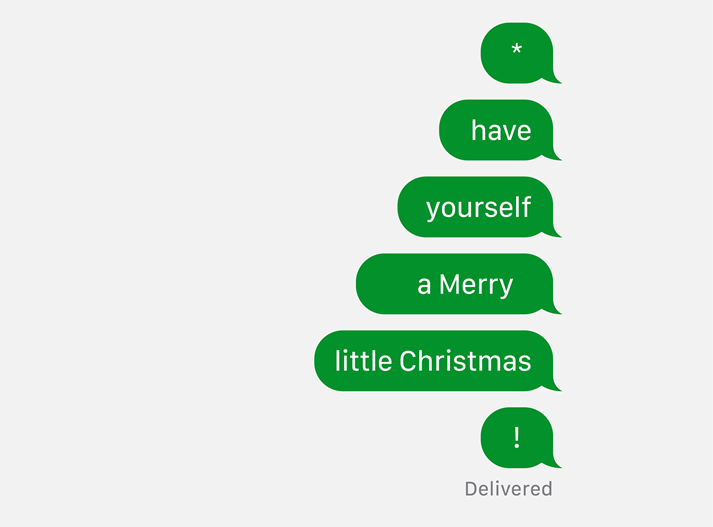
Just two words: Merry Christmas.”
Imagine it's December 3, 1992. A young engineer named Neil Papworth sends the world’s first mobile text message.
The message? Exactly: “Merry Christmas.” That’s it.
Fast forward to today: you wake up, open your phone, and swipe into a flood of instant messages—GIFs, emojis, stickers, videos, group chats.
In this lesson, you’ll explore how text messaging actually works (science + tech), how it evolved, and why it matters to your everyday life.
The Big Idea — What is a Text Message?
A text message is when one device sends a short bit of written communication to another device, usually a mobile phone today. But the origin lies in something called the Short Message Service (SMS).
Here’s the technical gist.
SMS was built into mobile-network standards (specifically the GSM standard) so phones could send text messages.
Originally, SMS messages were limited to 160 characters for messages encoded in the standard alphabet. Why 160? Because engineers counted typical sentences and found most were under that size.
The network uses a “store & forward” system: the message is sent from your device to a Short Message Service Center (SMSC) on the network, and then from there to the recipient's device.
Bottom line: texting started as a simple way to send short written messages via mobile networks.

The First Message – How it Happened
Here’s the quick timeline.
On December 3, 1992, Neil Papworth (engineer) sent the first SMS message.
He used a computer to send the message via the Vodafone network to a colleague’s mobile phone (because phones couldn’t yet send texts themselves).
The message: “Merry Christmas.” A simple greeting — but a big milestone.
Soon after, commercial SMS services were rolled out (around 1993 in some markets), and mobile phones began to feature built-in SMS sending capabilities.
That’s how one holiday greeting launched a revolution in communication.
How the Technology Works (Under the Hood)
Let’s get nerdy: here are the nuts and bolts of SMS and how texting tech evolved.
Encoding & character limit
Original SMS encoding was based on a 7-bit alphabet (for 160 characters). If you used 16-bit characters (e.g., in languages with non-Roman scripts), you got fewer characters (like 70).
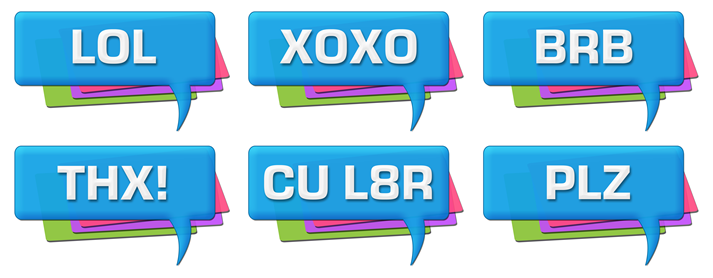
That limit influenced how people text: shorthand words, abbreviations, nicknames — culture followed tech.
Network path
Your phone → network signalling channel → SMSC → recipient’s phone.
The SMS leverages signalling paths (used for setting up calls) when they are not in use. Engineers realised the “idle time” in the network could be used to send texts without building an entirely new infrastructure.
Evolution: Beyond SMS
SMS was great, but limited (no videos, large files, etc.). Over time, we got MMS (multimedia messages), then internet-based messaging apps, and richer messaging services (like RCS).
Network capabilities have improved: 2G → 3G → 4G → 5G, resulting in faster data, more features, and enhanced multimedia capabilities.
The form of messages changed too: pictures, voice notes, video clips, stickers, and real-time read receipts.
Why It Matters to You
You live in a world of messaging.
Every ping, tap, emoji, or meme you send has roots in that first “Merry Christmas” text.
Because texting has become a standard, you can message across devices, platforms, and countries.
Understanding how it works gives you power: you’ll recognise what’s possible, what has limits (like character count, network coverage), and how future tech might change it further.
You’re part of the evolution: your texting habits, the apps you use, the way language shifts in texts (emojis, abbreviations, voice-to-text) — these are all influenced by the tech roots.

Now that you’ve seen how text-messaging started, how it works under the hood, and how it evolved, it’s time to play with the mechanics yourself.
In the Got It? section, you’ll practice by sending your own “tech story” message, explore character limits, try encoding quirks, and experiment with the next-gen forms of texting.

Supplies



 FAVORITE
 Like
Like