Sign Up
School Account Sign Up

Lesson ID: 11039
What do salt, balloons, and signs have in common? They're all powered by the elements! Learn how the periodic table unlocks the secrets of every substance around you.




Meet the Most Powerful Table in the World
You’ve seen tables that hold food, and maybe even tables full of math facts. But now, it’s time to meet a table so powerful that it helps scientists predict the future.
This table doesn’t wobble or squeak—it holds the secrets of the universe.
It’s called the Periodic Table of Elements, and it’s the ultimate chemistry cheat sheet.
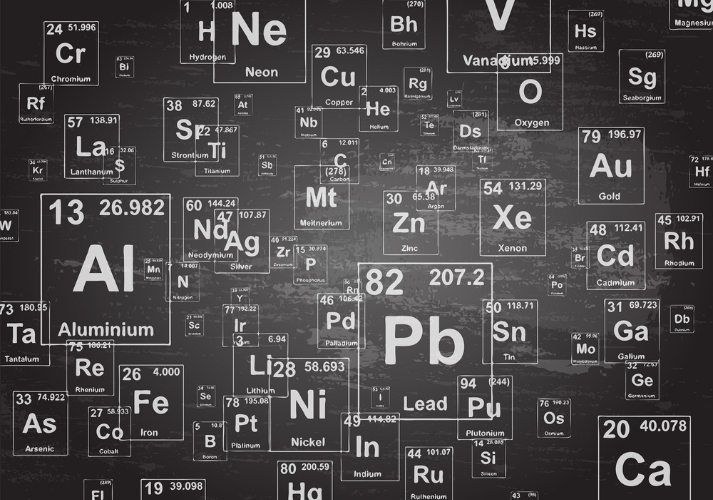
It shows you all the known elements in the universe, how they behave, and how they’re connected. It looks like a colorful grid—but it’s actually a code breaker for matter itself.
What Is an Element?
Before you jump into the table, let’s talk about what’s on it: elements.
An element is a substance made of only one kind of atom. That means it can’t be broken down into anything simpler.
All elements.
Not elements—those are combinations of elements called compounds.
Each element has the following.
A name (like Oxygen)
A symbol (O)
An atomic number (how many protons are in the atom)
An atomic mass (how much the atom weighs)
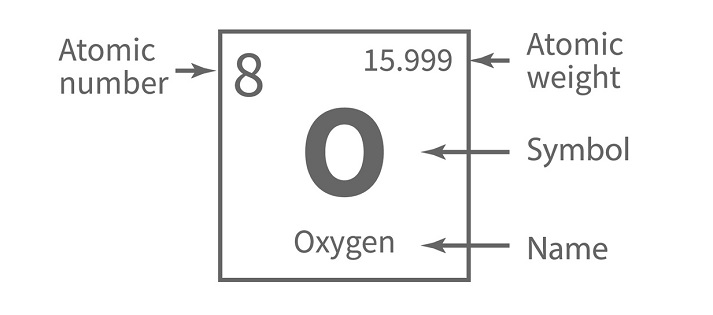
There are 118 known elements, and the periodic table organizes them all into one brilliant, patterned puzzle.
The Genius of the Grid: Why the Table Works
In the 1800s, Russian chemist Dmitri Mendeleev wanted to make sense of the growing list of elements. He noticed something fascinating: if he arranged the elements by atomic weight, their properties began to repeat in a pattern.
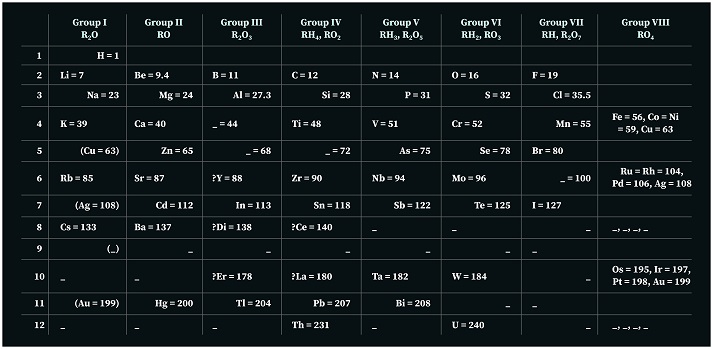
He left empty spaces in his table for elements that hadn’t been discovered yet, and predicted their properties based on the pattern.
Later, scientists found those missing elements, and they matched Mendeleev’s predictions. Boom. The Periodic Table was born.
That repeating pattern is called periodicity, and it’s what makes the table so powerful.
What the Periodic Table Tells You
Look at the table and you’ll see rows and columns. These are called periods (rows) and groups or families (columns).
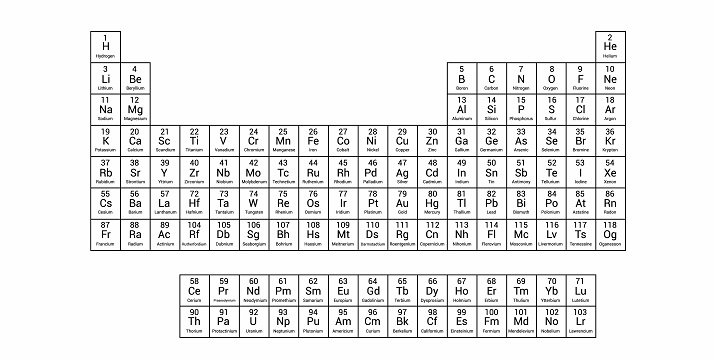
Here’s what they reveal.
Horizontal Rows: Periods
Each row adds a new energy level (or “shell”) to the atoms.
As you move across, elements become less metallic and more reactive (from right to left).
Vertical Columns: Groups
Elements in the same group have similar properties.
They also have the same number of electrons in their outer shell, which tells you how they react with other elements.
The VIPs of the Table: Element Families
Different sections of the table are color-coded or grouped based on their behavior.
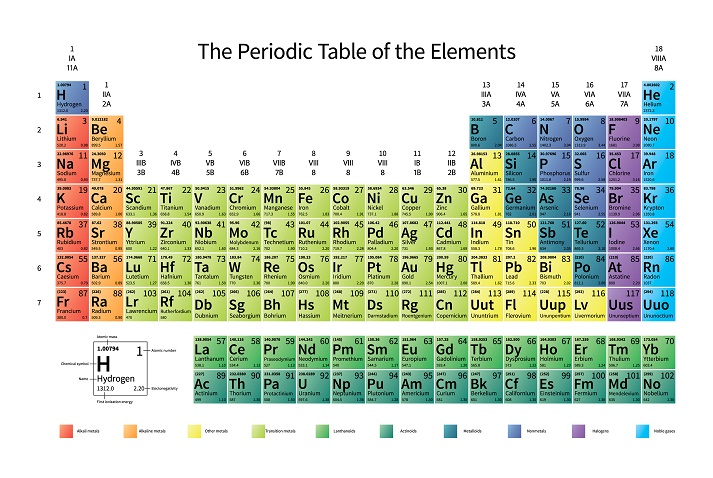
Alkali Metals (Group 1): Super reactive metals like lithium and sodium. They love to lose one electron.
Alkaline Earth Metals (Group 2): Still reactive, but not as wild. Think magnesium and calcium.
Transition Metals (Middle block): The classic metals—gold, silver, copper, iron. Shiny, bendy, and great at conducting electricity.
Halogens (Group 17): Gases like fluorine and chlorine. They love to gain one electron.
Noble Gases (Group 18): The cool, calm ones. Helium, neon, argon. They don’t react much because their outer shells are full.
Lanthanides and Actinides (the “footnote” row): Hard-to-isolate metals, many used in tech or energy.
Hidden Powers of the Table
The periodic table isn’t just for naming elements. It can help you in the following ways.
Predict how an element will react with others.
Identify the number of protons, electrons, and neutrons.
Compare metallic or non-metallic properties.
Understand chemical bonding and reactions.
The table even explains why elements form certain types of compounds, and how those compounds form the materials we use every day.
It’s Not Set in Stone
Believe it or not, the modern table isn’t the only way to organize elements. Some scientists have imagined circular tables, spiral tables, and even 3D models to show how elements are connected in new ways.
Still, Mendeleev’s grid remains the most widely used because it’s clear, powerful, and accurate—even more than 150 years later.
Recap Before You React
Elements are pure substances made of one type of atom.
The periodic table organizes all known elements by patterns in their atomic structure.
Rows = periods; columns = groups or families.
Elements in the same group act alike and have similar outer electrons.
Families include alkali metals, noble gases, halogens, and more.
The table helps you understand, predict, and explore the behavior of matter.
Coming Up Next
You’ve just unlocked one of the most powerful tools in science. But understanding it isn’t enough—you need to practice using it!
Head to the Got It? section to complete a series of challenges that test how well you can navigate this amazing atomic map.
Put your periodic power to the test!

Supplies
Additional Resources





 FAVORITE
 Like
Like