Sign Up
School Account Sign Up



Look around you.
Right now.
You might be sitting in a room, near a window, or outside under the sky. You have a place where you eat, sleep, and stay safe. That place is your home.
Now here’s something cool: every living thing on Earth has a home, too.
That home is called a habitat.

What Is a Habitat?
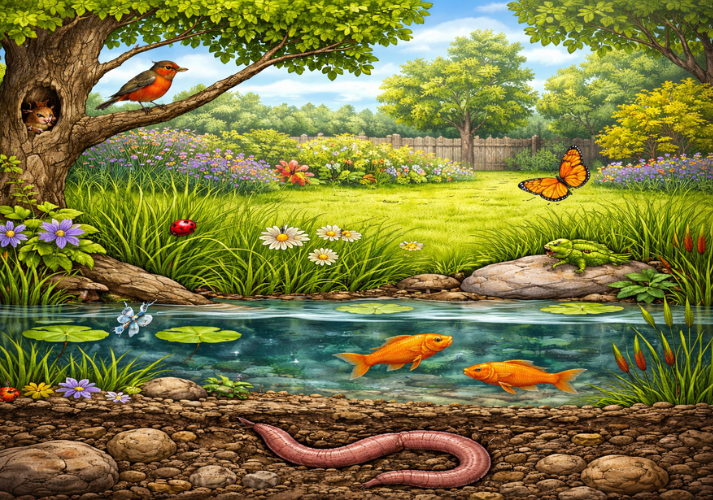
A habitat is the place where a living thing lives. It gives everything that living thing needs to survive.
That includes:
food
water
shelter
space
If even one of these is missing, it becomes very hard for a living thing to survive.
Your home is your habitat. A bird’s nest is its habitat. A worm under a rock has a habitat, too.
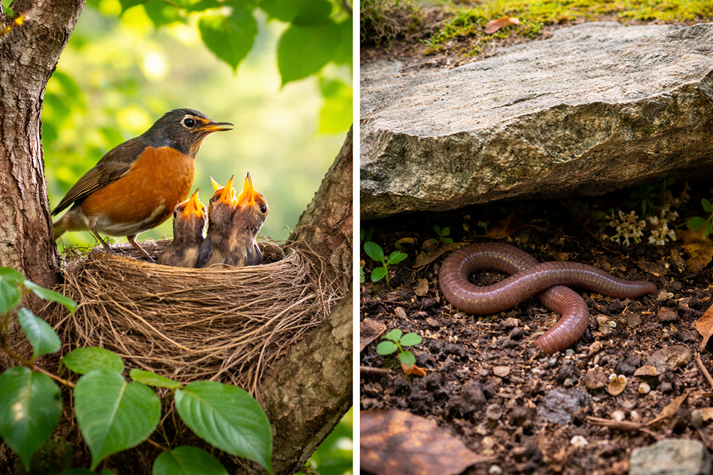
Habitats can be big or small.
An entire ocean is a habitat.
The space under a single rock is also a habitat.
Living and Nonliving Parts
Habitats are made up of two kinds of things:
Living things:
plants
animals
insects
Nonliving things:
sunlight
water
air
soil
temperature
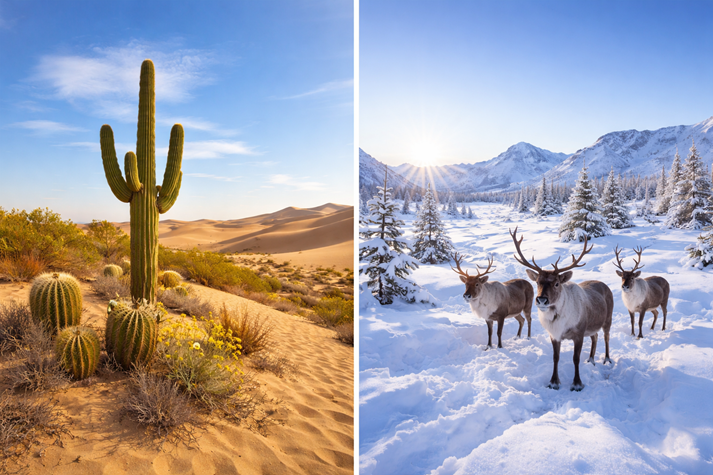
These nonliving parts are just as important. For example, a cactus can live in a hot, dry desert. But that same cactus would not survive in a freezing, snowy place.
Every habitat has its own mix of living and nonliving parts.
Habitats Are Everywhere
Habitats are not just faraway places like jungles or oceans. They are all around you.
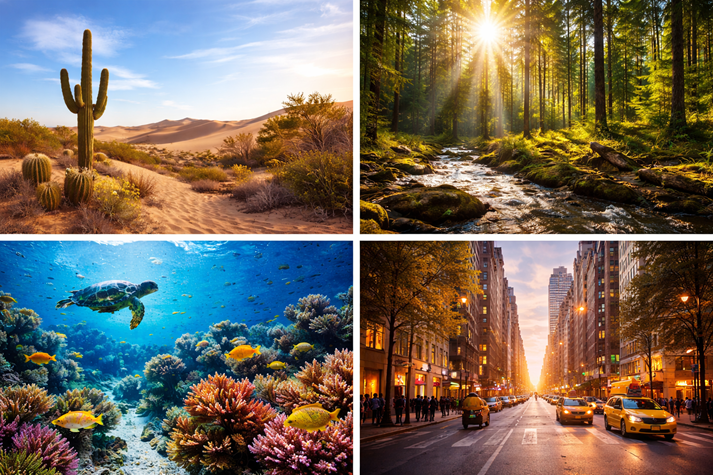
Here are some common types of habitats.
Deserts
Deserts are very dry. Some are hot, and some are cold. They get very little rain. Animals like snakes, lizards, and camels live there.
Forests
Forests have lots of trees and plants. Some get a lot of rain, while others have seasons. Animals like deer, birds, and bears live in forests.
Grasslands
Grasslands have wide open spaces with lots of grass but not many trees. Animals like lions, antelope, and squirrels live here.
Mountains and Polar Regions
These places can be very cold and windy. Animals that live here are built to survive harsh weather, like polar bears and mountain goats.
Water Habitats
Lakes, rivers, and oceans are habitats, too. Fish, whales, and many other animals live in water. The ocean is the largest habitat on Earth.
Cities and Farms
Even places where people live are habitats. Humans, pets, birds, insects, and small animals all share these spaces.
Why Habitats Matter
Every living thing depends on its habitat.
If a habitat changes too much, the living things inside it may not survive. For example:
If a pond dries up, fish cannot live there anymore.
If a forest loses its trees, animals may lose their homes.
Habitats help keep life going.
Your Turn to Think
Think about your own habitat.
You are part of a habitat, just like every other living thing.
You just learned what a habitat is, what it includes, and where habitats can be found.
Next, it’s time to test your thinking and explore habitats more closely in the Got It? section.

Supplies
Additional Resources


 FAVORITE
 Like
Like