Sign Up
School Account Sign Up

Lesson ID: 10499
Explore the fiery world beneath your feet! Learn about Earth's layers, how volcanoes form, and what makes them blow their tops.




What’s Going On Under Your Feet?
You’re walking across the ground, just like every day.
The earth is on the move. Not just a little—it’s constantly shifting, breaking, and even exploding. Volcanoes aren’t just wild eruptions—they're the earth’s way of revealing what’s inside.
Find out what’s going on down there.
What's Beneath the Crust and Why It Explodes
The earth may seem solid, but it's built like a giant layered cake with different parts inside, each with a special job to do.
These layers don't just sit still—they help create earthquakes, volcanoes, and even whole continents.
Earth's Layers: Built from the Inside Out
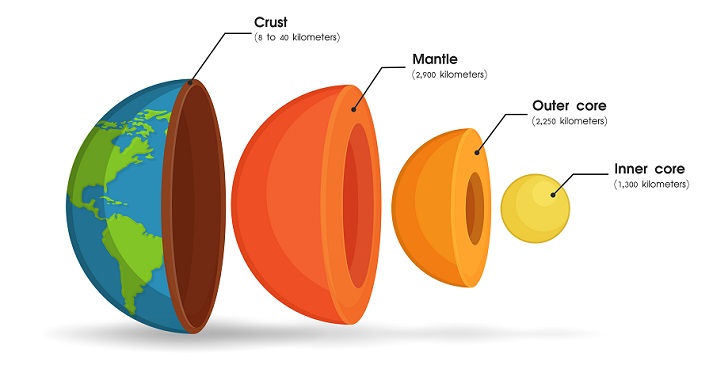
The earth has four main layers; each one gets hotter the deeper you go.
Crust
This is the outer layer where we live. It's made of rock and includes the land you walk on and the bottom of the oceans.
The crust is very thin compared to the rest of the earth—kind of like the skin on an apple. It's broken into large pieces called tectonic plates, which float on the soft layer beneath them.
Mantle
Beneath the crust is the mantle, the thickest layer. It's made of solid rock that moves slowly like warm, sticky taffy.
The lithosphere consists of the top part of the mantle and the crust. The bottom part of the mantle is hotter and under more pressure.
Movements in the mantle cause the crust to shift, break, and move around.
Outer Core
This layer is made of hot, melted metals like iron and nickel. It's completely liquid. The motion of this layer creates the earth's magnetic field, which protects us from harmful space radiation.
Inner Core
The very center of the earth is a solid metal ball. Even though it's incredibly hot—about as hot as the surface of the sun—it stays solid because the pressure is so strong it squeezes the atoms together tightly.
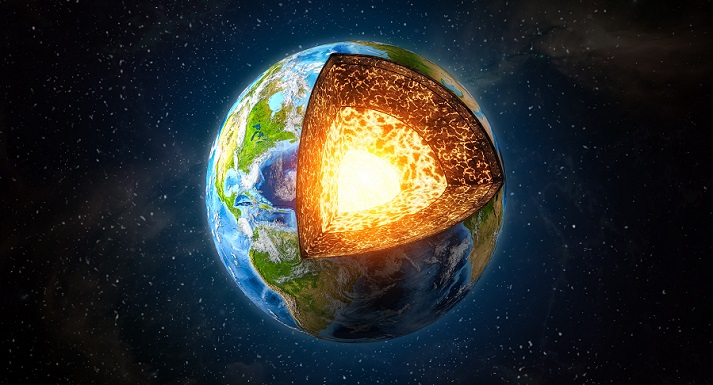
Scientists study earthquakes and volcanic eruptions to learn about these layers. When an earthquake occurs, waves move through the earth. Some travel through solid rock, but others stop when they hit liquid.
Scientists can tell what's inside the earth by watching how the waves behave without ever digging that deep.
How Volcanoes Form: When the Earth Breaks Through
Volcanoes are openings in the earth's crust where magma (melted rock) escapes to the surface. They often form at the edges of tectonic plates, where the earth's crust either pulls apart or collides.
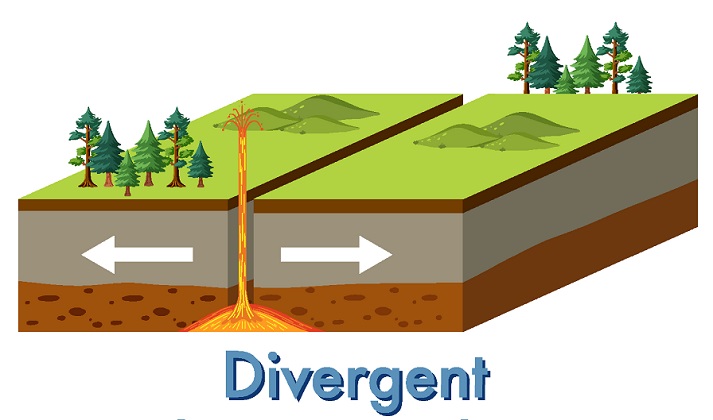
Divergent boundaries: At these spots, the plates move away from each other. Magma rises up to fill the gap, creating new crust. This usually happens on the ocean floor.
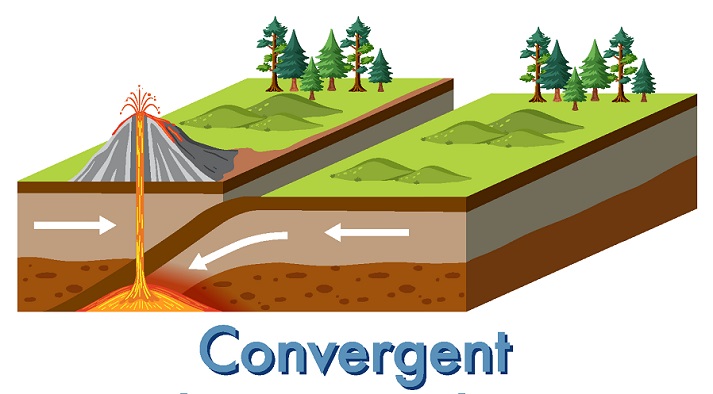
Convergent boundaries: Here, one plate dives under another in a process called subduction. The diving plate melts as it sinks into the hot mantle. That melted rock, or magma, rises to the surface, sometimes erupting as a volcano.
Some volcanoes don't form at plate edges. They form above hotspots—places where heat from deep inside the earth melts rock directly under the crust.
This is how the Hawaiian Islands were created, one eruption at a time.
When magma reaches the surface, it's called lava. Over time, lava and ash build up to create different types of volcanoes.
Types of Volcanoes: Not All Eruptions Are the Same
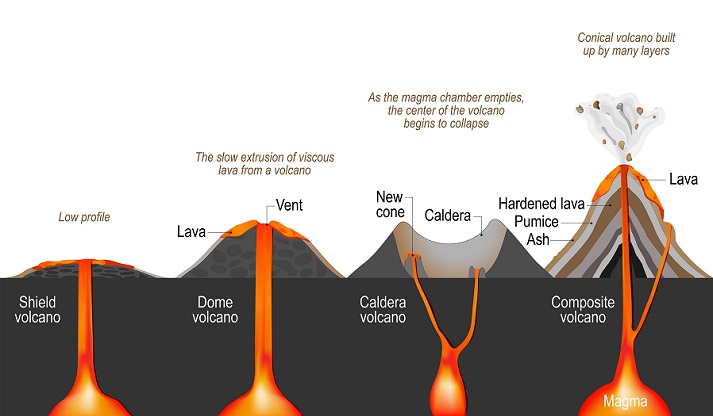
Shield Volcanoes
Shield volcanoes have a wide, low profile with gently sloping sides. They form from very thin and runny lava that flows easily and spreads out in all directions.
These volcanoes erupt calmly and steadily, building up large areas over time. This type of volcano formed the Hawaiian Islands.
Dome Volcanoes
Dome volcanoes form when thick, sticky lava slowly pushes its way to the surface but doesn’t flow far. Instead, it piles up around the vent, creating a rounded, dome-shaped mountain.
These volcanoes don’t usually erupt explosively, but the pressure from the trapped lava can cause sudden, powerful bursts.
Caldera Volcanoes
A caldera volcano forms when a massive eruption empties the magma chamber beneath it, causing the center to collapse. This leaves a large, bowl-shaped depression called a caldera.
Sometimes, a smaller cone can form in the center as new eruptions begin.
Composite Volcanoes (Stratovolcanoes)
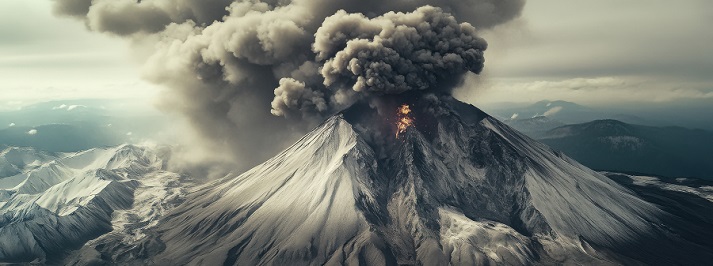
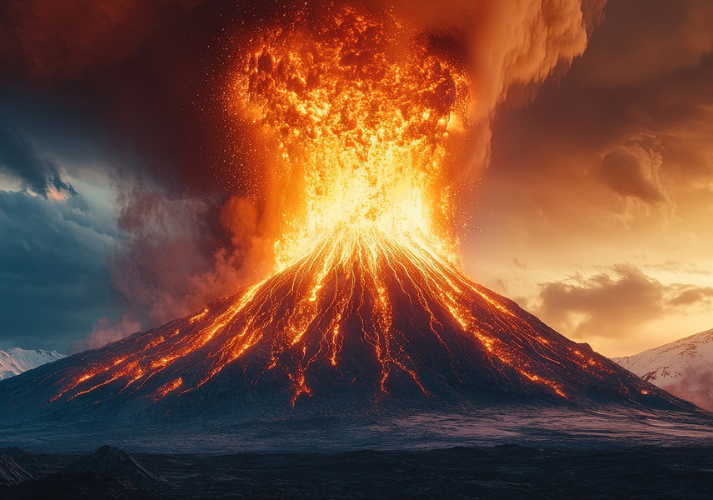
Composite volcanoes are tall, cone-shaped mountains made from many layers of hardened lava, ash, and volcanic rock. They are known for their explosive eruptions, which can send ash and gases high into the air and be very destructive.
Mount St. Helens is a well-known example.
Why Volcanoes Matter
Volcanoes help scientists learn what's inside the earth. They also change the earth's surface, making new land and affecting weather and air travel.
That's why volcanologists—scientists who study volcanoes—climb, measure, and monitor them. Although volcanoes are hard to predict, volcanologists try to find warning signs, like ground swelling or gas changes, that can give nearby communities time to prepare.
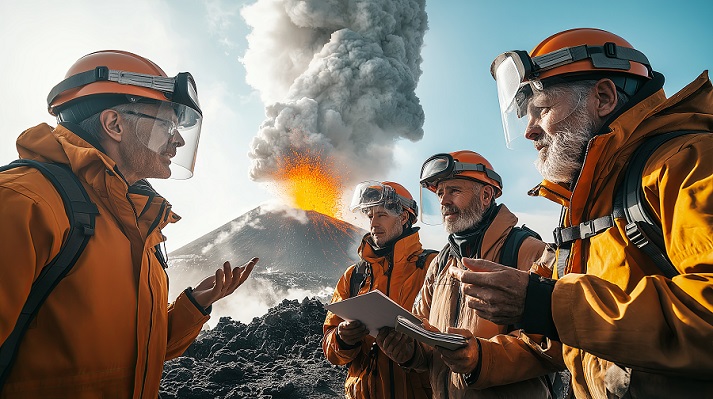
By studying volcanoes and the layers beneath us, we learn more about how the earth works and how it's constantly changing—even if we can't see it happening.
Now that you’ve explored the layers beneath the earth’s surface and the different types of volcanoes that form above it, it’s time to check your understanding.
In the Got It? section, you’ll answer questions, sort information, and apply what you’ve learned to show just how much you know about the earth's powerful inner forces.
Dive into some review and practice!

Supplies




 FAVORITE
 Like
Like