Sign Up
School Account Sign Up

Lesson ID: 12044
Discover how the moon moves the ocean! Learn how tides work, explore real sea creatures, and create your own tide pool.




Tug-of-War at the Beach!
It’s not a trick. It’s not magic. It’s something happening every day—thanks to our great big moon in the sky!

The ocean is always on the move, and one of the reasons it moves is because of the pull of gravity from the moon and the sun.
These amazing space neighbors are strong enough to move something as huge as the sea.
So next time the waves come in or go out, remember—you’re seeing moon power in action!
Moon Pull = Ocean Dance
The moon might be far away, but it’s strong. Its gravity tugs on the earth’s oceans, gently pulling the water toward it.
The sun helps, too, but the moon does most of the work. As the earth turns and the moon moves, that pull changes, and it makes the ocean rise and fall. These rising and falling water levels are called tides.
Tides happen every day—in fact, most places near the ocean have two high tides and two low tides every single day!
What Are High and Low Tides?
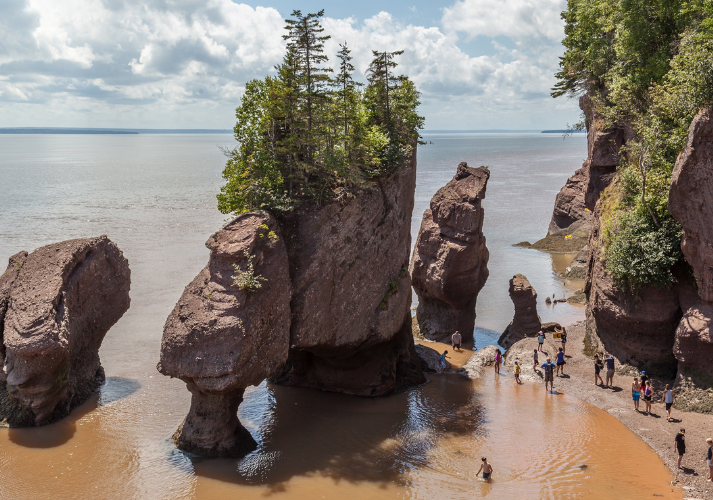
High tide is when the water level is at its highest. The waves come closer to the land.
Low tide is when the water level is at its lowest. More sand, rocks, and shells are visible.
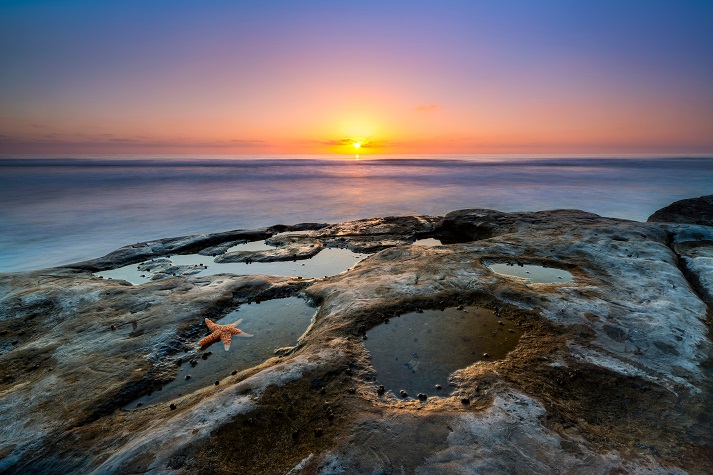
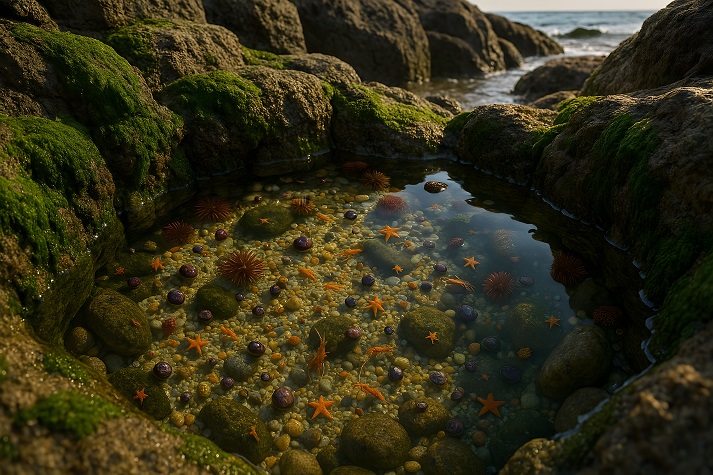
If you’ve ever seen tide pools full of sea creatures like crabs, sea stars, and even baby octopuses, you’ve seen what the ocean leaves behind during low tide!
The Moon’s Special Tidal Trick
Not all tides are the same.
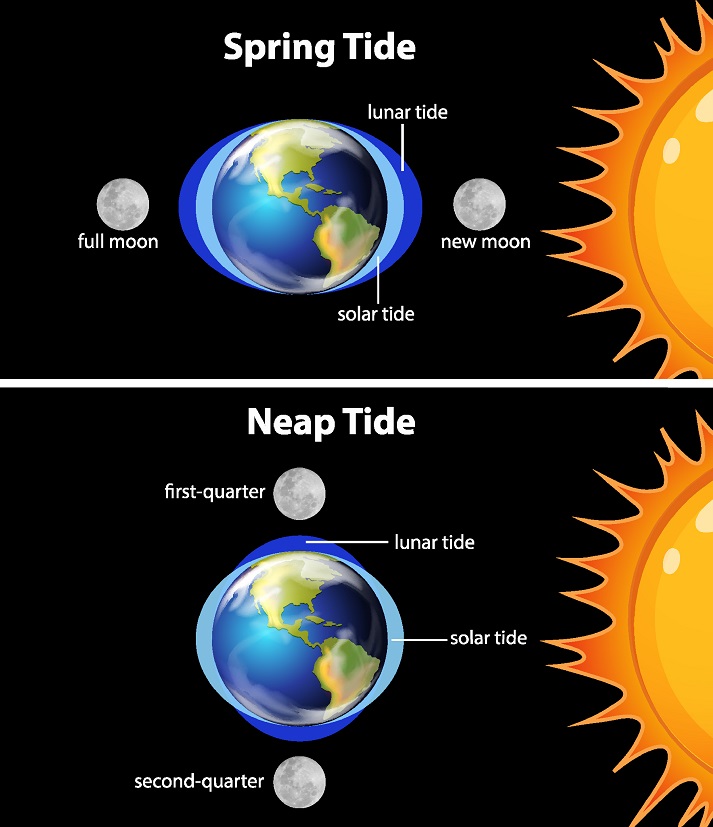
Some are extra high, and some are barely noticeable. It all depends on how the moon, the earth, and the sun line up.
Here’s the secret.
Starfish in a tide pool during a sunset
Spring Tides = SUPER high and low tides
→ Happens when the the earth, the moon, and the sun are in a straight line.
→ These occur during full moons and new moons
Neap Tides = Not-so-big tides
→ Happens when the earth, the moon, and the sun form a right angle.
→ These occur during the first and third quarter moons
Why This Matters to Ocean Life
Tides don’t just move water—they change the world for ocean animals.
When the tide comes in, water fills tide pools, letting sea creatures move and hunt.
When the tide goes out, some animals are left behind in rocky pools where they hide, rest, or wait for the next tide.
Animals like pufferfish, sea stars, eels, and baby octopuses all depend on the tides to survive!
If you visit a tide pool during low tide, you’re visiting a hidden ocean world that appears like magic.
Ready to Practice?
Now that you’ve learned how the moon and sun create tides and how those tides help ocean life, it’s time to practice what you’ve learned.
Get ready to explore, match, and sort some ocean-powered fun in the Got It? section!

Supplies


 FAVORITE
 Like
Like