Sign Up
School Account Sign Up

Lesson ID: 10382
Discover how giant clouds of gas and dust—called nebulae—create stars, color the universe, and connect to you! Explore, test your knowledge, and make your own glowing mini nebula.




What in the World (or Out of It) Is a Nebula?
Picture a place where stars are born, live wild lives, and die in bursts of color and light. That place is a nebula—a giant cloud of gas and dust floating in space.
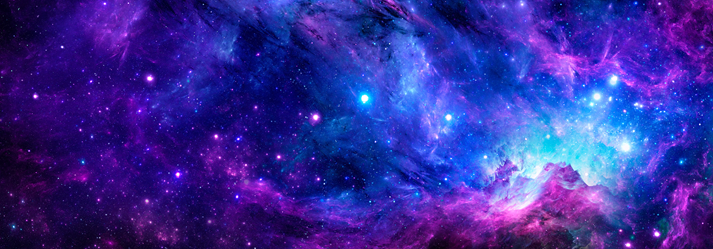
The word nebula comes from Latin for “cloud,” and that’s exactly what it is: an enormous space cloud made mostly of hydrogen gas and tiny grains of dust.
If you could see a nebula up close (don’t forget your space helmet), you’d notice it’s not solid at all. In fact, it’s almost empty!
A single cubic centimeter of air on Earth has about a thousand trillion atoms, but a cubic centimeter of a nebula might have only a few thousand. What makes a nebula so visible is its size—many stretch for dozens or even hundreds of light-years!
The Life Cycle of Stars (and How Nebulae Fit In)
Stars and nebulae are cosmic partners in a never-ending cycle. Stars are born in nebulae, and when they die, they create new nebulae.
Inside a star-forming nebula (sometimes called a stellar nursery), gravity begins to pull together gas and dust. As the material clumps together, it grows denser and hotter until—at about ten million degrees Celsius—a new star ignites!
Around that baby star, leftover dust and gas may form planets, moons, and asteroids. The Orion Nebula, one of the brightest in our sky, is full of newborn stars still glowing in their dusty cradles.
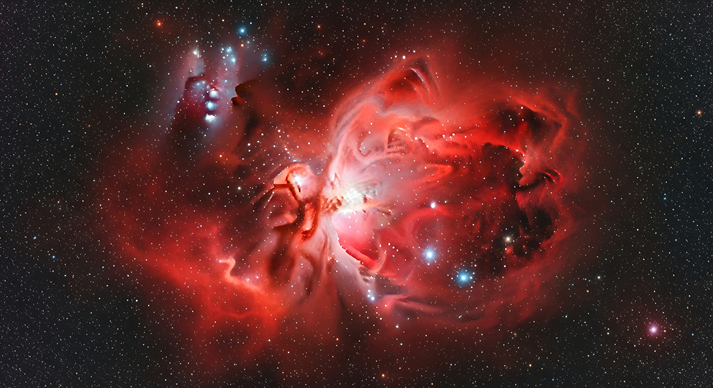
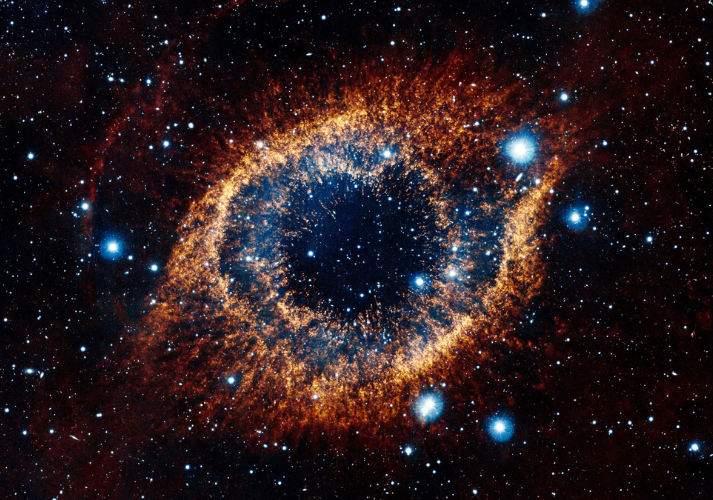
Later, when stars grow old, they release their own clouds of gas. A medium-sized star like our sun eventually becomes a planetary nebula—a glowing shell of gas surrounding its dying core.
Massive stars end even more dramatically in supernova explosions, blasting their outer layers into space and creating supernova remnants such as the Crab Nebula.
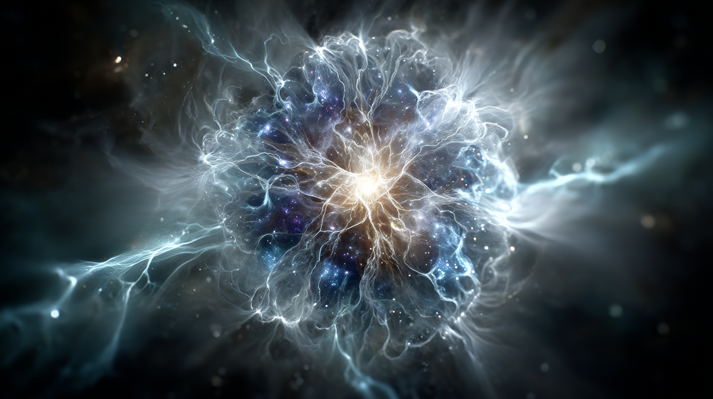
Each of these stages adds more material to space, recycling the universe’s building blocks again and again.
The Many Faces of Nebulae
Not all nebulae look or act the same. Astronomers classify them by how they shine—or don’t.
Emission Nebulae glow on their own. Nearby hot stars energize their gas, causing it to shine. Hydrogen glows red, oxygen glows green or blue, and together they paint the sky with cosmic color.
Reflection Nebulae don’t make light; they reflect it. Their dust bounces blue light from nearby stars—like cosmic mirrors.
Supernova Remnants are the remains of exploded stars—hot, expanding clouds that spread elements like carbon, oxygen, and iron across the galaxy.
Dark Nebulae are thick clouds of dust that block the light behind them. The famous Horsehead Nebula is one such shadowy shape.
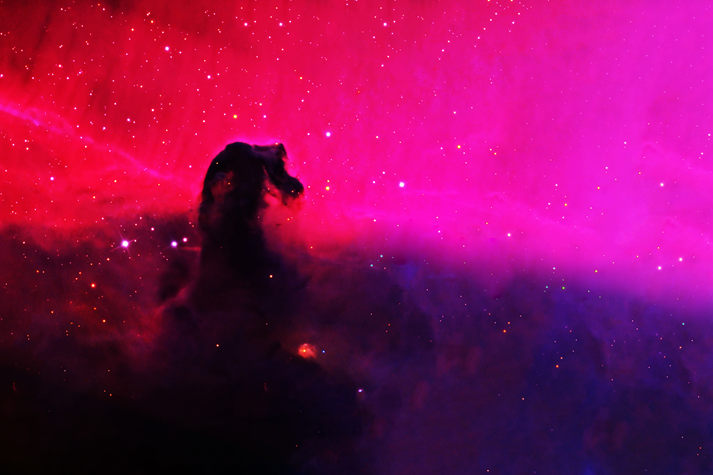
Together, these types of nebulae make up the raw material of the cosmos, shaping the birth and death of stars everywhere.
Nebulae Up Close: The Orion and the Eagle
Two nebulae have become celebrities in the night sky.
The Orion Nebula, visible just below Orion’s belt, is a massive star factory about 1,300 light-years away. Four powerful stars at its center, called the Trapezium, light up the gas around them.
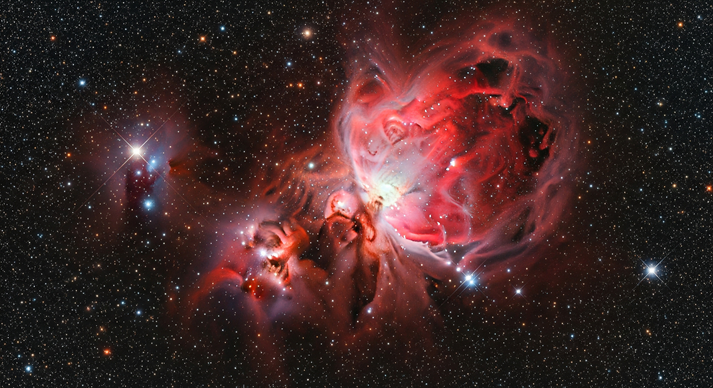
If you could see in infrared light, you’d spot hundreds of tiny, forming stars—some still surrounded by thick disks that might one day become solar systems.
Another is the Eagle Nebula, home of the breathtaking Pillars of Creation. These towering clouds are dense enough to resist the fierce radiation from nearby stars, sheltering new stars as they form within.
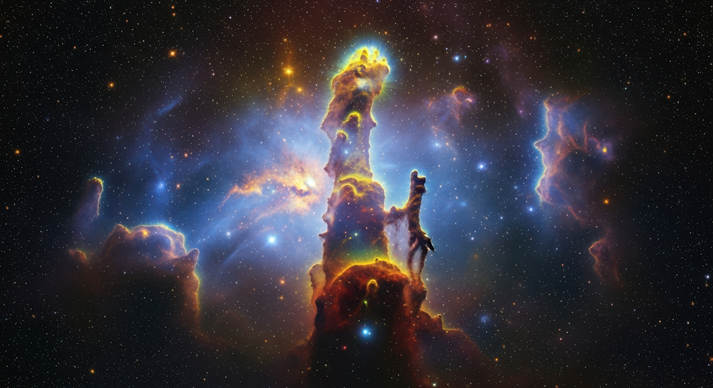
Over thousands of years, the same energy that creates them will also destroy them—proving that even in space, creation and destruction often go hand in hand.
Seeing the Invisible
Some nebulae seem dark or invisible to our eyes but glow brightly in infrared light, which can pass through dust.
Special telescopes—like those on the Herschel Space Observatory—can detect this heat, revealing hidden stars still forming inside. In a sense, astronomers are peeking into the universe’s nursery!
The Universe’s Beautiful Dust
It’s wild to think that the same stuff under your bed—dust—fills the vast reaches of space. But space dust isn’t like household dust. It’s made of silicates, carbon, and icy molecules, all essential ingredients for stars, planets, and maybe even life.
So the next time you see a picture of a colorful nebula, remember: it’s not just a pretty cloud. It’s the universe recycling itself—turning dust into stars, stars into nebulae, and nebulae back into dust again.
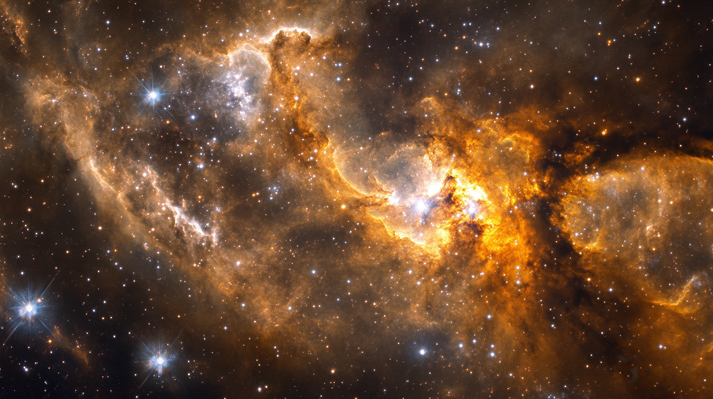
Now that you know how nebulae form, shine, and shape the stars, it’s time to see how much you’ve absorbed. In the next section, you’ll explore and practice what you’ve learned about these spectacular cosmic clouds.

Supplies
Suggested Reading



 FAVORITE
 Like
Like