Sign Up
School Account Sign Up

Lesson ID: 13755
Explore how World War II erupted, from the invasion of Poland to the Battle of Britain. Learn about the strategies, pivotal events, and resilience that shaped the war’s early days.




By the end of August 1939, Hitler had successfully united German-speaking people from Austria to Czechoslovakia into Nazi Germany.
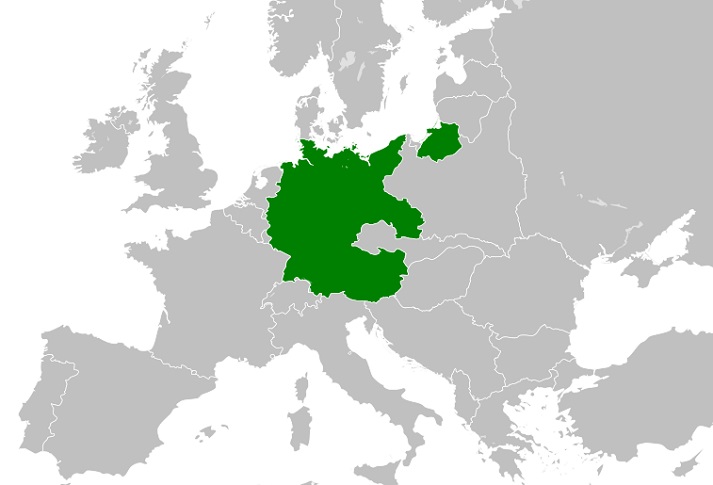
His non-aggression pact with the Soviet Union had just been sealed, ensuring Germany wouldn’t have to worry about a war with Russia.
If Hitler's only goal were to unite the German people, this would have been the perfect moment to stop. Germany was in a solid position to thrive.
But instead of stopping, Hitler made a decision the very next day that would ignite World War II and plunge the world into another devastating conflict.
The Polish Guarantee
Poland had a turbulent history, often vanishing from maps and reappearing as empires rose and fell. After World War I, Poland was re-established as part of the Treaty of Versailles, with new borders that stretched across Eastern Europe.
With Germany to the west and the Soviet Union to the east, Poland was like a buffer zone between two major powers. However, there was a problem: Germany and the Soviet Union could easily invade Poland.
Fearing that Hitler might push his ambitions beyond uniting the German-speaking world, Great Britain stepped in. In March 1939, Britain made a bold move by issuing a formal guarantee to Poland. The guarantee stated the following.
...in the event of any action which clearly threatened Polish independence, and which the Polish Government accordingly considered it vital to resist with their national forces, His Majesty's Government would feel themselves bound at once to lend the Polish Government all support in their power. They have given the Polish Government an assurance to this effect.
I may add that the French Government have authorised me to make it plain that they stand in the same position in this matter as do His Majesty's Government.
In simpler terms, Great Britain and France promised to come to Poland's defense if it were invaded.
On September 1, 1939, Hitler answered that question by launching an invasion of Poland. Just weeks later, the Soviet Union joined in from the east. By the end of September, Poland was carved up between Nazi Germany and the Soviet Union.
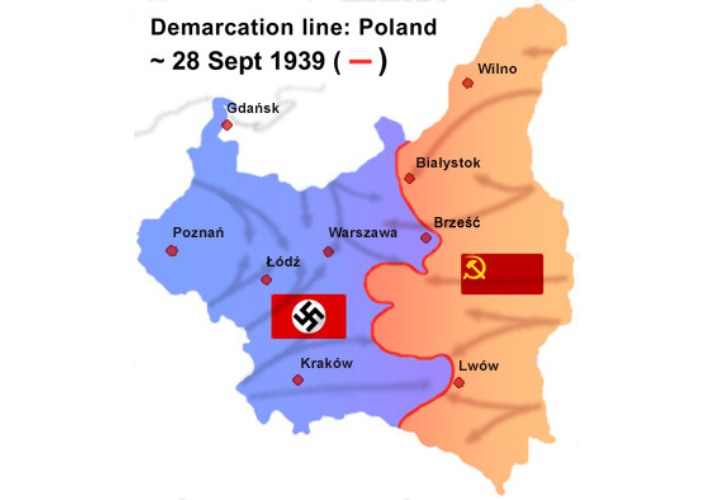
True to their word, Great Britain and France declared war on Germany, marking the official beginning of World War II. But curiously, they didn't declare war on the Soviet Union.
The Polish Guarantee had a loophole. It only promised to protect Poland from a German invasion, not a Soviet one. Western Europe still hoped to ally with the Soviet leader, Joseph Stalin.
Unfortunately, the Molotov-Ribbentrop Pact between Hitler and Stalin shattered that hope.
The Phony War
So, war was declared.
Not quite.
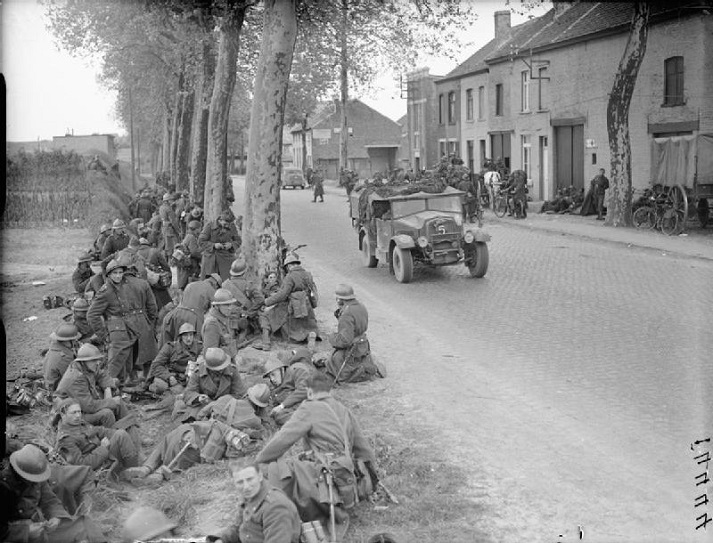
The first six months of World War II were so quiet on the Western Front that journalists called it the Phony War. Even the Germans had a term for it: sitzkrieg or sitting war.
Despite Britain and France declaring war, little action occurred on land. Both sides were hesitant to make the first move.
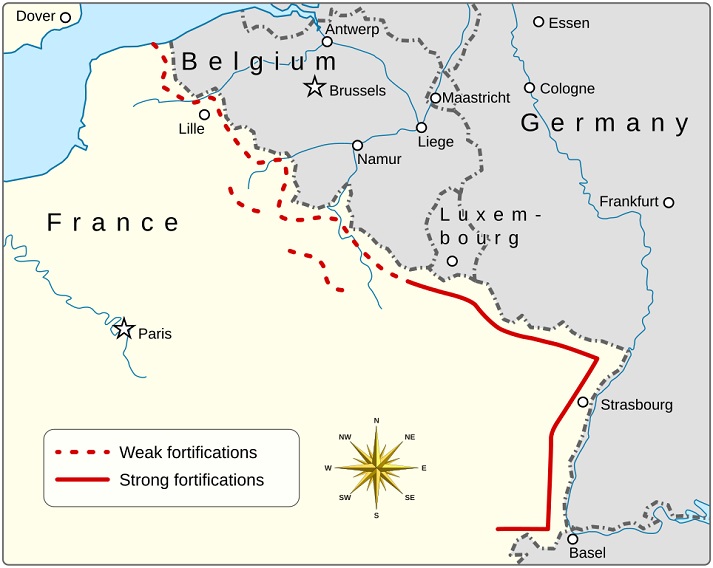
Germany was held back by the heavily fortified Maginot Line, a series of defenses along the French border designed to stop any invasion. For a while, it seemed like neither side wanted to test their strength.
As you watch this video about the beginning of World War II, pay attention to what the French and German militaries did — or didn't do — during this period.

Still, by May 1940, nine months after invading Poland, Hitler stood before the Eiffel Tower.
Hitler found a way around the Maginot Line by invading Belgium, using it as a distraction.
Expansion
The Phony War ended abruptly on May 10, 1940.
Hitler launched a massive invasion of The Netherlands, Belgium, and Luxembourg, forcing French troops to spread out along the Maginot Line. This strategic move allowed the Nazis to punch through the French defenses and surround the French and British forces.
By the end of May, Allied forces were trapped at Dunkirk, with no easy way to escape. Facing total destruction, the British Expeditionary Force, along with smaller French forces, had to be evacuated across the English Channel.
In an incredible display of courage, ships large and small set sail from England to rescue as many soldiers as possible.
Watch this footage of the Battle of Dunkirk to see just how desperate the situation was for these soldiers.
By June 4, 1940, the Battle of Dunkirk ended with the British forces safely off the continent.
However, Germany had successfully taken control of France, the Netherlands, and Belgium. The Nazi army was closing in on Paris.
The Battle of Britain
By the end of June 1940, France had surrendered, and the French government went into exile.
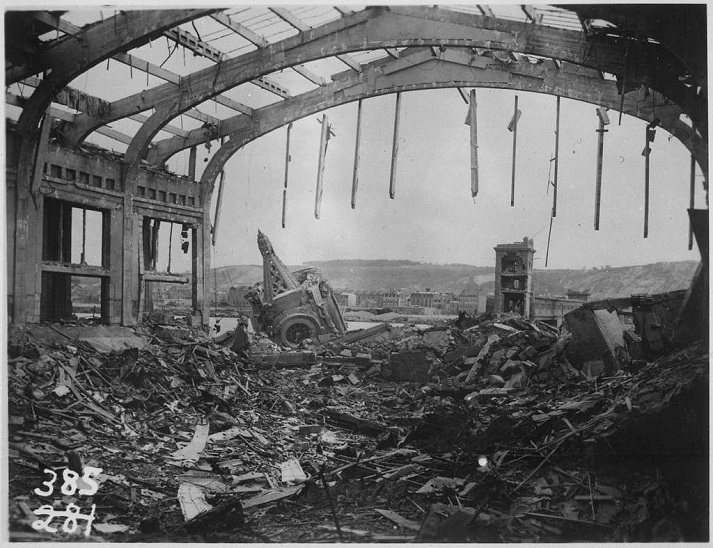
The Phony War had become a full-blown disaster for Western Europe in just two months. Most of the continent was now under Nazi control or in the hands of Hitler's ally, Benito Mussolini of Italy.
As Europe looked to July 1940, it seemed like Hitler was unstoppable. The only remaining obstacle was Great Britain. Isolated and under threat, Britain was all that stood between Nazi Germany and total domination of Western Europe.
Watch this animated speech by Winston Churchill and listen to how he prepares the people of Britain for the coming bombings. Notice the gravity of his words and the determination to survive.
With no help from the United States or the Soviet Union, it was up to this small island nation to stand up to the might of the German war machine.
Move into the Got It? section to review how the early strategies of World War II unfolded and how they played a crucial role in shaping the future of the war and the survival of Western civilization itself.

Supplies
Additional Resources


 FAVORITE
 Like
Like