Sign Up
School Account Sign Up

Lesson ID: 14386
Discover how scientists add “leap seconds” to keep our clocks in sync with Earth’s rotation and explore how even one extra second can impact technology, science, and everyday life.




Time Stood Still… for One Second.
Imagine watching the clock strike midnight, and suddenly—nothing happens. For one brief moment, the clock doesn’t move.
No tick. No tock. Just one mysterious second hangs in the air before time continues like nothing happened.
This isn’t science fiction. It’s real—and it’s called a leap second. Since 1972, scientists have occasionally hit “pause” on Earth’s official clocks to keep them in sync with our slowly turning planet.
It’s proof that time—the thing we trust to run our lives—isn’t as solid as we think.
What Is a Leap Second, Anyway?
We all know a leap year adds an extra day every four years to keep the calendar in line with Earth’s orbit. But a leap second is sneakier—it adds one second to the world’s clocks whenever we fall behind by just a hair.
Because Earth is a little inconsistent. It doesn’t spin at a perfect speed. Earth’s rotation slows down ever so slightly over time, mostly because of the gravitational pull of the Moon. (Yep, the tides are literally stealing our seconds.)
Tiny shifts in the planet’s molten core and atmosphere also change how fast it spins.
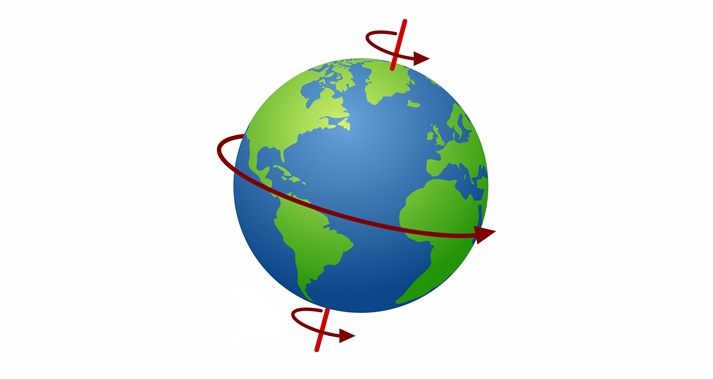
So, every few years, scientists notice that the planet’s rotation and our clocks aren’t perfectly synced anymore. When that difference approaches a full second, they give time a “micro-adjustment.” It’s like hitting the snooze button on the entire planet.
Who Decides When to Add a Second?
The people in charge of time don’t wear capes, but they might as well. The International Earth Rotation and Reference Systems Service (that’s a mouthful, so let’s just call them timekeepers) monitors Earth’s rotation with atomic clocks and satellites.
When they detect that atomic time and Earth’s rotation differ by about 0.9 seconds, they call for a leap second—either on June 30 or December 31. At that moment, the last minute of the day doesn’t have 60 seconds… it has 61.
That means your digital clock might go like this.
11:59:58 ? 11:59:59 ? 11:59:60 ? 12:00:00.
Congratulations—you’ve lived through a second that technically shouldn’t exist.

Atomic Time vs. Planet Time
Here’s where things get a little scientific.
Atomic clocks measure time using the vibrations of atoms—specifically, cesium atoms—which are so precise they lose less than a second every millions of years.
That’s the basis of Coordinated Universal Time (UTC), the time standard the whole world follows.
But while atomic time is steady and flawless, Earth’s rotation isn’t. It wobbles, slows, and speeds up slightly because it’s a spinning sphere being tugged by gravity, winds, and tides.
If we ignored those tiny changes, “solar time” (based on Earth’s rotation) and atomic time would slowly drift apart. Eventually, noon wouldn’t match when the sun is overhead anymore—and our clocks would be out of sync with the planet beneath our feet.
The leap second keeps human time and planetary time aligned.

When Time Glitches the Internet
You might not notice a leap second—but your devices definitely do. Computers, satellites, and stock exchanges depend on precise timing. When an extra second sneaks in, things can get… messy.
In 2012, several websites briefly crashed because their systems couldn’t handle that one extra tick. Airlines, social media, and GPS networks had to update their systems to recognize the “phantom second.”
To a computer, an unexpected time jump can cause chaos—but to scientists, it’s just another day in the life of a living, breathing planet.
Some tech experts have even suggested eliminating leap seconds altogether. They argue that our technology is better off running on atomic time alone, even if that means Earth’s day and the official clock slowly drift apart.
Others believe keeping our time linked to the planet’s rhythm is too important to lose. For now, leap seconds remain—occasional, unpredictable, and slightly rebellious.
Time Isn’t Fixed—It’s a Collaboration
Leap seconds remind us that time isn’t something nature hands us—it’s something we manage together. Humanity measures, adjusts, and agrees on what time is.
That one extra second every few years may not seem like much, but it represents the delicate balance between science, technology, and our planet’s heartbeat.
Time, it turns out, isn’t a single ticking line—it’s a dance between Earth, the moon, and us.
You’ve learned that time isn’t just slipping away—it’s occasionally paused by the people who keep the world ticking in sync.
In the Got It? section, you’ll test what you’ve learned, explore how timekeeping affects daily life, and see how one second can cause a global ripple. Get ready to race the clock—literally!

Supplies





 FAVORITE
 Like
Like