Sign Up
School Account Sign Up

Lesson ID: 12998
Turn your best ideas into stories! Learn how to brainstorm, organize, and plan your writing using creative tools that make writing easier—and more fun.




The Blank Page Problem
You sit down to write, open your notebook or a blank document, and nothing. Not one brilliant word. Your brain is suddenly emptier than your paper.
Every writer, from best-selling authors to classroom storytellers, knows that stuck feeling.
But here’s the truth: great writing never begins with perfect sentences. It begins with messy ideas. Writers doodle, list, map, and question before they ever write a full paragraph.
That early part of the process—when you explore, connect, and collect your thoughts—is called prewriting, and it’s where creativity really starts.
So before you panic over punctuation or word choice, learn how to fill that blank page with possibilities.

Step 1: Brainstorm Without Limits
Grab your pencil and play a quick game of “What If?”.
Use the Brainstorm Game, found under Downloadable Resources in the right-hand sidebar, to explore all the big questions—Who? What? When? Where? Why? How?
For example, if you want to write about “growing a plant,” ask:
Who grows it?
What kind of plant is it?
Where does it grow best?
When does it bloom?
Why is it special?
How do you take care of it?
Don’t worry about writing in complete sentences—just fill your chart with quick notes and ideas. This step is pure creativity, so there are no wrong answers.

Step 2: Make Connections With a Mind Map
Once you have ideas, use the Mind Mapping Template to organize them (Downloadable Resources).
Write your main idea in the center circle—maybe it’s “My Dream Adventure” or “How to Bake Cookies.”
From there, add colorful branches for related thoughts. One branch might be “supplies,” another “steps,” and another “tips or tricks.”
Mind maps work because they use pictures, color, and keywords—not full sentences. The goal is to see how your thoughts connect.

Step 3: Plan Your Story With Maps or Storyboards
Now that your ideas are flowing, it’s time to shape them into a clear plan. You can choose between two templates depending on your style (Downloadable Resources).
Story Map Template: Use this to plan the setting, time, place, characters, problem, plot, and resolution. It’s perfect for stories and creative writing.
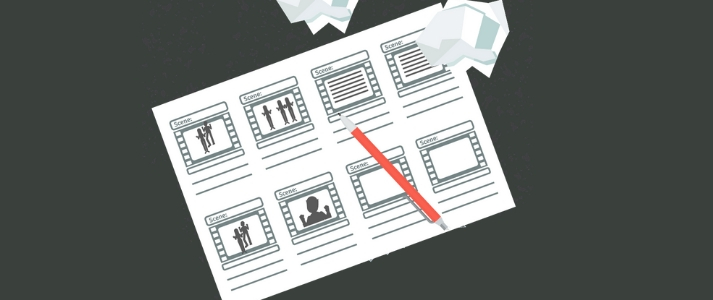
Storyboard Template: Use this if you think in pictures or want to outline a sequence of events, like a comic or video. Sketch each major scene and write short notes under each box.
Both tools help you visualize your story before you start writing paragraphs, so you always know where you’re headed.
Step 4: Find Inspiration
Choose a topic from the Prewriting Prompts found under Downloadable Resources in the right-hand sidebar. Try one that sparks curiosity, like:
“Create your own holiday. What would you celebrate?”
“Write about a goal you accomplished recently. How did it feel?”
“Describe your favorite hobby or how you learned to do it.”
These prompts come straight from the minds of other creative writers who know what it’s like to need a jumpstart.

Step 5: Reflect and Choose
Now that you’ve brainstormed, mapped, and explored, review your work.
Choose the one that makes you say, “Yes—I can’t wait to tell this story!”
That’s your perfect starting point.

Next, head to the Got It? section to take your favorite prewriting plan and put it into action. Practice turning your organized ideas into a strong beginning for your story or essay.
The fun part—writing—starts next!

Supplies
Additional Resources





 FAVORITE
 Like
Like