Sign Up
School Account Sign Up

Lesson ID: 12917
Master the math behind measuring solutions—learn to calculate molarity, percent concentrations, and more with real-world examples.




What’s in That Sip?
Think about lemonade. Add too little sugar, and it’s sour. Add too much, and it’s undrinkably sweet. Add just the right amount, and it’s refreshing perfection.
The answer lies in solubility calculations.
Whether you’re mixing chemicals in a lab or making a sports drink in your kitchen, understanding how to measure solution concentrations is critical—and it all starts with knowing how to count things you can’t even see.
How Do You Measure Dissolved Substances?
The amount of a substance dissolved in a solution is called its concentration.
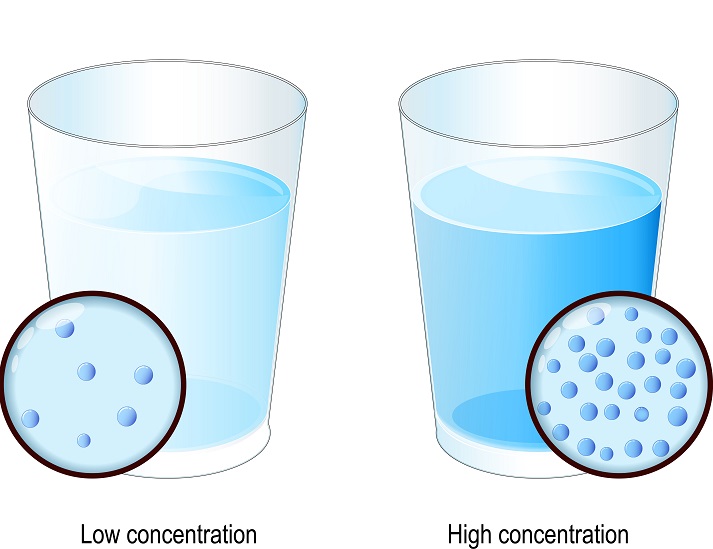
Chemists have several ways to calculate concentration, and the one they choose depends on what they’re mixing (solids, liquids, gases) and how the information is presented (mass, volume, moles).
Here is a breakdown.
Molarity: Counting Invisible Particles
Molarity (M) is the most common unit of concentration in chemistry. It tells you how many moles of solute are dissolved in liters of solution.
A mole is just a big counting number—like a dozen, but much bigger.
A mole equals 6.02 × 10²³ particles. That’s 602 sextillion atoms, molecules, or ions—so many that we use this count like a “chemist’s dozen.”
This number is known as Avogadro’s number, named after Amedeo Avogadro, who first proposed that equal volumes of gases at the same temperature and pressure contain equal numbers of particles.
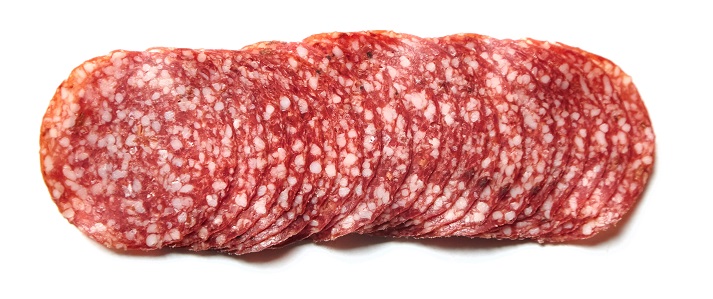
Analogy: Just like you don’t buy 43 slices of salami—you buy a pound—chemists don’t count out individual molecules. They measure by moles.
The molarity formula is: M = moles of solute / liters of solution.
| M | = | moles of solute | |
| liters of solution |
Example: Dissolve 4.2 moles of NaCl in 2.5 liters of water.
| M | = | 4.2 mol | = | 1.68 M | |
| 2.5 L |
Even a low molarity, like 0.01 M, can be dangerous if the solute is a strong acid or base. Concentration tells you strength, but the chemical's nature matters, too.
Percent by Weight: Solid Mixtures
If both parts of a mixture are solids, you use percent weight by weight (% w/w): % w/w = 100 × (mass of solute / mass of total solution)
| % w/w | = | 100 | x | ( | mass of solute | ) | |
| mass of total solution |
Example: Mix 20 g of NaCl with enough sand to make 200 g of mixture.
| % w/w | = | 100 | x | ( | 20 | ) | = | 10% NaCl by weight | |
| 200 |
This is most useful when combining solid substances.
Percent by Volume: Liquid-Liquid Solutions
If you’re mixing two liquids, use percent volume by volume (% v/v): % v/v = 100 × (volume of solute / volume of solution)
| % v/v | = | 100 | x | ( | volume of solute | ) | |
| volume of solution |
Example: Mix 20 mL of methanol into enough water to make 200 mL of solution.
| % w/w | = | 100 | x | ( | 20 | ) | = | 10% methanol by volume | |
| 200 |
You’ll see this on bottles of rubbing alcohol or hand sanitizer.
Percent Weight by Volume: Solid-Liquid Solutions
When a solid dissolves into a liquid (like salt in water), you often use percent weight by volume (% w/v): % w/v = 100 × (grams of solute / mL of solution).
| % w/v | = | 100 | x | ( | grams of solute | ) | |
| mL of solution |
Example: Dissolve 0.5 g of NaCl in 200 mL of water.
| % w/w | = | 100 | x | ( | 0.5 | ) | = | 0.25% w/v NaCl | |
| 200 |
This is particularly useful for medicines and laboratory solutions, where precise dosing is crucial.
Molar Mass and Why It Matters
To calculate molarity, you often need to find molar mass, which is the mass of one mole of a substance.
Use the atomic masses from the periodic table to add up the molar mass of a compound. For example, H?O (water) has a molar mass of about 18.01 g/mol.
So 18.01 grams of water contains one mole of water molecules.
Now that you’ve mastered the core formulas and the idea of the mole, it’s time to try some calculations for yourself.
Head to the Got It? section to convert mass to moles, compare solution concentrations, and use real-world examples to test your skills.
See how concentrated your knowledge really is!

Supplies
Additional Resources



 FAVORITE
 Like
Like