Sign Up
School Account Sign Up

Lesson ID: 12809
See how invisible air can hold up water! Discover air pressure through fun science and hands-on projects.




Can You Turn Water Upside Down?
Most people would expect a big splash.
But guess what? The water can actually stay inside the glass—even upside down.
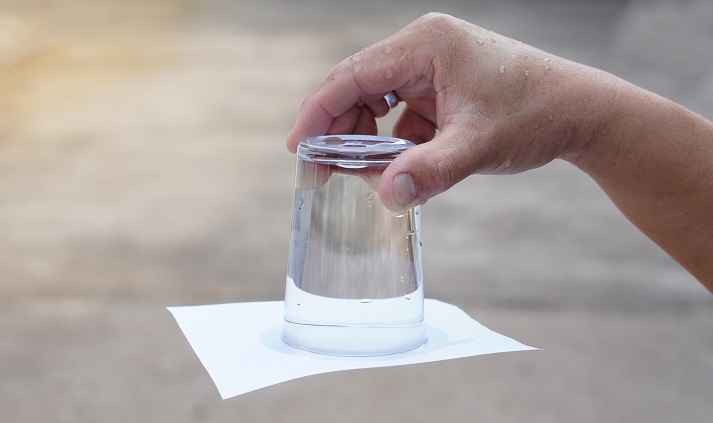
Not at all. It’s air pressure at work!
You’re about to explore the invisible power of air and how it pushes and holds things in surprising ways.
Get ready to think like a scientist and discover how air makes water stick where it doesn't belong!
Meet Air: The Invisible Pusher
Air might be invisible, but it’s always there. It’s made up of tiny particles called molecules that move around all the time.

These moving molecules push on everything they touch. That push is called air pressure.
Even though you can’t feel it, air is pushing on your skin, your clothes, your books—even your cereal bowl! The pressure comes from all directions, which is why you don’t notice it most of the time.
The Upside-Down Water Test
Here’s what happens in the upside-down glass experiment.
Fill a glass to the top with water.
Place a flat piece of cardboard over the opening.
Hold the card in place with your hand and flip the glass upside down.
Carefully let go of the card… The water stays inside the glass!
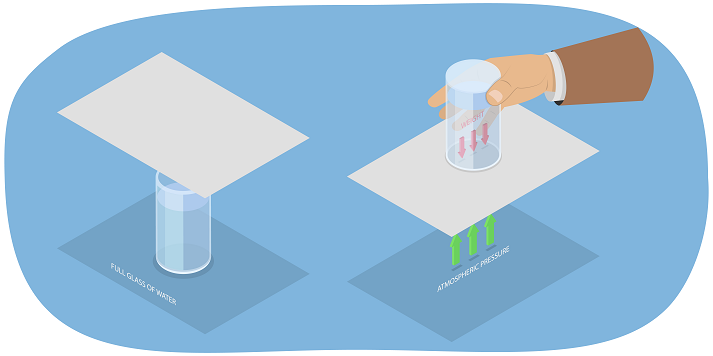
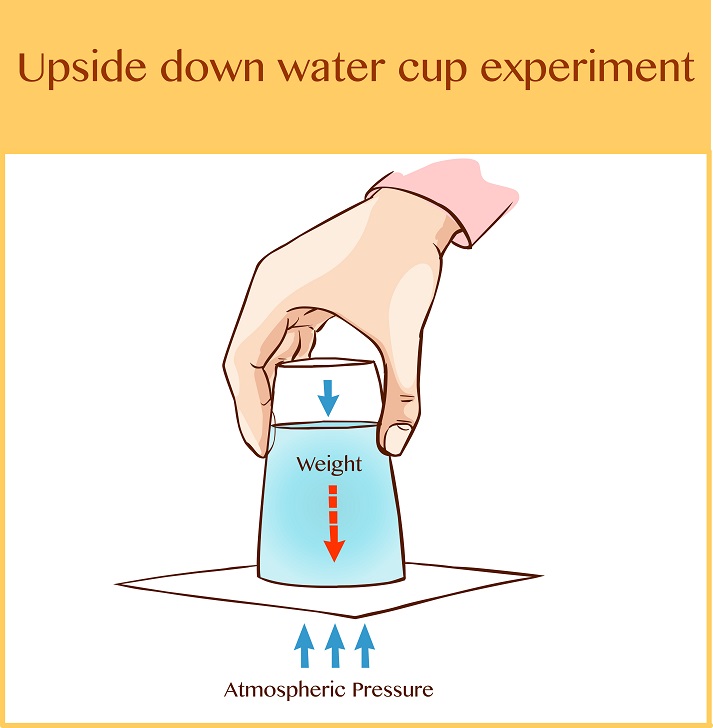
Because the air underneath the card is pushing up harder than the water is pushing down. There’s no magic—it’s all thanks to air pressure.
What If There Were No Air?
If the card didn’t make a tight seal, or if there were a big hole in the cup, air could sneak in and take the water’s place. That would let the water fall out.
But when the seal is tight, the air pressure pushes up on the card, and the water can’t fall.
That’s why the air pressure outside the glass matters—it’s like an invisible hand holding everything in place.
What You’ve Discovered
Air is made of molecules that take up space and push on things.
Air pressure is real, even though you can’t see it.
Air pressure can hold water upside down!
You’re starting to see how powerful air really is. Now, it’s your turn to test your understanding!
Go to the Got It? section.

Supplies



 FAVORITE
 Like
Like