Sign Up
School Account Sign Up

Lesson ID: 12279
Meet Florence Nightingale, The Lady with the Lamp, and discover how she helped change nursing during the Crimean War.




Imagine walking into a hospital and seeing dirty floors, crowded rooms, old bandages, and not enough food for the sick people inside.
Yikes. That is not a hospital. That is a “please-let-me-leave-immediately” situation.
Today, hospitals are expected to be clean, well-organized, and staffed by trained doctors and nurses. A big reason for that change was a determined nurse named Florence Nightingale.
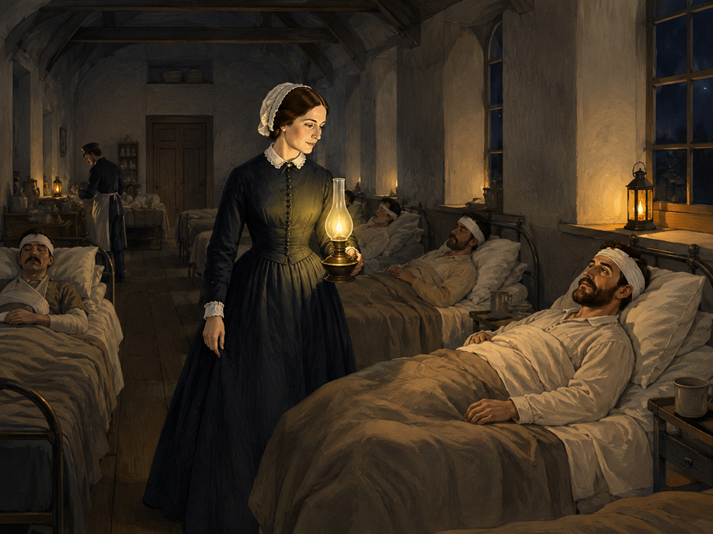
Florence Nightingale became known as The Lady with the Lamp because she walked through hospital rooms at night carrying a lamp as she checked on wounded soldiers. She did not just help patients feel better. She helped change the way hospitals cared for sick and injured people.
International Nurses Day is celebrated every year on May 12. That date was chosen because it is Florence Nightingale’s birthday.
Let’s find out.
The Crimean War
The Crimean War took place from 1853 to 1856. It was fought mainly on the Crimean Peninsula, near the Black Sea.
Russia fought against an alliance that included Britain, France, the Ottoman Empire, and Sardinia.
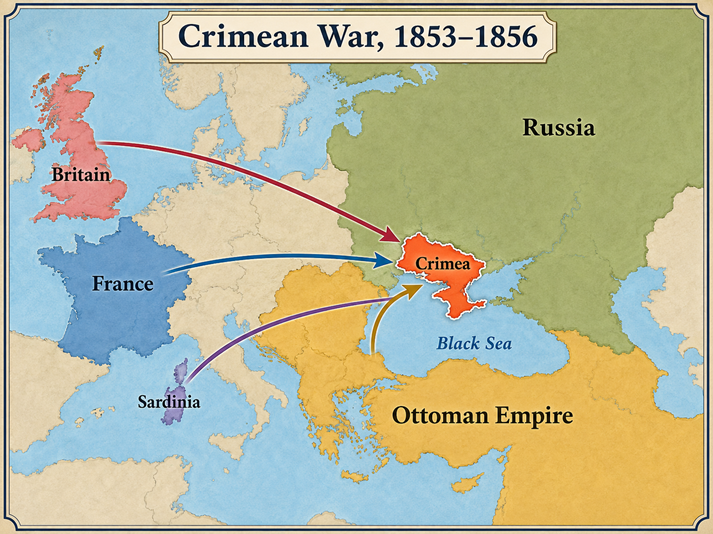
The war was partly about power and control. Russia wanted more influence in areas controlled by the Ottoman Empire, especially near important waterways and trade routes. Britain and France did not want Russia to become too powerful in that region, so they joined the war against Russia.
Like most wars, the Crimean War caused terrible suffering. Many soldiers were hurt or killed in battle. Even worse, many soldiers died from disease, infection, and poor hospital conditions.
The Crimean War is sometimes called one of the first modern wars because new technology changed how people fought and learned about the war.
Some of these changes included the following.
The telegraph helped reporters send news faster than ever before.
Railroads helped move supplies and soldiers.
New weapons made fighting more dangerous.
War reporters sent stories back home, so people far away could read about what was happening.
Photography was used to show scenes connected to the war.
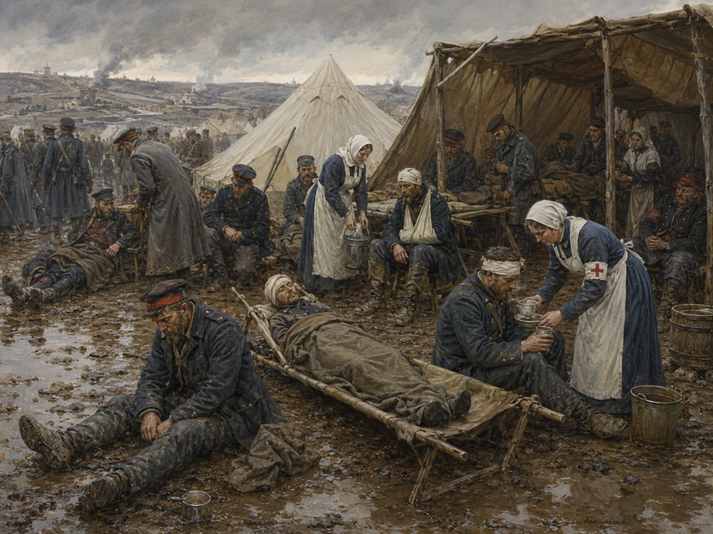
For the first time, many people at home could learn about soldiers' suffering much more quickly. That helped the public understand how awful the conditions were.
And those awful conditions helped lead to one very important change: better nursing care.
Florence Nightingale
Florence Nightingale was born on May 12, 1820. She was named after Florence, Italy, where her parents were visiting.
Florence grew up in a wealthy British family. Her family had servants, comfortable homes, and many social opportunities. At that time, many wealthy young women were expected to attend parties, marry, and manage a household.
Florence had a different plan.
She wanted to become a nurse.
That may not sound shocking today, but it was unusual in Florence’s time. Hospitals were often dirty, crowded, and dangerous. Nursing was not always seen as a respected job. Florence’s family did not want her to become a nurse because they thought the work was too difficult and unpleasant.
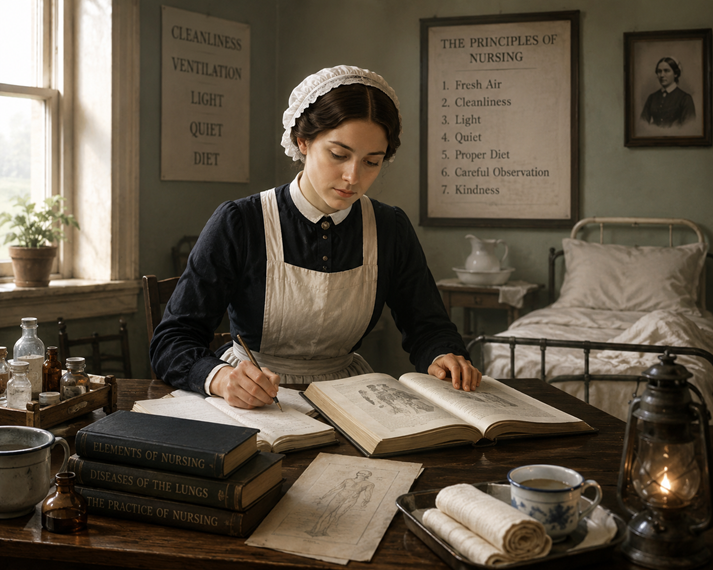
Florence did not give up. In 1851, she traveled to Germany to study nursing. The work was hard, but she loved it. She believed nursing was her calling, and she wanted to help people who were sick or injured.
Florence Goes to War
In 1854, British soldiers were fighting in the Crimean War. Army hospitals were overflowing with injured men. There were not enough nurses, and the conditions were terrible.
Soldiers often did not have clean beds, fresh food, clean bandages, or safe surroundings. Many died from infections and diseases that spread through the hospital.
Florence Nightingale traveled to the army hospital with a team of nurses.
When she arrived, she got to work. And by “got to work,” we mean serious superhero-with-a-mop energy.
Florence worked extremely long hours, sometimes up to 20 hours a day. She helped make the hospital cleaner and safer. She made sure soldiers had fresh food. She cleaned hospital beds. She used clean bandages on wounded soldiers. She helped organize supplies and improve care.
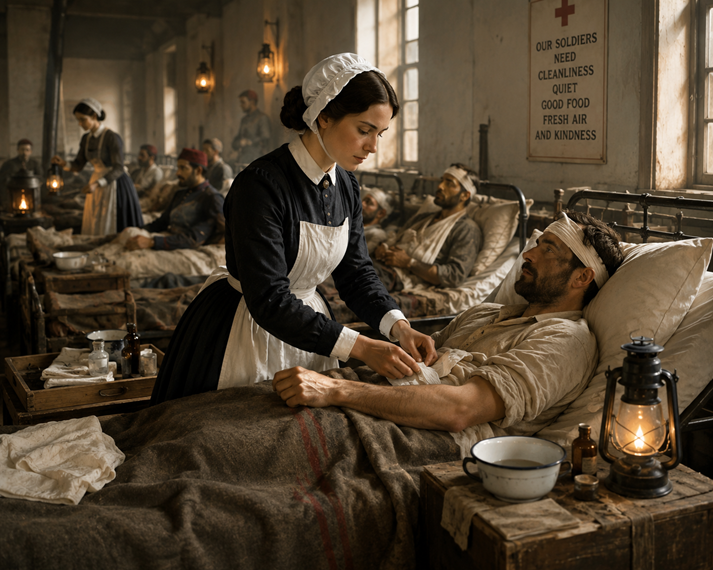
These changes sound simple now, but they were powerful. Cleaner hospitals meant fewer infections. Better food helped soldiers grow stronger. Clean bandages helped wounds heal. Organized care helped patients receive the help they needed.
Soon, fewer soldiers were dying.
The Lady with the Lamp
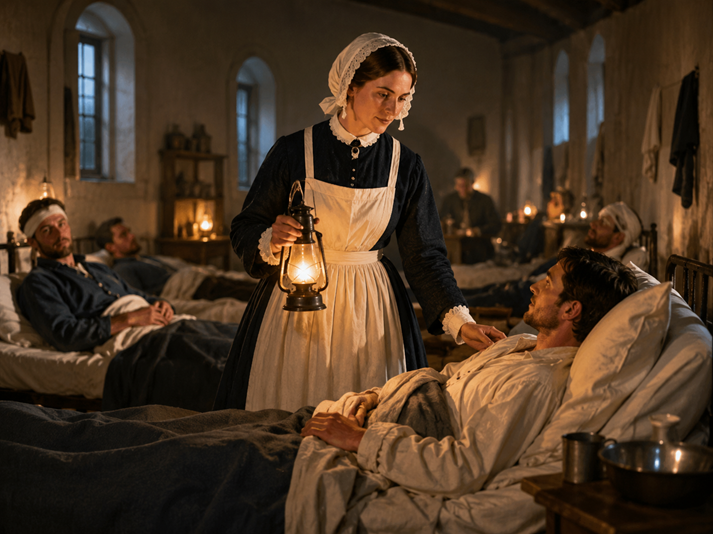
Florence did not only care for soldiers during the day. At night, she walked through the hospital carrying a lamp. She checked on injured soldiers, comforted them, and talked with them.
She also helped soldiers write letters to their families. That mattered because many soldiers were far from home, frightened, and in pain. A letter could bring comfort to the soldier and to the family waiting for news.
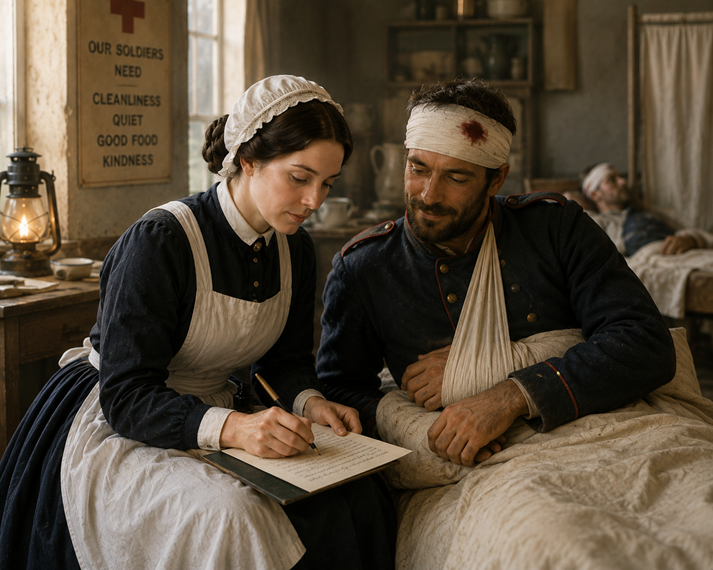
The soldiers began calling Florence The Lady with the Lamp.
That nickname showed how much they respected and appreciated her. To them, her lamp meant someone cared.
Florence’s Lasting Impact
When Florence returned to England, many people saw her as a heroine. Queen Victoria even wrote her a letter to thank her for her work.
Florence continued working to improve hospitals and nursing. She believed hospitals should be cleaner, safer, and better organized. She also believed nurses should be trained.
Her work helped nursing become a respected profession. Florence later received the Order of Merit, a special honor in Britain. She was the first woman to receive it.
Florence Nightingale did not stop a war. She could not erase the suffering soldiers faced.
But she did something incredibly important.
She looked at a terrible situation and asked, “How can this be better?”
Then she worked to make it better.
Because of Florence Nightingale, nursing changed forever. Hospitals became cleaner. Patient care improved. Nurses received better training. Sick and injured people had a better chance of surviving.
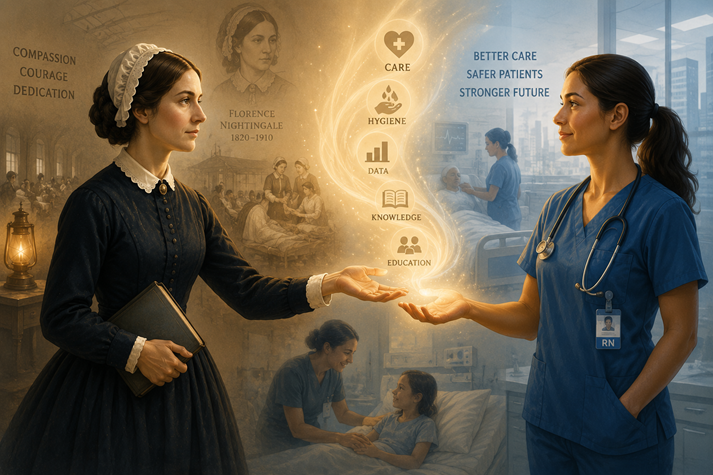
The Crimean War was destructive, but Florence Nightingale helped bring something good out of it.
In the Got It? section, review what you learned about Florence Nightingale and the Crimean War. Then, see if you can spot how one person’s choices helped change history.

Supplies


 FAVORITE
 Like
Like