Sign Up
School Account Sign Up

Lesson ID: 11961
Explore the exciting world of Egyptian mythology through storytelling, games, and creativity. Meet gods, build myths, and create your own legend!




Secrets of the Sand: Discovering Egyptian Mythology
Imagine standing at the edge of a huge, golden desert. The sun beats down from above, and in the distance, you spot a giant statue with the body of a lion and the head of a human.
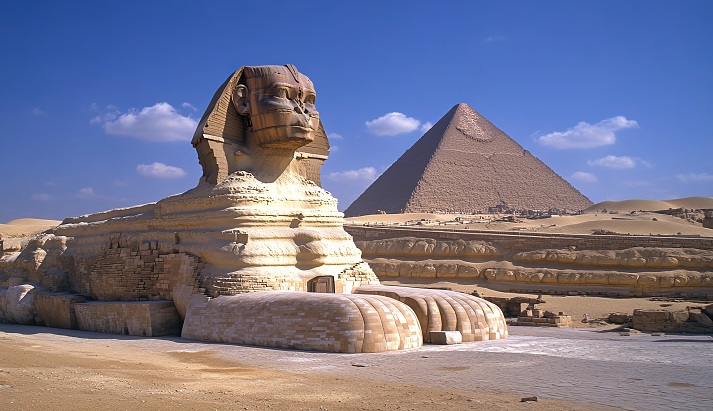
You've just entered the land of ancient Egypt, a place full of wonders, mysteries, and gods!
But these gods aren’t the kind you might be used to hearing about. Some have animal heads. Some control the sun, the sky, or even the afterlife. And they all have stories to tell.
Take a journey back in time and uncover the powerful, puzzling world of Egyptian mythology!
What Is Mythology, Anyway?
A myth is a story people once believed to be true. It helped explain the world around them—things like where the sun goes at night, what causes a river to flood, or what happens after someone dies.
Just as many people today use religion to answer big questions about life, the ancient Egyptians did the same, using their gods and goddesses to guide their understanding of nature, creation, and the afterlife.
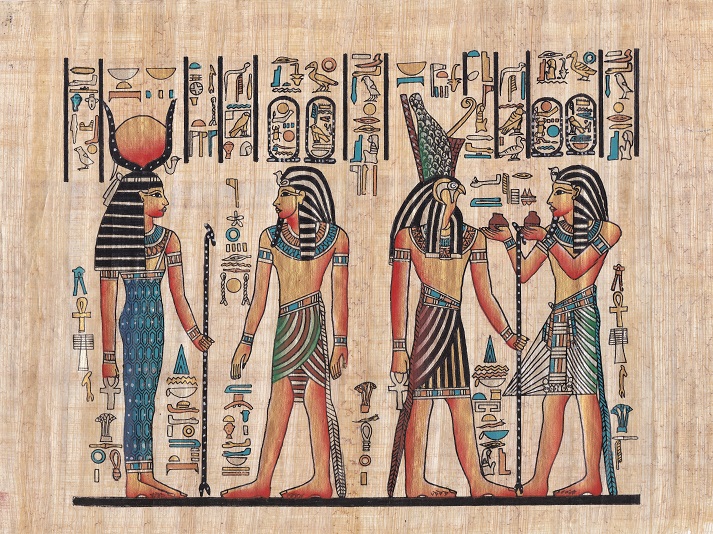
How the World Began (According to the Egyptians)
The Egyptians had several different stories about how everything began. Here are a few.
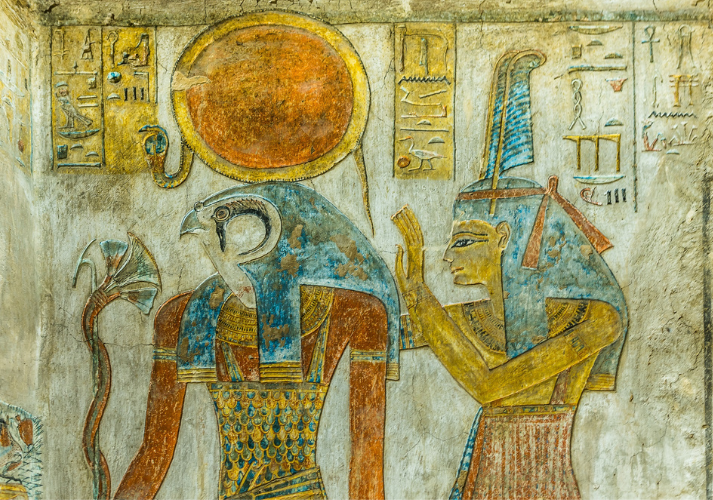
Ra’s Creation: The most famous myth states that Ra, the sun god, appeared out of complete darkness and chaos. He made the world by creating other gods.
Ptah’s Thought: Another version says Ptah created the universe just by thinking and speaking it into existence.
Khnum the Potter: Some believed Khnum, a god with a ram’s head, used a potter’s wheel to form the world out of clay.
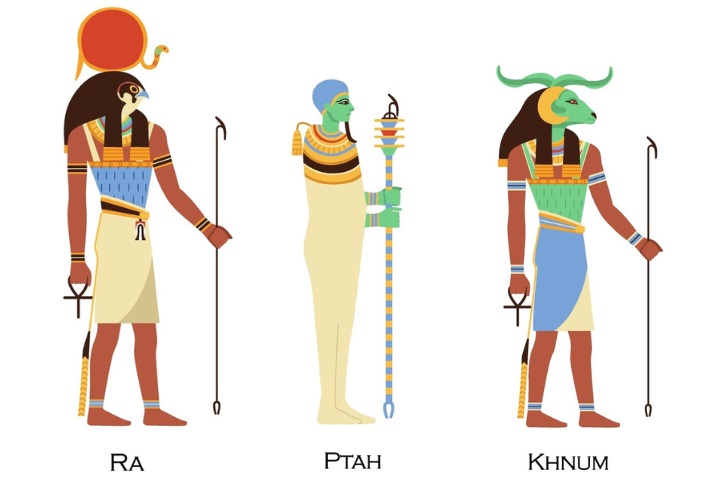
Each of these stories shows how the Egyptians used imagination and symbolism to explain life.
How the Egyptians Viewed the Universe
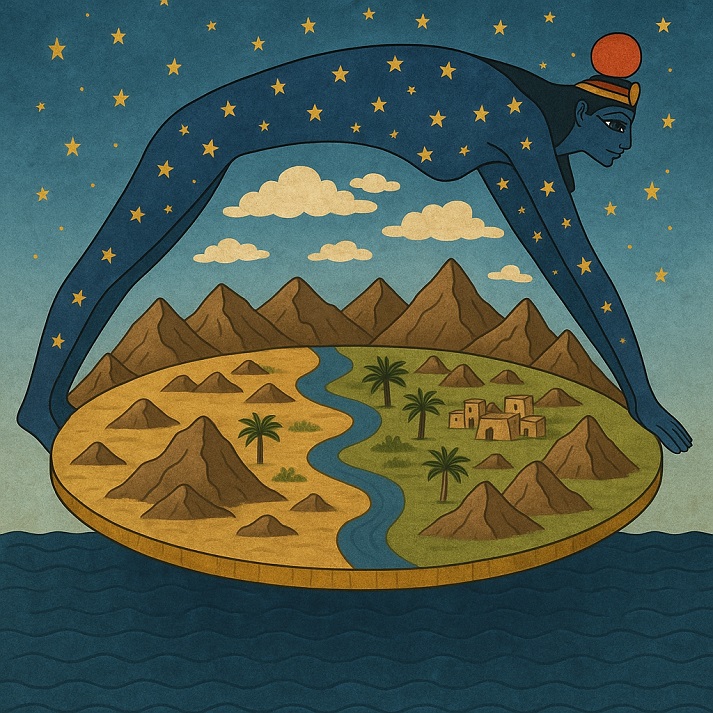
The ancient Egyptians believed the earth was shaped like a giant flat disc.
The middle was Egypt. Around the edges were mountains, and underneath it all was deep water—the underworld. Above the disc was the sky, where many gods lived and watched over the people.
Meet the Gods and Goddesses
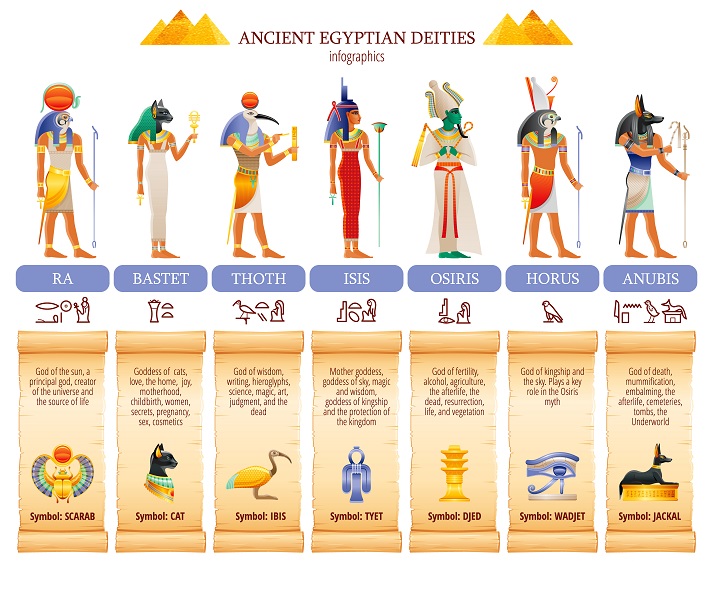
The Egyptians worshipped more than 800 gods! That’s a lot, right? Here are some of the most important.
Ra – The powerful sun god. He sailed across the sky each day in a boat.
Isis – A caring goddess who protected families and used powerful magic.
Osiris – The god of the afterlife, who ruled the land of the dead.
Horus – The falcon-headed god of the sky and kingship.
Anubis – The jackal-headed god of mummification, who guided spirits to the afterlife
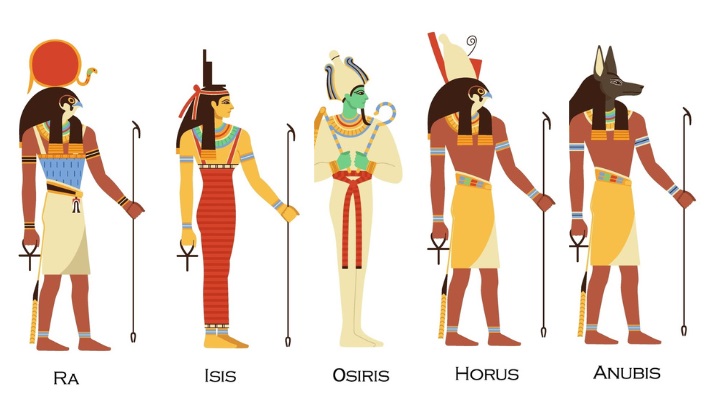
Most of these gods were shown with animal heads and human bodies, mixing nature and people into one shape. This helped the Egyptians understand what each god controlled.
The Afterlife: Life After Death
One of the most important parts of Egyptian mythology was the belief in an afterlife.
When someone died, they didn’t just disappear. Egyptians believed the person’s soul had to go on a journey to another world called the Duat, or the underworld.
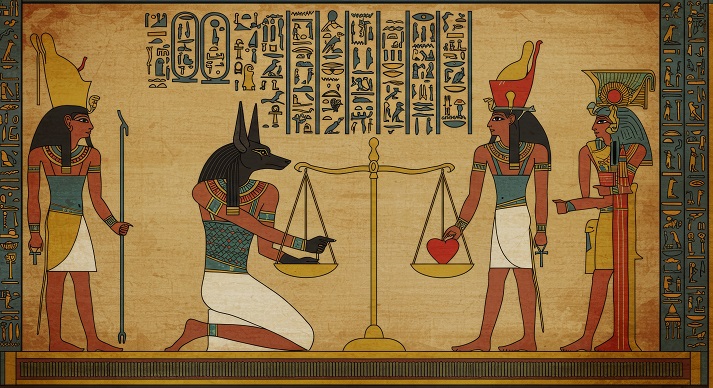
In the afterlife, the heart was weighed against a feather to see if the person had lived a good life.
If the heart were lighter than the feather, the soul entered paradise.
If it wasn’t, the soul was eaten by a fearsome creature named Ammit, who had the head of a crocodile, the body of a lion, and the back legs of a hippo.
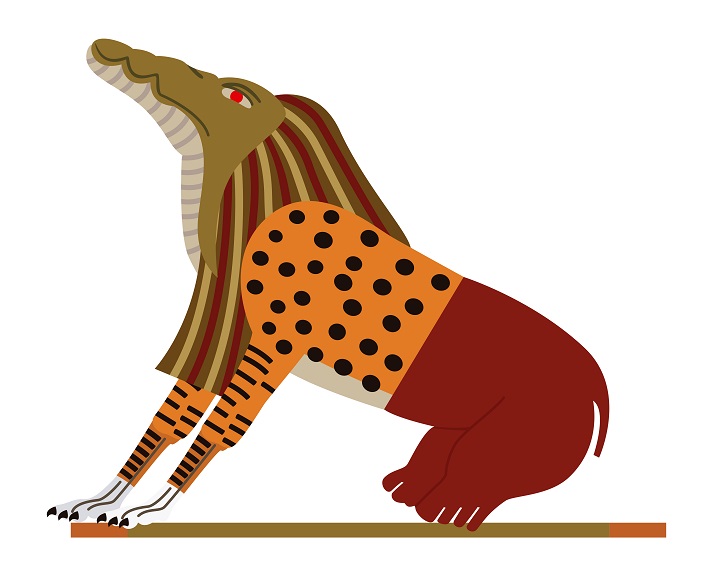
That’s why living an honest life was very important to the Egyptians—they wanted a happy afterlife!
Why So Many Gods?
The Egyptians believed every part of life—sunshine, rivers, farming, even writing—had a god connected to it.
Gods weren’t just worshipped in temples. They were part of daily life. People wore amulets (lucky charms) of gods, painted them on tombs, and told stories about them to explain why the world worked the way it did.
Mythology vs. Modern Belief
Today, the stories told by the ancient Egyptians are called myths because they are no longer part of a living religion.
People study them to understand how ancient cultures explained the world. It’s important to remember that just like people today have different beliefs, the Egyptians had theirs, too.
Learning about their mythology is a way to understand history—not a suggestion for what anyone today should believe.
Onward to Adventure!
Now that you've met Ra, Isis, Anubis, and more, it's time to test your knowledge and show what you’ve learned.
In the Got It? section, you’ll explore the gods a little more and practice telling their stories in your own words.
Get ready to bring Egyptian mythology to life!

Supplies


 FAVORITE
 Like
Like