Sign Up
School Account Sign Up

Lesson ID: 11954
Crack open the world of sarcophagi and uncover the secrets hidden in ancient Egypt’s most powerful tomb protectors.




Buried in Bling: Meet the Ancient Egyptian Sarcophagus
The ancient Egyptians didn’t just bury their dead—they built a journey to the afterlife with style.
If you've ever thought of a coffin as just a plain box, think again. A sarcophagus (say: sar-KAH-fuh-gus) wasn’t just a container—it was a symbol of power, protection, and eternal life.
It was often huge, beautifully decorated, and filled with secrets designed to help the person inside reach the stars.
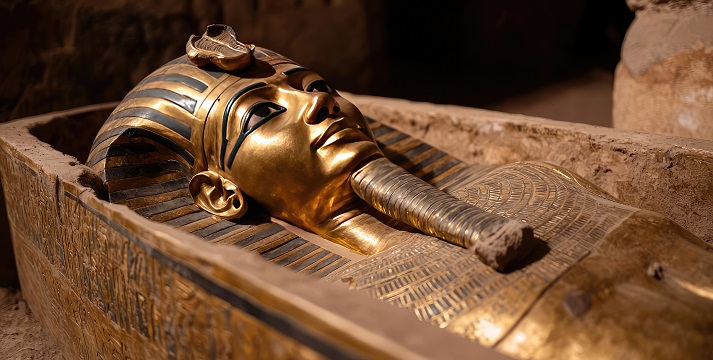
What Is a Sarcophagus?
The word sarcophagus comes from Greek and originally meant “flesh-eater”—but don’t worry, it wasn’t actually a monster.
Early stone coffins made of limestone had a chemical reaction that helped break down the body faster. Over time, the term came to mean any stone container that held a coffin and a mummy, especially in Egypt.
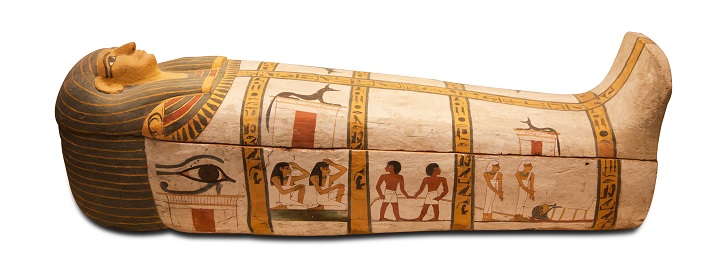
Coffin vs. Sarcophagus: What’s the Difference?
Here’s how it worked.
The body was mummified—organs removed, body dried with natron, wrapped in linen, and protected with amulets and resin.
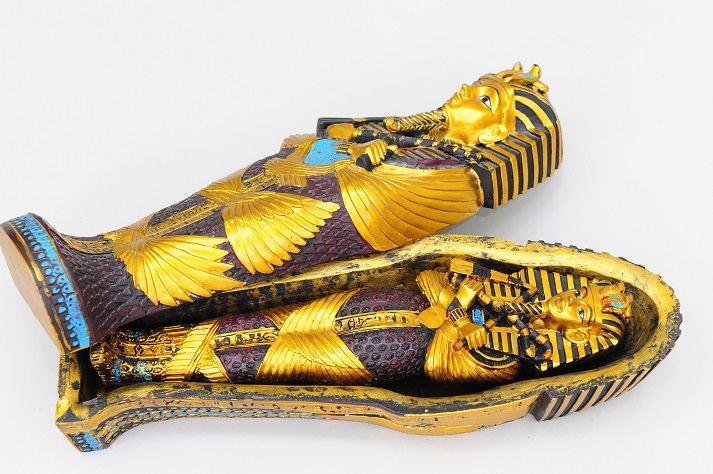
The mummy was placed inside a wooden coffin, or even multiple coffins, nested like a set of dolls.
All of that went inside the stone sarcophagus, the outermost and strongest layer of protection.
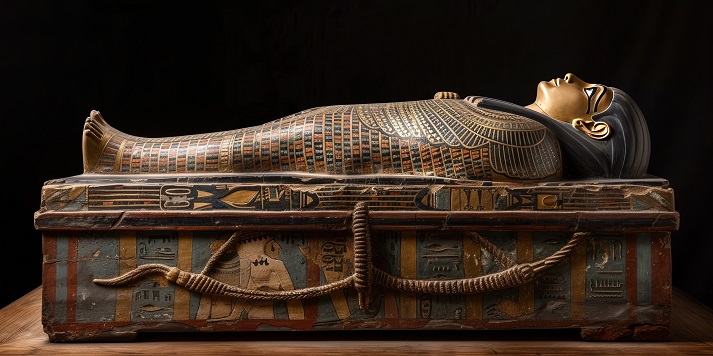
Only the wealthiest Egyptians, like pharaohs and royal officials, could afford a sarcophagus. The richer you were, the more layers and decorations you had.
Some sarcophagi were plain, while others were carved and painted with hieroglyphs, portraits, prayers, and gold.
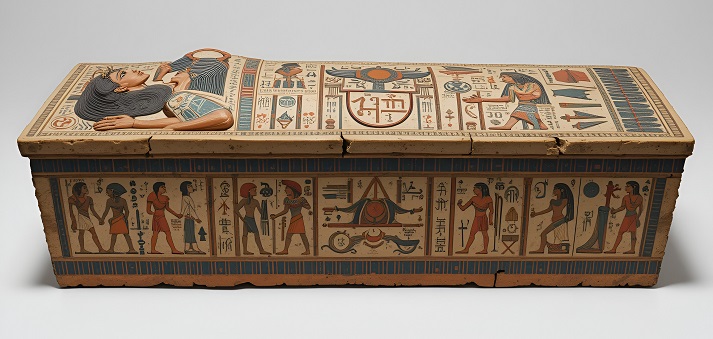
King Tut’s Golden Resting Place
One of the most famous sarcophagi in the world belonged to Tutankhamun, or King Tut.
His body was placed inside three coffins—each one fancier than the last—before all of them were locked inside a sarcophagus made of yellow quartzite. It was covered in symbols and carvings to help him in the afterlife.
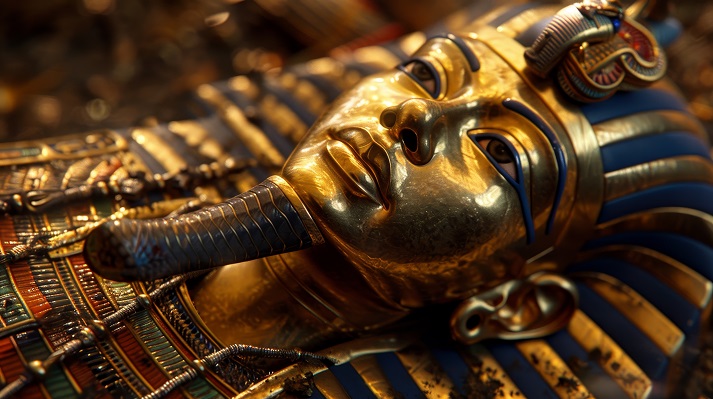
Another example is the sarcophagus of Ramses II, which was once decorated with scenes from the Book of Gates and coated in colorful pigment.
Even though parts of it have been lost over time, it still shows how much detail and care went into preparing someone for eternity.
Why All the Decorations?
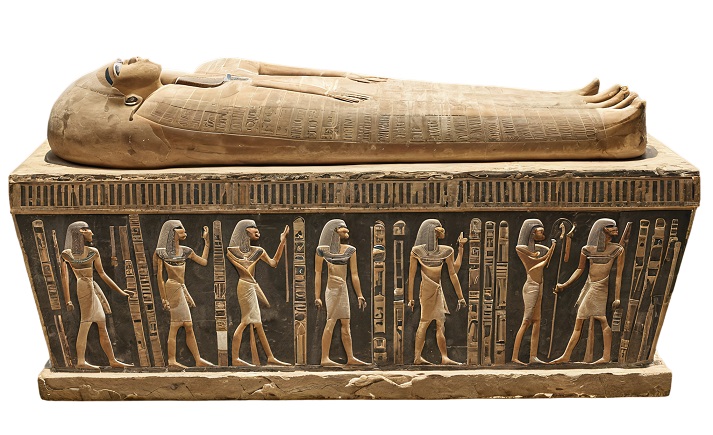
Hieroglyphics carved on a sarcophagus were more than just fancy writing. They were prayers and spells meant to protect the spirit and guide the soul on its journey.
The designs often included the following.
Images of gods
Magical symbols
The person’s name and achievements
Protective animals or charms
In the case of Stik SB (pronounced Semtech Beh), a healer who lived around 600 BCE, the hieroglyphs around his sarcophagus offered prayers for good fortune and described him as a “scorpion charmer”—a healer of stings and bites. One prayer read:
“It is in your embrace that Horus has come… Lift yourself up… so that you may go forth to the sky, born in the goddess N and alive among the stars.”
The writing was even turned to face his head, so he could read it during his journey.
Stone, Style, and Symbolism
Sarcophagi were usually made of strong materials such as the following.
Limestone (early and common)
Granite, alabaster, or even gold
Cartonnage, a paper-mâché–like material for inner layers
Some sarcophagi looked like boxes with palace designs, while others were shaped like people with realistic faces and crossed arms, imitating Osiris, the god of the underworld.
Ready to Carve Out What You Know?
You’ve just explored the who, what, and why of sarcophagi—how they protected the body, celebrated a life, and prepared the dead for their greatest adventure.
Now, it’s your turn to test what you remember and dive into some hands-on learning.
Head to the Got It? section to see if you can tell a coffin from a “possessor of life”!

Supplies


 FAVORITE
 Like
Like