Sign Up
School Account Sign Up

Lesson ID: 11648
How do bacteria reproduce and share DNA? Discover the methods that keep bacterial populations thriving—and surprising.




Cloning, Copying, and… Copying With a Twist?
When bacteria reproduce, they don’t pair up, go on awkward dates, or need a second partner. Instead, they do something much simpler—split in half.
In fact, a single bacterium can create an entire colony all on its own in a matter of hours.
It turns out bacteria have a few clever ways to share and change their DNA, without ever reproducing.
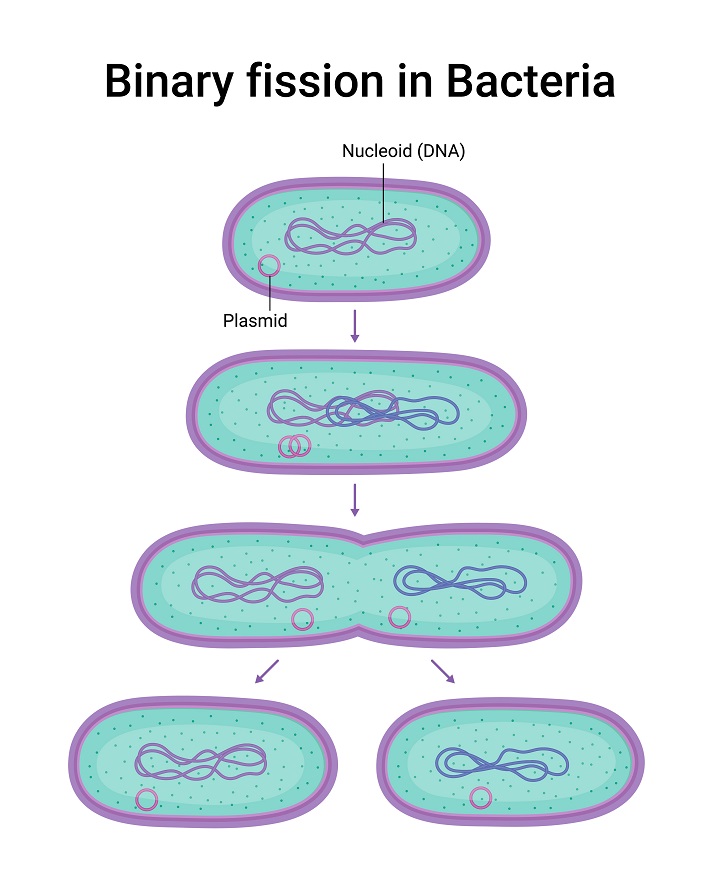
Binary Fission: Copy and Divide
This is how bacteria reproduce. It’s fast, simple, and asexual. A bacterium follows these steps in binary fission.
Copies its circular DNA (the chromosome).
Elongates and pulls the DNA copies apart.
Divides into two identical cells.
No sperm. No egg. Just one cell becoming two. Under the right conditions, this process happens rapidly and can result in huge populations in a short time.
Result: Two genetically identical cells—clones.
Bacterial Conjugation: DNA File-Sharing
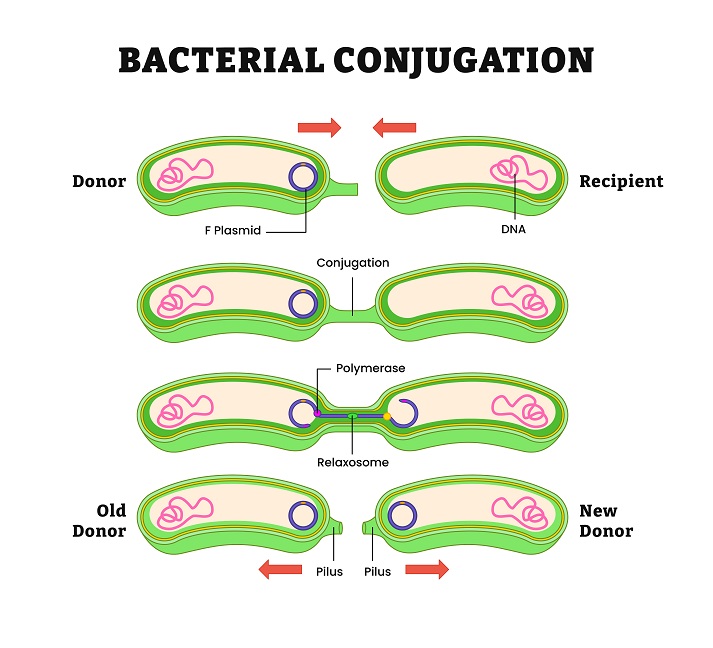
Although binary fission doesn’t create diversity, bacteria have a clever workaround: conjugation.
The following occurs during this process.
A bacterium with a plasmid (an extra ring of DNA) forms a conjugation tube with another bacterium.
It sends a copy of the plasmid across the tube, like sending a file through a cable.
The receiving cell may express new traits from this new DNA, like antibiotic resistance.
Result: No new cells, but genetic diversity increases.
Bacterial Transformation: The DNA Grab
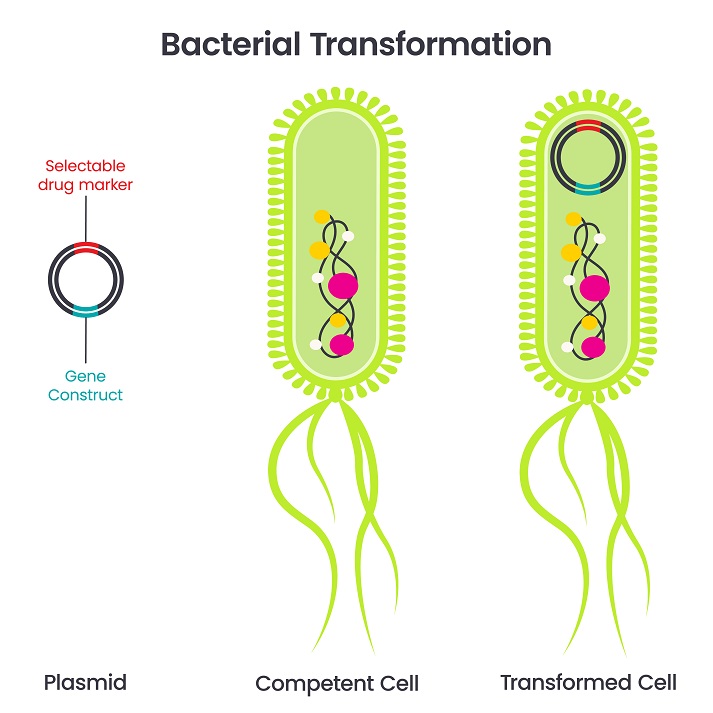
Bacteria don’t waste genetic material. If another bacterium dies and leaves DNA floating around, other bacteria can absorb it from the environment.
They pick up plasmids or fragments of DNA.
They insert it into their own genome.
They express any useful traits encoded by the new DNA.
Result: Still one bacterium, but now with bonus features.
Bacterial Transduction: Viral Delivery
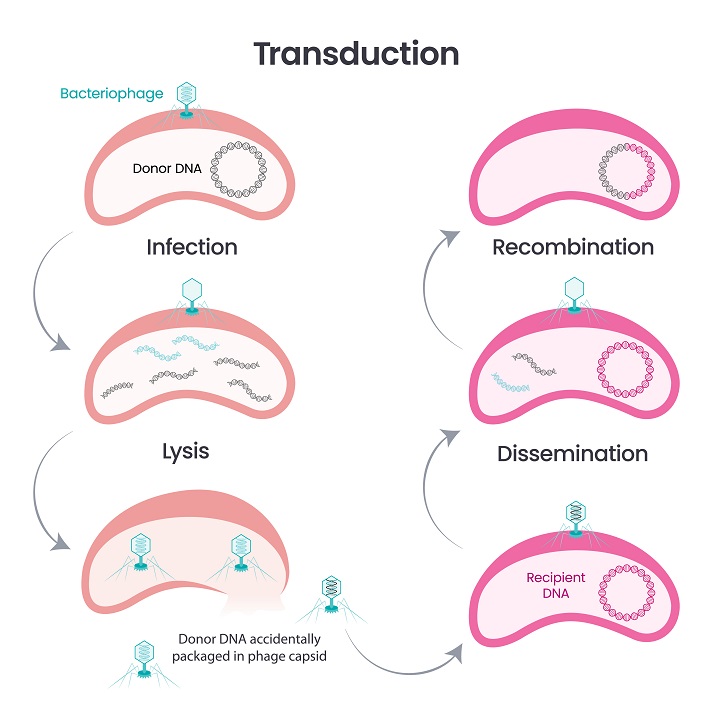
Sometimes, a virus can accidentally help a bacterium evolve using transduction.
A virus infects a bacterium and hides its DNA inside the host.
When the virus leaves, it may take some bacterial DNA with it.
That virus infects a new bacterium and drops off the old host’s DNA.
The new host picks it up and gains genetic diversity.
Result: Genetic traits transferred between bacteria—thanks to a virus!
Now that you know how bacteria reproduce and swap genes, it’s time to test what you’ve learned. You’ll answer questions, sort the four processes, and dig into the differences between copying and changing DNA.
Go to the Got It? section!

Supplies
Additional Resources


 FAVORITE
 Like
Like