Sign Up
School Account Sign Up

Lesson ID: 11458
Discover the animals that live in rivers and streams! Learn how they survive moving water with amazing adaptations and build something to show what you know.




Swim Like Your Life Depends on It!
Imagine living in a place that never stops moving. The ground beneath you flows, rushes, twists, and turns.
You can’t build a bed, you can’t stand still—and if you want to eat or hide, you'd better know how to swim.
Welcome to life in a river or stream! From slick-furred mammals to lightning-fast fish, these animals are built for speed, survival, and slippery surprises.
Life in a Moving World
Rivers and streams are constantly flowing. That movement creates a challenging—but exciting—home for many kinds of animals.

Some live in the water full-time. Others build their homes along the banks and dive in when it’s time to swim, eat, or hide.
Common river and stream animals include the following.
| frogs | salamanders | crayfish | |
| salmon | catfish | beavers | |
| muskrats | river otters |
Meet a few of the most fascinating!
River Otter: The Aquatic Acrobat
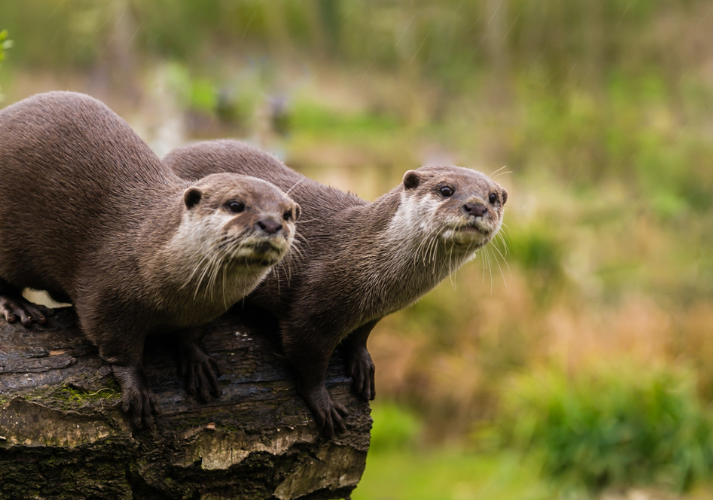
River otters are playful swimmers found in many parts of North America.
They live in cozy underground homes called burrows, which often have multiple tunnels—one always leading straight to the water. This gives them a quick escape if trouble comes near.
Their bodies are built for the water.
Strong tails help them steer.
Webbed feet give them swimming power.
Long, flexible bodies let them twist and dive easily.
Waterproof fur keeps them warm and dry—like wearing a built-in wetsuit!
Muskrat: The Tunnel Digger
Muskrats are small mammals with a name that comes from their musky smell and rat-like shape.
They build homes near rivers, ponds, and streams, digging tunnels that go underwater before rising back up to dry land. This protects them from predators and floods.
Like otters, they also have waterproof fur, which helps them stay dry even after a long swim.
Beaver: The Water Engineer
Beavers are best known for building dams—huge walls made of twigs, mud, rocks, and sticks.
These dams can slow or even change the direction of a river! Beavers use them to create calm ponds where they build their homes, called lodges.
Beavers are expert swimmers, too.
Webbed feet make them fast and quiet in the water.
Flat tails help them steer—and they slap the water to warn others of danger.
Thick fur keeps them warm and dry, just like otters and muskrats.
Other River Residents
Not all river animals are mammals! Here are some others worth noticing.
Frogs and salamanders lay their eggs in calm water and grow up learning to leap, hop, and swim.
Crayfish look like mini lobsters and scurry along the riverbed, hiding under rocks.
Catfish and salmon are strong swimmers that glide through fast-moving currents in search of food.
Piranhas (like the red piranha) can be found in South American rivers—they're not always dangerous, but they are definitely interesting!
Eurasian otters, gavials, hellbenders, sunbitterns, and others live in rivers around the world.
Every river has its own wild collection of creatures—some cute, some creepy, but all important to the food chain and the health of the water.
How Do They Do It?
Animals that live in rivers and streams have special adaptations—traits that help them survive.
webbed feet = faster swimming
waterproof fur = stays warm and dry
strong tails = steering and balance
burrows and tunnels = protection and shelter
dams and lodges = calm water homes
These features are what help animals survive in places where the ground is always shifting and the current never stops.
See What You Remember!
Now that you've explored the animal kingdom of rivers and streams, it’s time to review and practice what you’ve learned.
Head to the Got It? section!

Supplies
Additional Resources


 FAVORITE
 Like
Like