Sign Up
School Account Sign Up

Lesson ID: 11449
Follow energy through a pond and discover how plants and animals are all connected!



Who Eats Who Underwater?
Imagine dropping a tiny crumb into a pond.
It might be eaten by something so small you can barely see it. Then that tiny creature might be eaten by a small fish. That fish might become lunch for a bigger fish… and that bigger fish could be eaten by a bird or another animal.
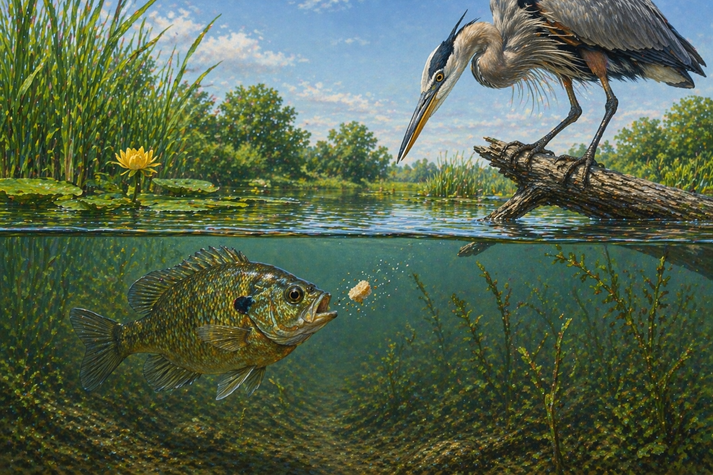
In lakes and ponds, every living thing is connected by food.
This connection is called a food chain.
What Is a Food Chain?
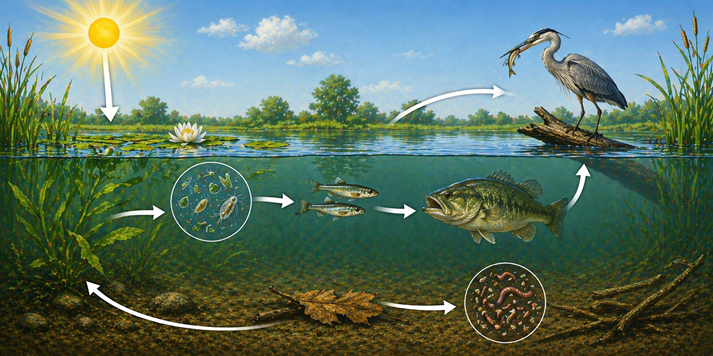
A food chain shows how energy moves from one living thing to another.
Every food chain starts with energy from the sun.
Plants use sunlight to make their own food. These plants are called producers because they produce their own energy.
Animals cannot make their own food, so they must eat plants or other animals. These are called consumers.
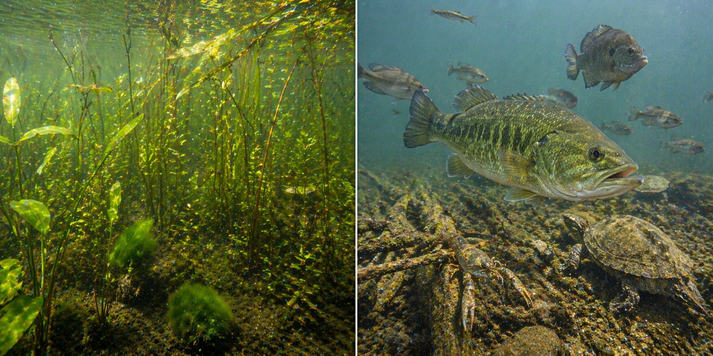
Here’s a simple freshwater example.
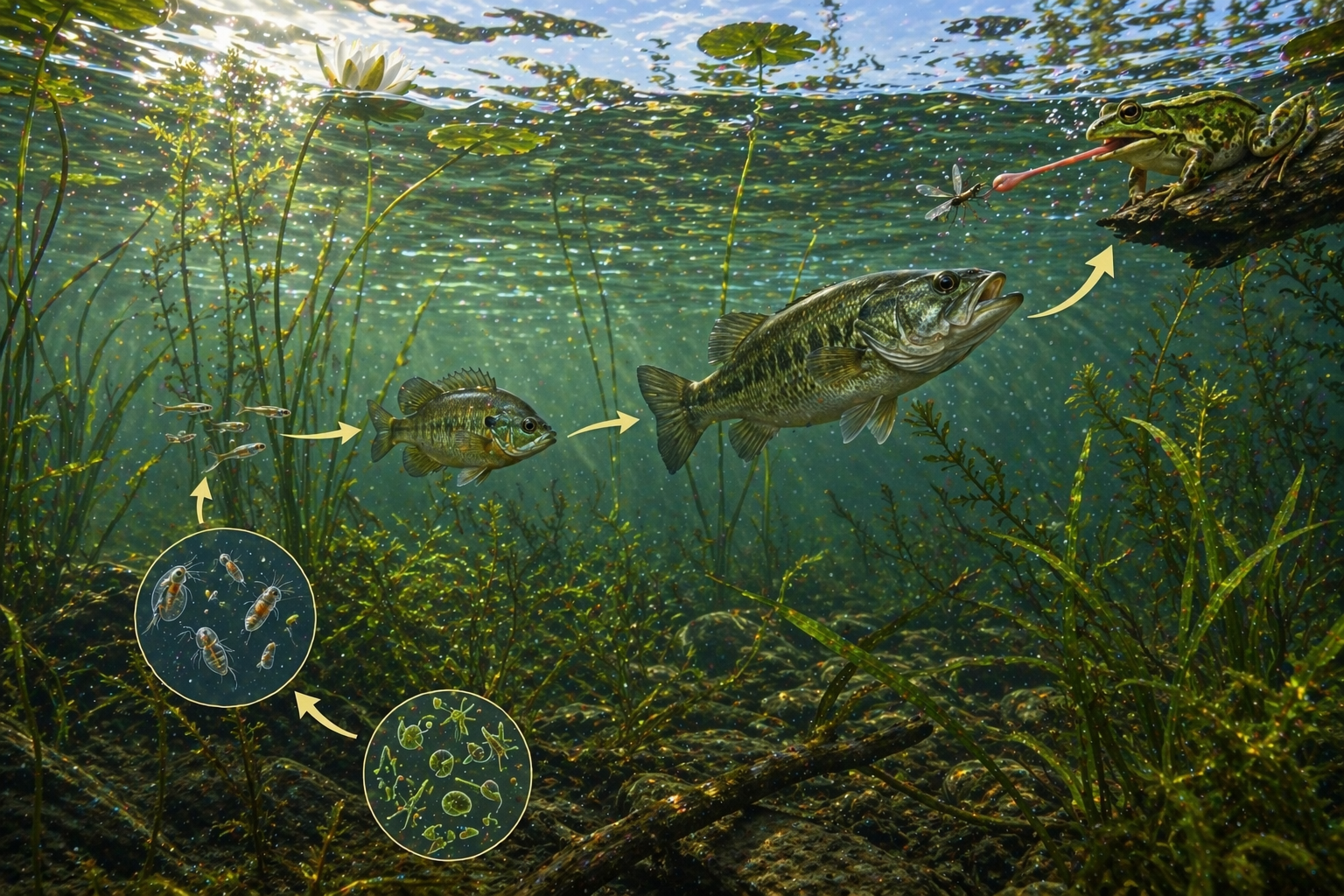
Tiny plants in the water use sunlight to grow.
Zooplankton eat the tiny plants.
Small fish eat the zooplankton.
Bigger fish eat the smaller fish.
A frog, bird, or other animal eats the bigger fish.
Each step is a link in the food chain.
Meet the Roles in the Food Chain
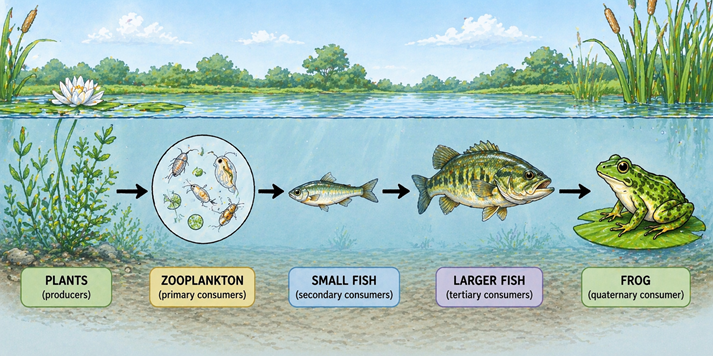
Every living thing has a role in the food chain.
Each level depends on the one before it.
It’s Not Just a Chain
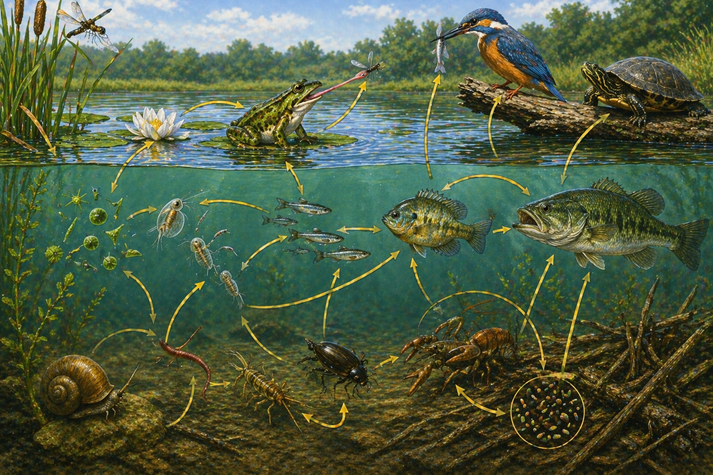
In real life, animals do not eat just one thing.
A fish might eat insects, zooplankton, or even smaller fish. A frog might eat insects and small fish.
Because of this, food chains often connect and overlap. This creates a food web.
A food web is like a giant network of food chains all linked together.
What Happens If One Part Changes?
Every part of the food chain matters.
If there are fewer plants, animals that eat plants may not survive. If small fish disappear, bigger fish may struggle to find food.
Changes in one part of the system can affect everything else.
That’s why healthy lakes and ponds need balance.
Energy Never Stops Moving
Energy from the sun moves through plants, then animals, and continues through the ecosystem.
Even when animals die, tiny organisms break them down and return nutrients to the water, helping plants grow again.
The cycle continues over and over.
You just discovered how energy moves through lakes and ponds and how living things depend on each other.
Now it’s time to see if you can follow the path of energy and build your own food chains.

Supplies
Additional Resources


 FAVORITE
 Like
Like