Sign Up
School Account Sign Up

Lesson ID: 11383
Discover how different living things work together in communities and explore how they help or compete to survive!




Stronger Together
Picture this.
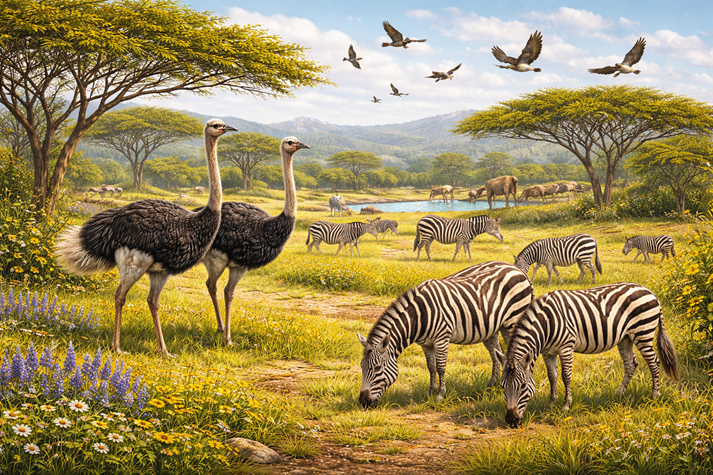
You are walking across a wide, grassy plain in Africa. You see zebras grazing, ostriches looking around, and birds flying overhead. At first, it looks like a bunch of different animals in the same place.
But something more is happening.
These animals are helping each other survive.
This is called a community.
What Is a Community?
A community is all the different populations living and interacting in the same place.
A population = one kind of living thing in one place
A community = many different populations living together
For example:
zebras + ostriches + insects + plants = a community
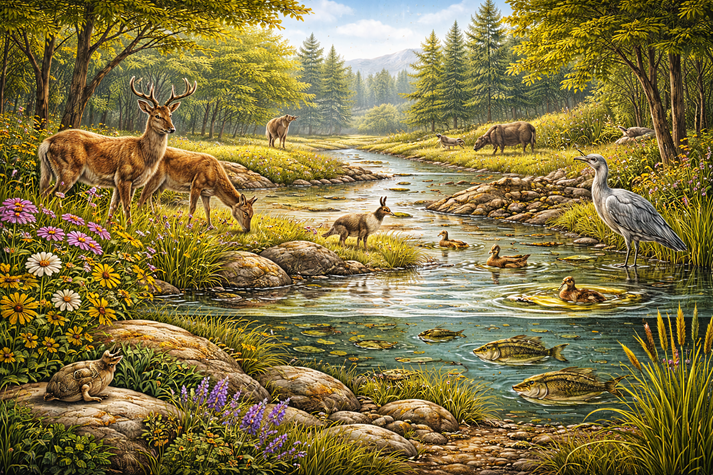
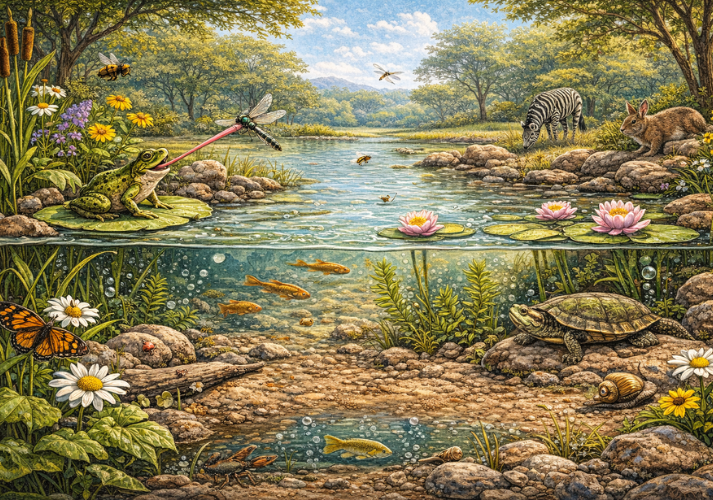
fish + frogs + plants in a pond = a community
Communities are made up of living things that share space and affect one another every day.
Not Just Living Together—Working Together
In a community, living things do more than just share space.
They interact.
That means they:
help each other
compete with each other
depend on each other
Some relationships are especially helpful.
Animal Teamwork in Action
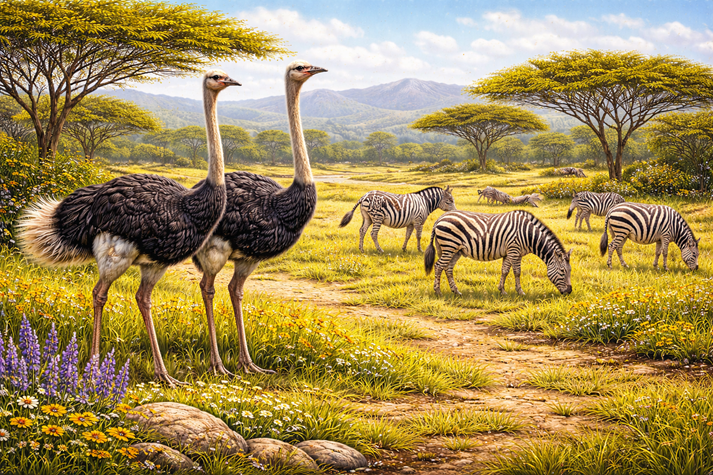
In parts of Africa, ostriches and zebras often stay near each other.
Here’s why:
Ostriches have excellent eyesight. Zebras have strong hearing and smell.
The ostrich watches for danger. The zebra listens and smells for danger.
Together, they stay safer than they would alone.
That’s teamwork in a community.
Helping Each Other Survive
Sometimes animals help each other in surprising ways.
During dry times, water can be hard to find.
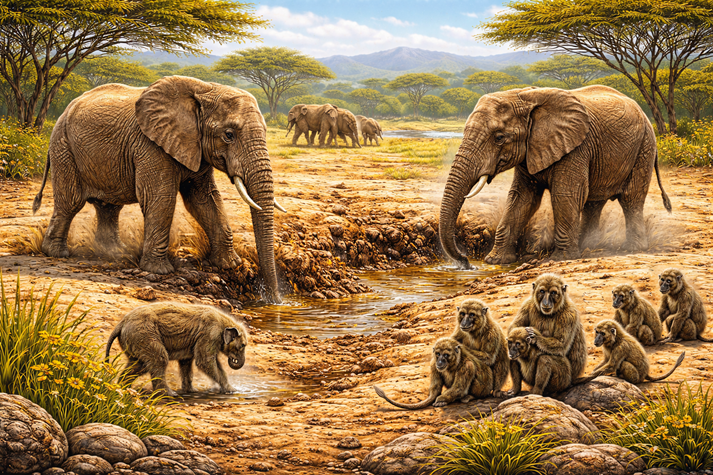
Elephants can dig deep holes to reach water.
Baboons use those water holes to drink.
But it’s not one-sided.
Baboons make loud warning calls if danger is nearby.
This helps protect the elephants.
Both animals benefit.
That kind of relationship helps a community stay strong.
Not All Relationships Are Friendly
Not every interaction is helpful.
Some living things compete.
That means they fight for the same things:
food
water
space
For example:
Two predators may hunt the same prey.
Plants may compete for sunlight.
Communities include both cooperation and competition.
Everything Is Connected
In a community, one change can affect many living things.
If one population changes:
Others may grow or shrink.
Food sources may increase or disappear.
The balance can shift quickly.
For example:
Fewer predators can lead to too many prey animals.
Fewer plants can affect many animal populations.
Communities work like a system—everything is connected.
Big Idea to Remember
A population is one group of the same species.
A community is many different populations living and interacting together.
You just explored how different living things work together in communities to survive.
Next, it’s time to practice spotting these connections and interactions in action.

Supplies
Additional Resources




 FAVORITE
 Like
Like