Sign Up
School Account Sign Up

Lesson ID: 11287
Meet the animals of the grasslands! From stampeding herds to sneaky diggers, discover how wild creatures survive and thrive on open land.




What’s Hiding in the Grass?
If you ever wandered through a grassland, you might think it’s just miles and miles of grass. But stay quiet… and look closer.
A prairie dog pops up from its burrow. A lion crouches in tall grass. A bison thunders by. Grasslands are teeming with wildlife—big, small, and totally wild.

This lesson is your backstage pass to life on the grassland stage. You’ll meet creatures with secret powers like camouflage, burrowing, and even night vision!
Get ready to explore the animal superstars of two amazing grassland worlds: temperate grasslands and tropical savannas.
Two Kinds of Grassland Homes
Grasslands are found all over the world, but they come in two main types.
Temperate Grasslands (such as the American prairie or Eurasian steppe): These areas have hot summers and cold winters, with fewer trees.
Tropical Grasslands (savannas like those in Africa and Australia): These stay warm all year but have rainy and dry seasons.
Despite their differences, both types are packed with wildlife adapted to the open landscape.
Meet the Grass Munchers
Grasslands are ruled by herbivores—animals that eat plants.
Temperate Grasslands: You’ll find bison, pronghorn, antelope, deer, and wild horses roaming the open spaces.
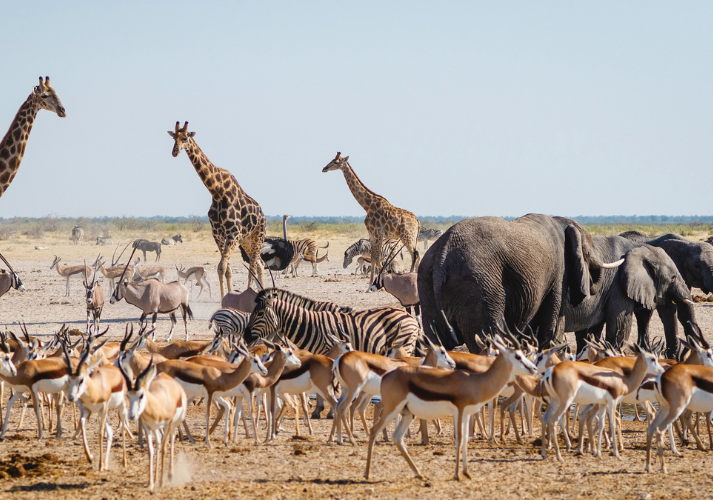
Tropical Grasslands: Zebras, elephants, antelopes, giraffes, kangaroos, and buffalo are common grazers.
Their eating habits help prevent the grasslands from turning into forests and shape the entire ecosystem.
The Hunters of the Plains
Where there are grazers, there are predators.
Savanna Carnivores: Lions, cheetahs, leopards, and hyenas rely on teamwork, speed, or stealth to survive.
Temperate Carnivores: Coyotes, wolves, swift foxes, and black-footed ferrets prey on small mammals and birds.
Some predators even fly! Hawks and owls soar above, using sharp eyesight to spot their next meal.
Tiny and Mighty
Even the tiniest animals make a big difference.
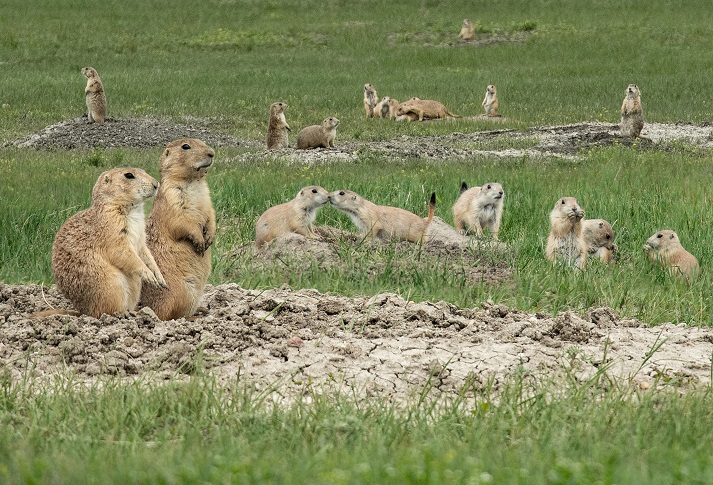
Small mammals, such as prairie dogs, rabbits, mice, and gophers, are expert burrowers, creating underground homes to stay safe.
Insects and arachnids, such as ants, beetles, and spiders, serve as food for birds, reptiles, and mammals.
Snakes slither silently through the grass, hunting their next meal or hiding from larger predators.
Birds, such as meadowlarks, sparrows, emus, and quail, bring song and color to both grassland types.
Survival Tricks
Grassland animals have mastered the art of staying alive.
Camouflage: Their fur or feathers blend in with the grasses—browns, tans, and soft grays.
Nocturnal life: Many animals come out at night to avoid the heat or hungry predators.
Burrowing: Prairie dogs and ground squirrels dig tunnels to hide and cool off.
Migration: Some animals travel long distances when food or water gets scarce.
Prairie Dogs: Tiny Engineers
Prairie dogs are more than just cute—they’re keystone species! That means they shape the entire grassland.
Their digging turns over soil, boosts plant growth, and helps other animals, such as bison, pronghorn, and hawks, find food and shelter.
In fact, places with prairie dog “towns” become super-powered food factories for other animals, because the grasses are healthier and more full of protein.
Get Ready to Practice!
You’ve now met the grazers, the hunters, and the hidden heroes of the grassland.
See what you remember—and maybe create your own wild creature, too, in the Got It? section!

Supplies
Additional Resources




 FAVORITE
 Like
Like