Sign Up
School Account Sign Up

Lesson ID: 10953
Turn ideas into laws! Discover how a bill travels through Congress and test your skills by creating your own.




From Idea to Law: The Long Journey
Ever had a rule at home or school that made you think, “Who came up with this?”
Now imagine creating a rule for an entire country. That’s exactly what laws are—and they don’t just appear out of nowhere.
Every single law in the United States started as just an idea.
But here’s the twist: most ideas never make it all the way to becoming a law.
So what actually happens between “someone has an idea” and “this is now the law of the land”? That journey is longer, more complicated, and way more interesting than it sounds.
Let’s break it down step by step.
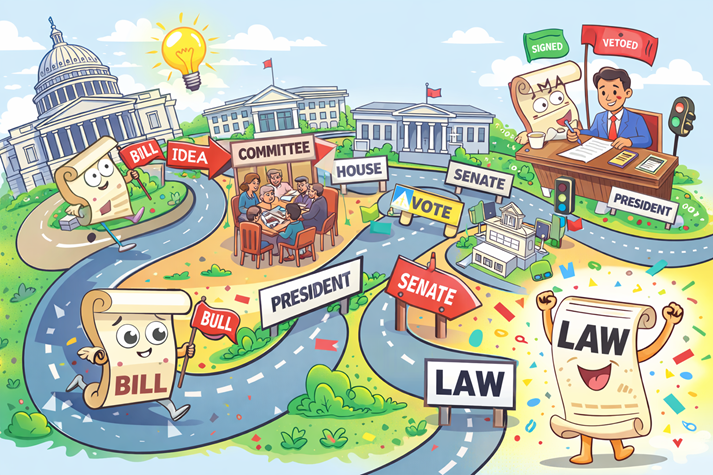
What Is a Bill, Really?
A bill is a proposed law. Think of it as a rough draft. It might suggest creating a new rule or changing an old one.
Ideas for bills can come from:
If enough people care about an idea, a member of Congress writes it down and officially introduces it. That’s when the idea becomes a bill.
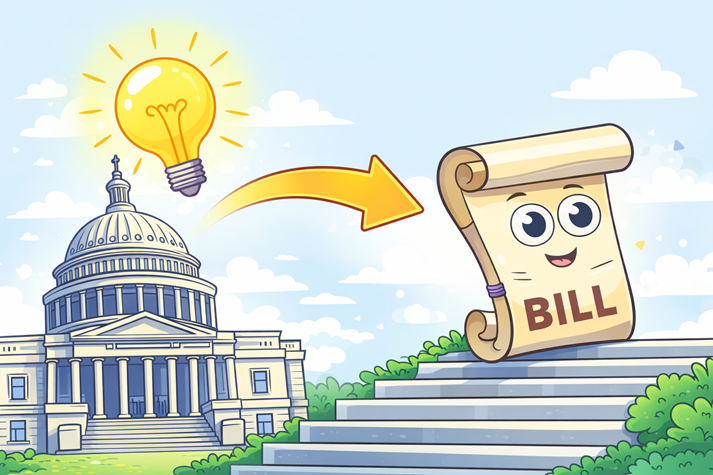
Step 1: The Bill Enters Congress
Once written, the bill is introduced in either the House of Representatives or the Senate (except for certain money-related bills, which must start in the House).
Now the bill has officially entered the system—but it still has a long road ahead.
Step 2: Committee Review (Where Many Bills Stop)
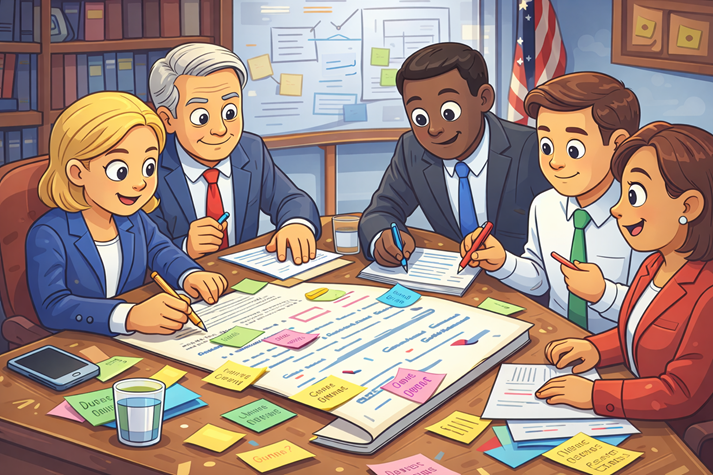
After the introduction, the bill goes to a committee. A committee is a group of lawmakers who focus on specific topics like education, health, or transportation.
Here’s what they do.
Many bills never make it past this step. If the committee decides the bill isn’t strong enough or necessary, it simply stops moving forward.
Step 3: Debate and Vote in One Chamber
If the committee approves the bill, it moves to the full House or Senate.
Now lawmakers:
If the majority votes “yes,” the bill passes this chamber.
Step 4: Repeat in the Other Chamber
Next, the bill heads to the other part of Congress. If it started in the House, it goes to the Senate. If it started in the Senate, it goes to the House.
The entire process happens again.
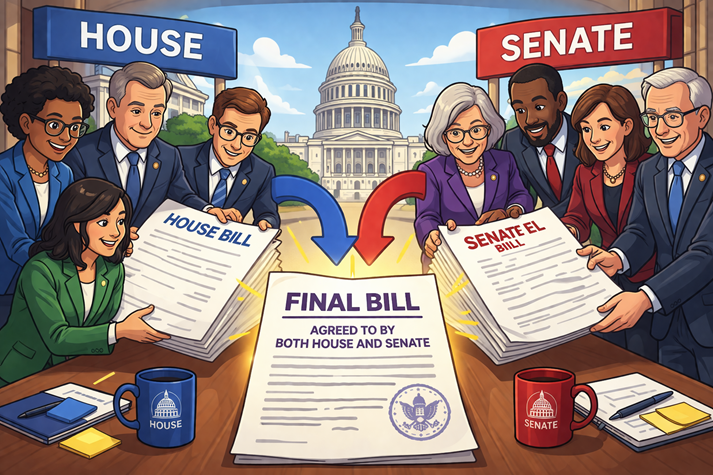
Sometimes the House and Senate pass slightly different versions of the same bill. When that happens, a small group works out the differences so both sides agree on one final version.
Step 5: The President’s Decision
Once both chambers agree, the bill goes to the president.
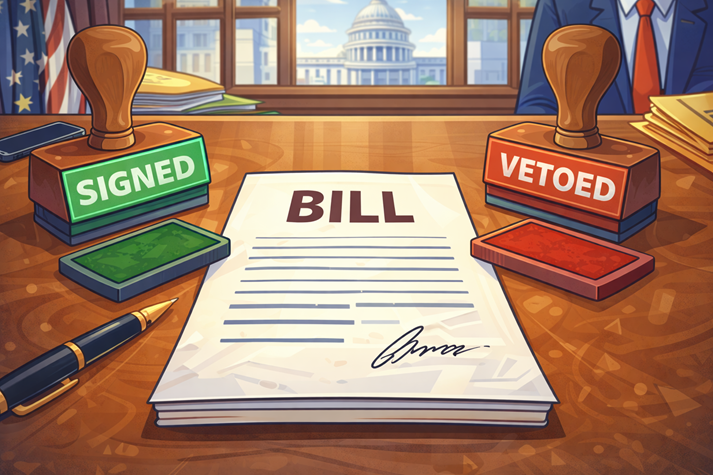
The president has three main options.
If the president vetoes the bill, Congress can try to override that veto with a two-thirds vote in both chambers. If they succeed, the bill still becomes a law.
Why So Many Steps?
The process is long on purpose.
When the Constitution was written, leaders wanted to:
The Constitution created a system where laws must pass through multiple checkpoints before they take effect.
In other words, if a bill becomes a law, it has been carefully reviewed from multiple angles.
Quick Reality Check
Thousands of bills are introduced each year, but only a small number actually become laws.
That means becoming a law is kind of like making it to the championship game—you have to survive every round.

Now that you know how an idea travels all the way to becoming a law, it’s time to see how well you can track the process.
Get ready to test your understanding and put the steps in the right order.

Supplies


 FAVORITE
 Like
Like