Sign Up
School Account Sign Up

Lesson ID: 10895
Write poetry your way! Learn how to break the rules and create powerful free verse using your own ideas and experiences.




Picture this: a poem that sounds like real thoughts, not a sing-song rhyme.
No strict beat. No forced pattern.
Just words arranged in a way that hits you right in the mind.
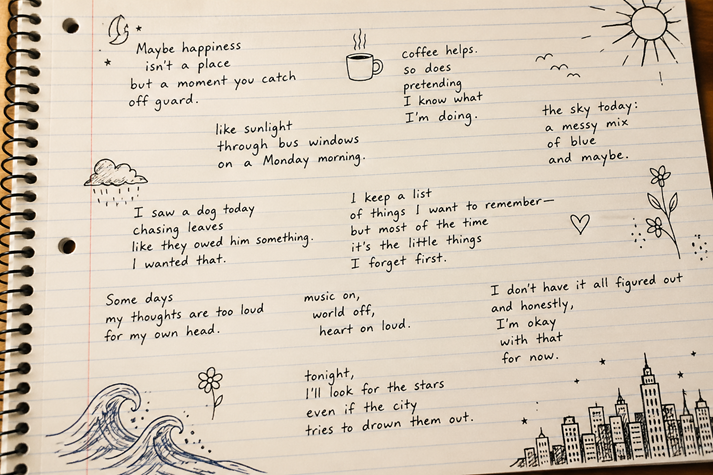
Free Verse: Poetry Without a Cage
You might have heard that poems have to rhyme or follow a steady rhythm. That idea is outdated. Free verse breaks those rules on purpose.
Free verse poetry does not follow a set rhyme scheme or a consistent meter. That means you won’t find a predictable pattern of stressed and unstressed syllables. Instead, it flows more like natural speech.
But “free” does not mean careless.
Free verse still uses:
vivid imagery to help you picture a scene.
carefully chosen words to create meaning and emotion.
line breaks to control how the poem sounds and feels when read.
Think of it like music without a strict beat. It still has mood, tone, and rhythm—you just have to listen differently.
Clearing Up Confusion: Free Verse vs. Blank Verse
These two often get mixed up, but they are not the same.
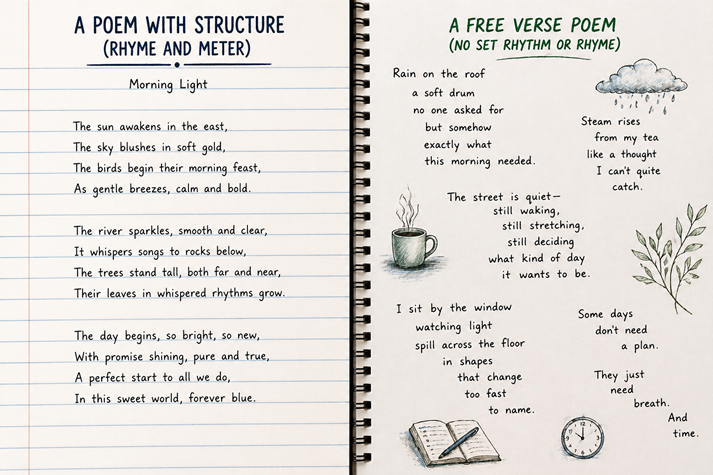
Blank verse follows a pattern of rhythm (called meter), usually iambic pentameter, but it does not rhyme.
Free verse does not follow a set rhythm or rhyme pattern at all.
Blank verse = structured rhythm, no rhyme
Free verse = no fixed rhythm, no required rhyme
If blank verse is like walking to a steady drumbeat, free verse is like walking at your own pace—speeding up, slowing down, stopping when it feels right.
What Makes Free Verse Work?
Even without rules, strong free verse writing still has structure. You just have to look for it differently.
Here’s what to notice.
Line Breaks
Poets decide where each line ends. This controls pacing and emphasis.
Example:
Imagery
Free verse relies heavily on images you can see, hear, or feel.
Example:

Sound and Rhythm
There may not be a strict pattern, but the words still create a natural flow.
Emotion and Focus
Free verse often zooms in on a moment, feeling, or idea and explores it deeply.
Original Example of Free Verse
Read this short example.

Notice:
No rhyme
No consistent rhythm
Strong imagery
Intentional line breaks
That is free verse.
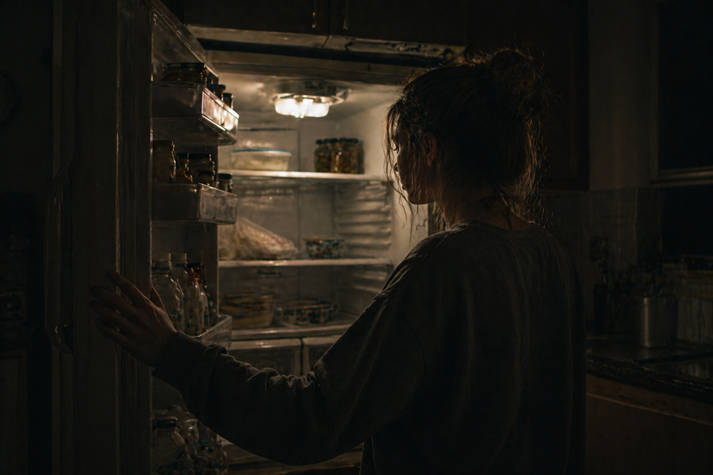
Another Example
Again, no strict structure—but it still feels like a poem.
Why Writers Use Free Verse
Free verse gives writers flexibility. It allows them to:
sound more like real speech.
focus on ideas and emotions without forcing rhyme.
experiment with structure and style.
Many modern poets use free verse because it reflects how people actually think and talk.
Before You Move On
Free verse may look simple, but it takes careful choices to make it effective. Every line break, every word, and every image matters.
Now that you understand how free verse works and how it differs from other types of poetry, it’s time to put your skills to the test.
Get ready to read, analyze, and create your own free verse in the next section.

Supplies


 FAVORITE
 Like
Like