Sign Up
School Account Sign Up

Lesson ID: 10848
Uncover the real story of Columbus—his daring voyages, his controversial actions, and how his legacy still affects the world today.




1492 and the Truth You Didn’t Learn in Kindergarten
You’ve probably heard this line:
“In 1492, Columbus sailed the ocean blue.”
But what happened next isn’t nearly as neat—or as innocent—as that rhyme suggests.
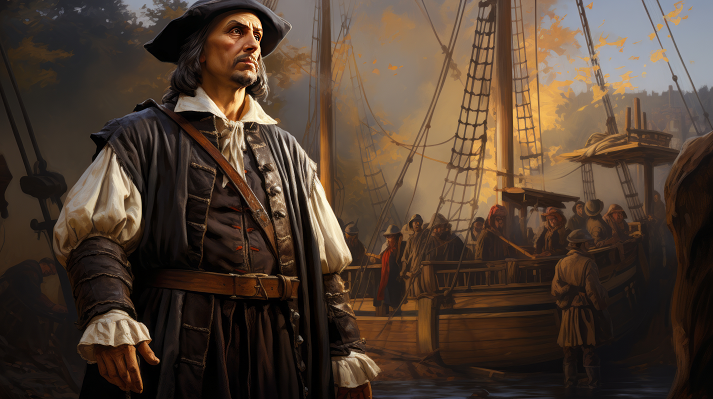
Christopher Columbus is one of the most debated figures in history. Some call him a brave explorer who changed the world. Others see him as the start of centuries of suffering for Indigenous people.
Dive into the full picture and get the facts—messy, amazing, and uncomfortable as they are.
The Plan: Sailing West for Riches
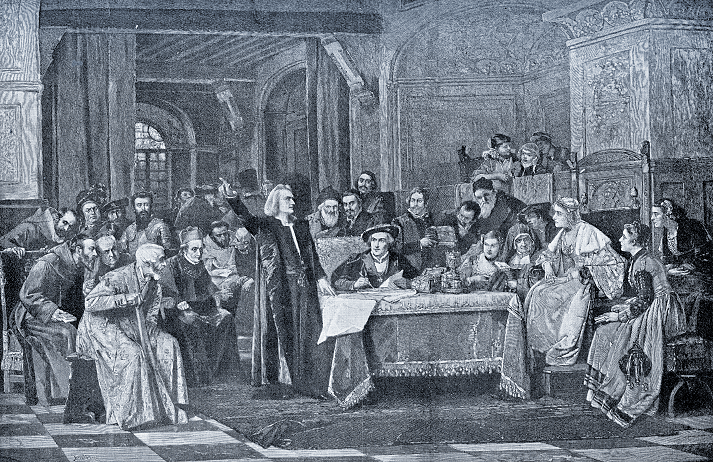
Columbus was born in Genoa (now part of Italy) in 1451. After working on ships and studying navigation, he became convinced he could reach Asia by sailing west across the Atlantic.
Most educated people already knew the earth was round—Columbus wasn’t proving that—but his math was way off. He underestimated the size of the planet and had no idea the Americas even existed.
For years, Columbus begged European rulers to fund his voyage. Portugal, France, and England all said no.
Finally, Spain’s King Ferdinand and Queen Isabella said yes—on one condition: Columbus had to bring back wealth. Gold, spices, and anything else valuable.
In return, they gave him fancy titles, the right to govern new lands, and a big cut of the profits.
The First Voyage
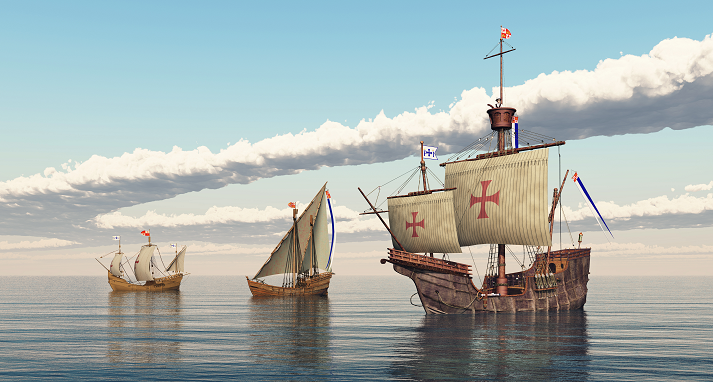
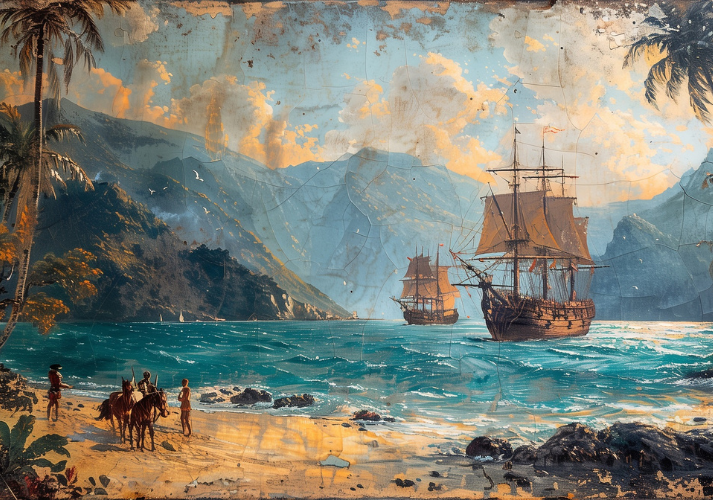
In 1492, Columbus set sail with three ships—the Niña, the Pinta, and the Santa Maria. On October 12, land was sighted. But it wasn’t Asia. It was the Bahamas.
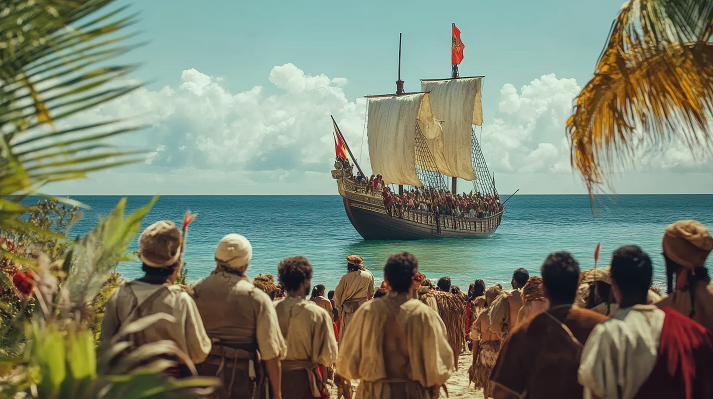
Columbus thought he was near India, so he called the local people “Indians.” These people were the Taíno, an Indigenous group living on the islands now known as the Caribbean.
At first, interactions were peaceful. But Columbus quickly began capturing and enslaving them. He even wrote in his journal that they would make “good servants” and could be “subjugated” easily.
Exploration... or Exploitation?
Columbus made four total voyages to the Americas. On each trip, he and his men searched for riches.
When gold and silver weren’t easy to find, they turned to enslaving Indigenous people and forcing them to work. Thousands were taken from their homes. Many died from overwork, disease, or violence. Some were shipped to Spain to be sold.
His rule over the settlements he created in places like Hispaniola (modern-day Haiti and the Dominican Republic) was harsh.
Reports reached Spain that he was cruel not only to Indigenous people but also to his fellow Europeans. He was eventually arrested by the Spanish Crown and stripped of his title as governor.
The Complicated Legacy
Columbus was not the first European to reach the Americas—Viking explorer Leif Erikson beat him there by about 500 years.
Although Columbus never reached what is now the United States, his voyages did change the world. They launched what historians call the Columbian Exchange, a widespread transfer of food, animals, cultures, technologies, and, unfortunately, diseases between Europe and the Americas.
That exchange reshaped both hemispheres forever. But it also caused catastrophic consequences for Indigenous populations.
Some see Columbus as a bold adventurer who connected continents. Others see him as a symbol of conquest, colonization, and genocide.
No Easy Answers—Just Big Questions
That depends on which parts of history you emphasize—and which voices you listen to.
What’s important is that you now have the whole story: the ambition, the brutality, the courage, the consequences.
Up next: A chance to practice and explore what you’ve just learned. Use your critical thinking skills to examine this complex legacy for yourself.

Supplies


 FAVORITE
 Like
Like