Sign Up
School Account Sign Up

Lesson ID: 10841
Travel through time to explore Mexico’s incredible history—from ancient empires to independence—and see how the past still shapes its people today.




A Land Where Time Layers Itself
Picture this: You’re standing in Mexico City, surrounded by skyscrapers, busy streets, and taco stands.
Beneath your feet lie the ruins of Tenochtitlán, the grand capital of the Aztec Empire.
Beneath those ruins rest even older temples built by the Toltecs, and deeper still, the traces of civilizations like the Olmecs and Maya—cultures that invented writing, built pyramids, and studied the stars long before Europe’s Middle Ages.
Mexico’s history is like a stack of stories—each one built on the one before it, every layer still echoing through the next.

The First Builders: The Olmecs
More than 3,000 years ago, the Olmecs flourished along Mexico’s Gulf Coast near present-day Veracruz. They farmed corn, squash, and beans in humid jungles and built enormous stone heads, some weighing over 40 tons, carved from volcanic rock brought from faraway mountains.
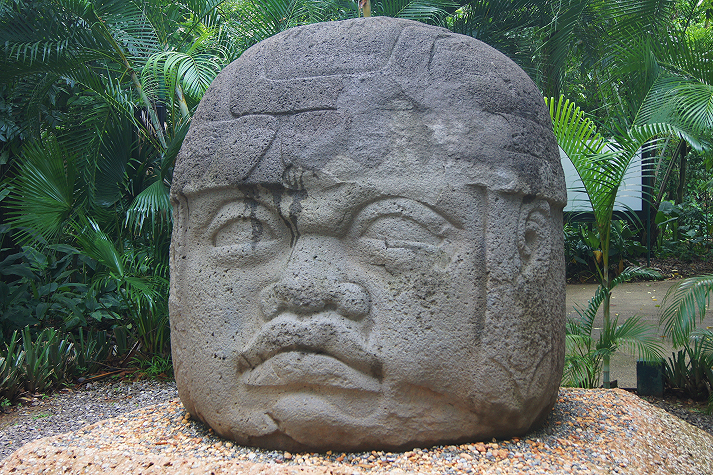
These colossal heads still stare across the land today—mysterious faces of leaders whose names are lost to time.
The Olmecs were the first in the Americas to develop writing, a calendar, and pyramids. Later civilizations would borrow their ideas, which is why historians call the Olmecs the “Mother Culture” of Mesoamerica.
Masters of Math and the Stars: The Maya
Farther east, deep in the Yucatán jungle, the Maya rose to greatness. They built city-states like Chichén Itzá and Palenque, connected by networks of roads and ruled by kings and priests.
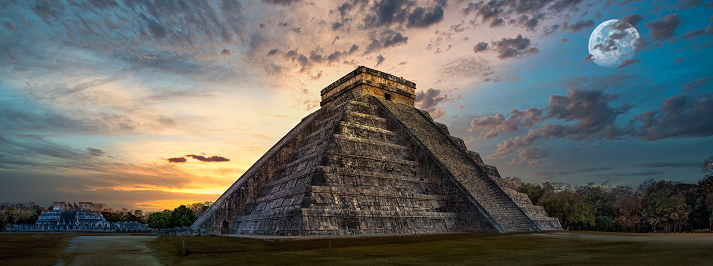
The Maya were brilliant astronomers. They tracked the movements of Venus and the moon, predicting eclipses centuries before telescopes existed.
They created a precise calendar system and used a base-20 number system—and were among the first in the world to understand zero.
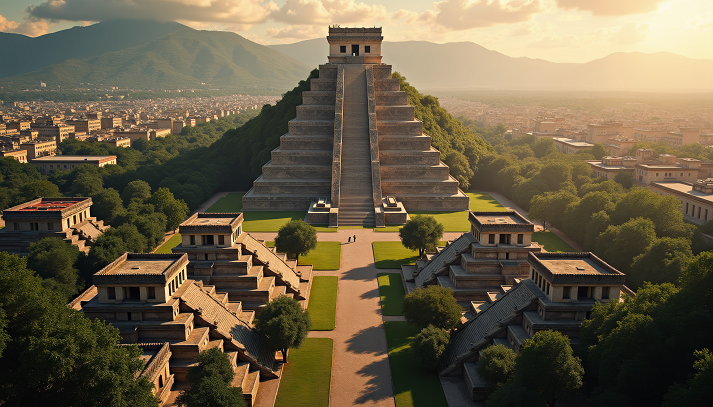
Their temples were not only places of worship but also observatories, aligned with the stars. Yet, around 900 CE, many Maya cities were mysteriously abandoned—possibly because of droughts, overpopulation, or warfare.
Their descendants still live throughout Mexico and Central America today, preserving languages, art, and traditions that stretch back millennia.
Warriors of the Valley: The Aztecs
Centuries later, a new power rose in central Mexico: the Aztecs, who called themselves the Mexica.
According to legend, their god Huitzilopochtli told them to build a city where they would find an eagle perched on a cactus eating a snake. When they saw that vision on an island in Lake Texcoco, they built Tenochtitlán—a magnificent city of canals, pyramids, and markets, home to more than 200,000 people.
The Aztecs engineered floating gardens called chinampas to grow crops on the lake’s surface.

Their empire spread across Mexico, demanding tribute from conquered peoples. But in 1519, Spanish conquistador Hernán Cortés arrived, bringing steel weapons, horses, and smallpox.
By 1521, Tenochtitlán was destroyed, and a new Spanish city—Mexico City—rose on its ruins.
A New Rule: Spain in the New World
For 300 years, Mexico was part of New Spain, ruled by the Spanish crown. Spanish settlers built churches and brought Catholicism, while native peoples were forced into labor on farms and in mines.
Gold and silver from Mexico fueled Spain’s empire, but inequality grew between European-born Spaniards and native or mixed-race Mexicans.
In 1810, a Catholic priest named Miguel Hidalgo y Costilla rang a church bell and shouted a call for freedom—the famous Grito de Dolores.
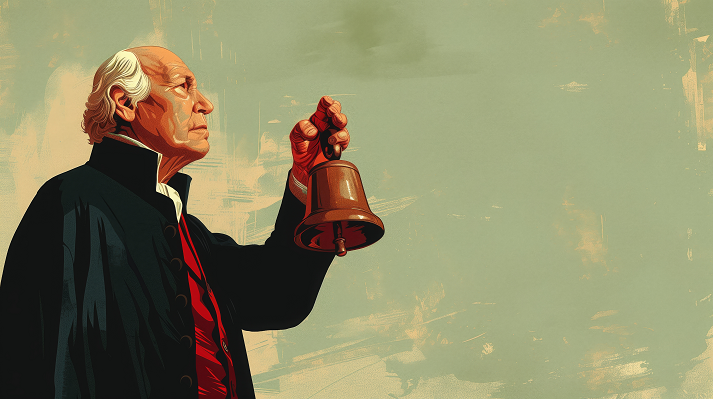
That cry began the Mexican War of Independence, which ended in 1821 when Mexico finally broke free from Spain.
Struggles for Power and Freedom
Freedom didn’t bring peace right away.
In 1846, the Mexican-American War broke out when the U.S. annexed Texas. Mexico lost about half its territory, including what is now California, Arizona, and New Mexico.
In the early 1900s, revolution swept the country again. Leaders like Pancho Villa and Emiliano Zapata fought for the rights of peasants and workers during the Mexican Revolution (1910–1920).
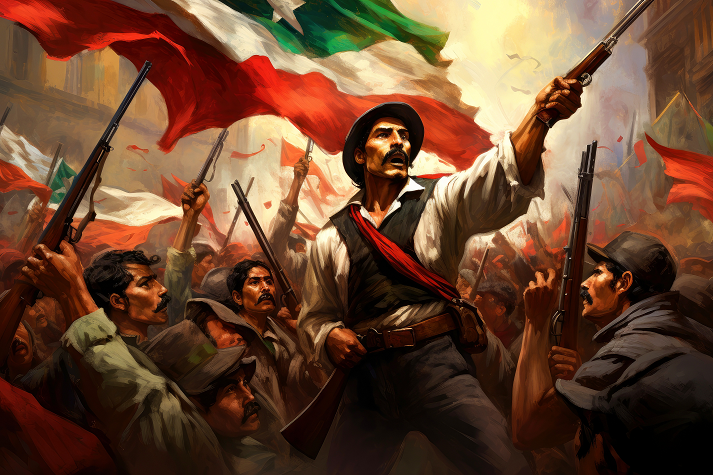
Though violent and chaotic, the revolution helped create the modern Mexican constitution and a government that aimed—at least in spirit—to represent all its people.
Symbols of Identity: The Mexican Flag
The flag of Mexico tells the story of its people. Three stripes—green, white, and red—stand for hope, unity, and the blood of heroes.
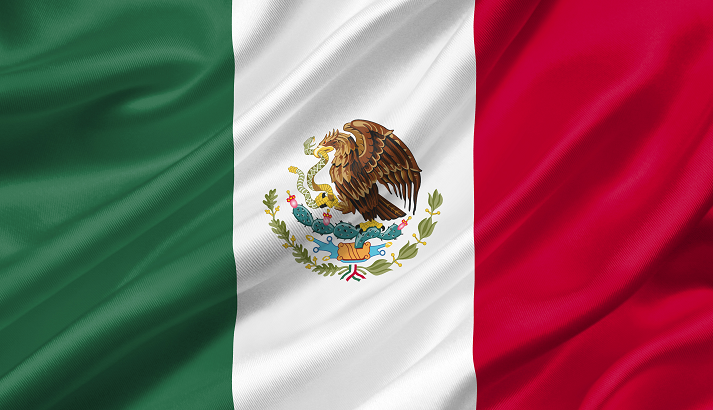
At the center, an eagle devours a snake atop a cactus—the same image the Aztecs saw when they founded their capital.
This symbol connects modern Mexico to its ancient roots, reminding its citizens that their strength comes from a blend of cultures, languages, and histories.
A Nation That Endures
Mexico’s story is one of resilience—a civilization that began with stone tools and stargazing farmers, endured conquest and revolutions, and emerged with a culture as vibrant and enduring as its people.
From Olmec sculptures to Maya calendars, from Aztec temples to modern celebrations like Día de los Muertos, each chapter adds to a story that continues to evolve.
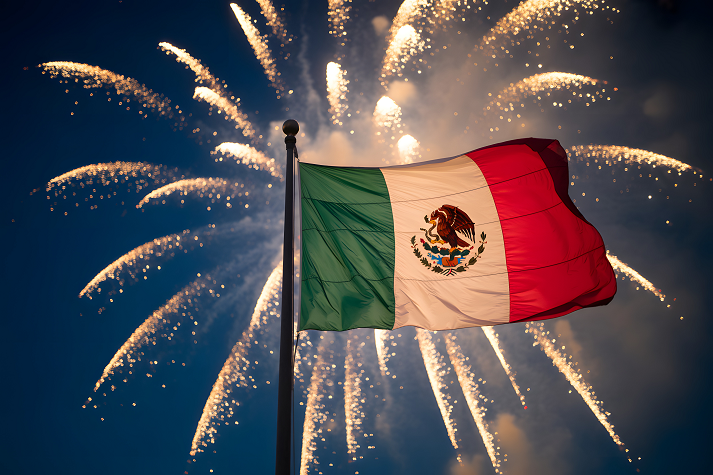
Now that you’ve uncovered how Mexico’s history unfolded from ancient empires to independence, you’re ready to test your knowledge and see how the past still echoes through the present.
Next up: Practice your new understanding of Mexico’s timeline, heroes, and empires as you travel through time—no time machine required!

Supplies
Additional Resources





 FAVORITE
 Like
Like