Sign Up
School Account Sign Up

Lesson ID: 10764
Pick your favorite weather and prove it! Learn how weather works and share your opinion with strong reasons.




What’s Going On Up There?
Step outside for a second.
That’s weather.
The weather is what the air and sky are doing right now. It can change quickly—sometimes in minutes! One moment it’s sunny, and the next, dark clouds roll in like they own the place.
Scientists who study weather are called meteorologists, and they focus on the atmosphere—the layer of air surrounding Earth where all weather happens.
Weather: More Than Just Sunny or Rainy
The weather includes many different conditions. Some you experience every day, and others are more extreme.
Here are the big ones.
Temperature – how hot or cold the air is.
Wind – moving air you can feel (and sometimes battle with).
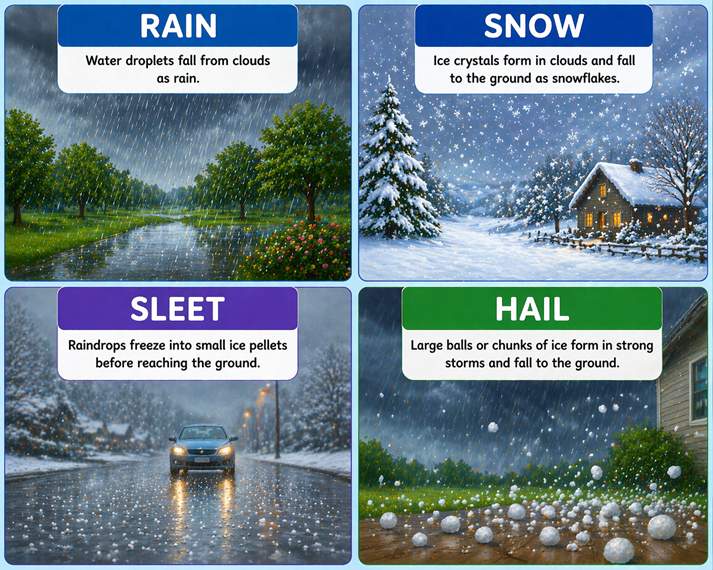
Precipitation – water falling from the sky (rain, snow, sleet, or hail).
Clouds – groups of tiny water droplets or ice crystals floating in the sky.
Air pressure – the weight of the air, which helps create weather patterns.
All of these work together like a team—sometimes a very dramatic team.
How Does Weather Even Happen?
Weather isn’t random. It follows patterns and processes happening in the atmosphere.
Here’s a simple breakdown.
The sun heats Earth unevenly. Some areas receive more heat than others, causing air to move.
This movement creates wind and helps form clouds.
Water from oceans, lakes, and rivers evaporates into the air, forming water vapor. When it cools, it condenses into clouds—and eventually falls as precipitation.
From Clouds to Rain (and Everything Else)
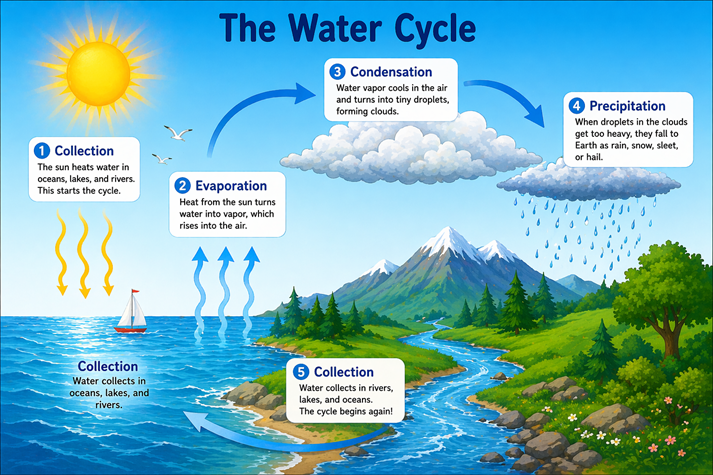
Rain doesn’t just “appear.” It follows a process.
Water heats up and turns into vapor (evaporation).
Vapor rises and cools into tiny droplets (condensation).
Droplets gather in clouds.
When clouds get too heavy, water falls as rain (precipitation).
Depending on the temperature, that precipitation might be snow, sleet, or hail instead.
When Weather Gets Extreme
Sometimes the weather goes from “grab a jacket” to “this is serious” very quickly.
For example:
A heat wave is a stretch of unusually hot weather lasting for days that can be dangerous.
A winter storm needs cold air, moisture, and rising air to create snow or ice.
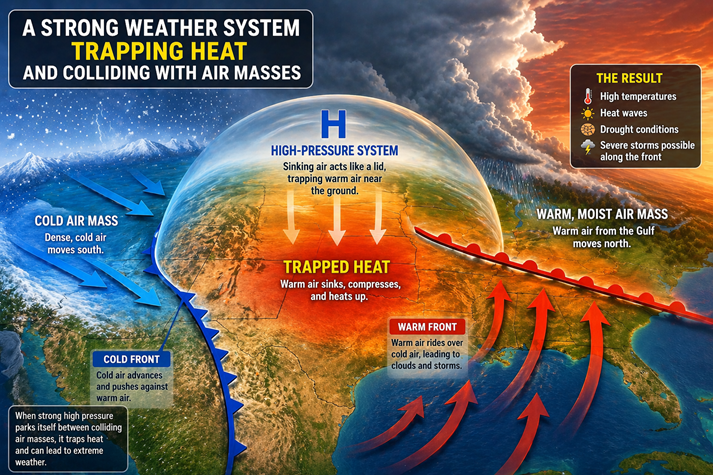
Strong weather systems can trap heat or collide with other air masses, causing major changes such as storms or sudden temperature shifts.
Weather isn’t just something to talk about—it can affect safety, travel, and daily life.
Weather vs. Climate (Quick Heads-Up)
The weather is what’s happening right now.
Climate is the pattern of weather over a long time.
Think of it this way.
Weather = today’s outfit
Climate = your whole wardrobe
Why Weather Matters to You
The weather affects almost everything.
What you wear
What you do outside
How plants grow
How people travel
Even how you feel during the day
Understanding weather helps you make better decisions—like knowing when to grab sunscreen… or when to run inside.

Ready to Make It Personal?
Now that you know how weather works, it’s time to think about your own experiences.
Up next, you’ll start exploring different types of weather and decide which one earns your vote.

Supplies
Additional Resources


 FAVORITE
 Like
Like