Sign Up
School Account Sign Up

Lesson ID: 10728
Discover how the U.S. Constitution was created, why it connects to people worldwide, and how you can use its ideas in your own projects.




What’s the Big Deal About September 17?
Imagine being in a room full of people who can’t agree on anything. It’s hot. It’s sticky. Tempers are rising. And no one’s leaving until they figure out how to run a whole country.
That’s exactly what happened in the summer of 1787.
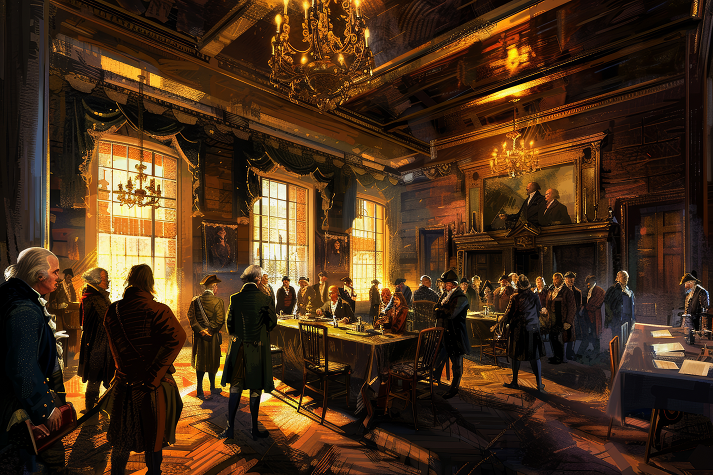
In a hall in Philadelphia, delegates from twelve of the thirteen states met to solve a huge problem: America’s first attempt at a government—the Articles of Confederation—was a disaster.
The government couldn’t collect taxes, settle disputes between states, or pay its debts. Farmers were going broke. Protests turned into armed uprisings. Something had to change—fast.
They debated. A lot. And they built something entirely new: the United States Constitution.
The Road to the Constitution
Step 1: Ditch the Articles
The Articles of Confederation were like a group project gone wrong. Each state did its own thing, and the national government had no power to make them work together.
Congress couldn’t raise money, regulate trade, or enforce laws. When Massachusetts farmers rebelled during Shays’ Rebellion, it became crystal clear—this system wasn’t cutting it.
Step 2: Gather the Delegates
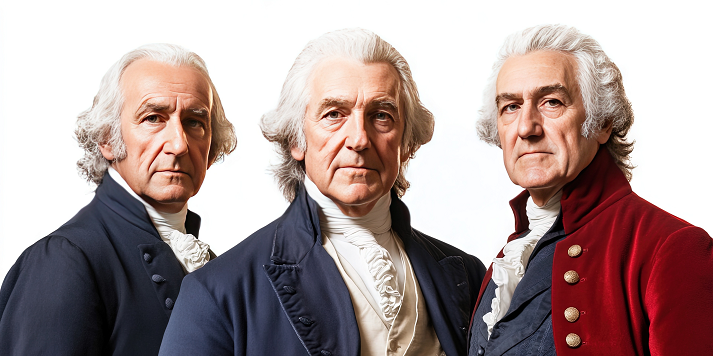
In May 1787, 55 delegates gathered in Philadelphia to revise the Articles. Spoiler alert: they didn’t revise anything. They started over.
Leading the group was General George Washington, who was unanimously elected to preside over the meetings.
Big names like James Madison and Benjamin Franklin were there, while others, like Patrick Henry, skipped the whole thing, saying he “smelled a rat”—he feared a powerful government might take away freedoms.
Step 3: Debate, Disagree, Repeat
The first big idea came from Virginia. It was called the Virginia Plan, and it suggested a strong national government with three branches—executive, legislative, and judicial—with representation based on population.
Smaller states weren’t thrilled. They worried that big states would control everything, so New Jersey proposed their own plan with equal votes for each state.
Things got heated—like, verge of collapse heated.

Step 4: The Great Compromise
Finally, a middle ground was found. In what became known as The Great Compromise, they decided that Congress would have two houses.
The House of Representatives, where representation is based on population.
The Senate, where each state gets two votes, no matter its size.
Oh, and the argument over how to count enslaved people for population and taxes?
That turned into the Three-Fifths Compromise, where three out of every five enslaved individuals would count toward a state’s total. This decision had serious consequences and would continue to fuel tensions for decades.
What’s in the Constitution?
The Constitution lays out the rules of the game for the U.S. government. Here's what it does.
Splits the government into three branches: legislative (makes laws), executive (enforces laws), and judicial (interprets laws).
Limits each branch's power so no one group can take over.
Gives citizens rights, like freedom of speech, religion, and a fair trial—added later in the Bill of Rights.
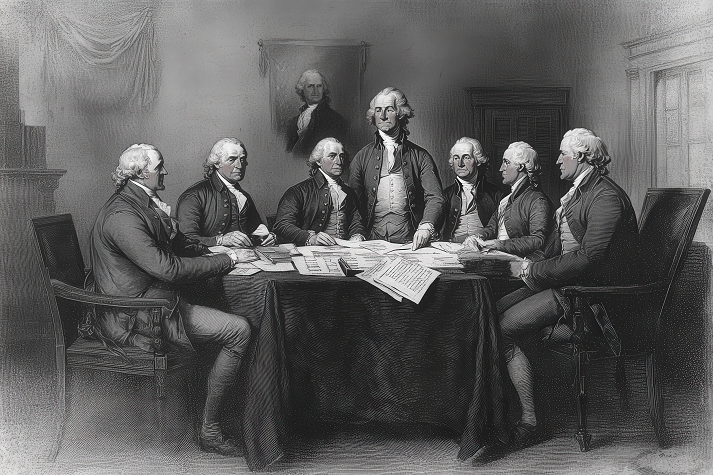
It took months of rewriting, negotiating, and—let’s be honest—compromising. But on September 17, 1787, 39 men signed the final document.
That date is what we now celebrate as Constitution Day.
Why Does It Matter?
The Constitution isn’t just a historical document. It’s the foundation for how the U.S. works today.
Every law passed, every court case decided, every presidential election—it all goes back to the rules written in that room in Philadelphia.
It also gave future generations tools to change the government when necessary. That’s how we got the Bill of Rights, and how amendments (like the 13th, which ended slavery) have helped the country grow and become more just.
Your Turn!
Now that you know the story behind Constitution Day—and why it matters—it's time to put your brain to the test.
In the Got It? section, you’ll get to practice what you’ve learned, explore key vocabulary, and dive deeper into how the Constitution affects your life today.
Head over to the next section and get started!

Supplies
Suggested Reading


 FAVORITE
 Like
Like