Sign Up
School Account Sign Up

Lesson ID: 10563
Use your words to convince! Learn how to share opinions, give reasons, and make your ideas strong and clear.




Can You Convince Me?
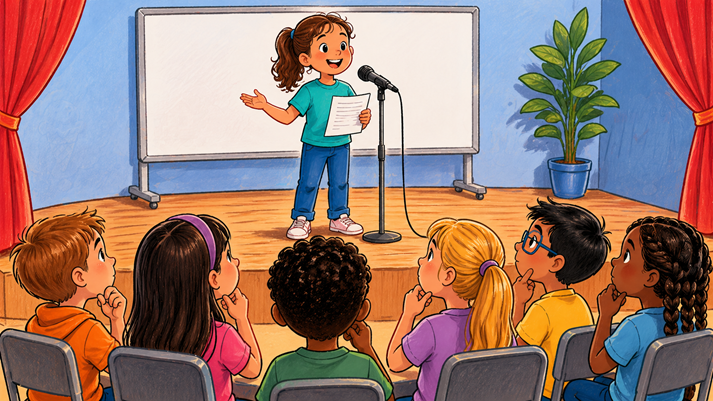
Maybe you wanted a later bedtime. Maybe you wanted pizza for dinner instead of vegetables. Maybe you wanted a pet.
You were not just talking. You were trying to convince.
That is called persuasion.
What Is Persuasion?
Persuasion means using words to convince someone to agree with you or think differently.
People use persuasion every day. You hear it in:
conversations with family
ads on TV or online
books and stories
speeches and announcements
Any time someone says, “You should…” or “This is the best because…,” they are trying to persuade.

Opinion vs. Fact
Before learning how to persuade, it is important to know the difference between an opinion and a fact.
A fact is something that is true and can be proven.
Example: The sun rises in the east.
An opinion is what someone thinks or feels.
Example: Chocolate ice cream is the best flavor.
Persuasive writing is built on opinions. But strong writers do not stop there. They support their opinions with reasons and details.
Look at this opinion:
Bedtime should be later than 8:00 PM.
That is just an opinion. It becomes stronger when you add reasons:
Bedtime should be later than 8:00 PM because there is still daylight in summer. Kids can play outside longer. Families can spend more time together.
Now the opinion has support. That makes it more convincing.

Words That Help You Persuade
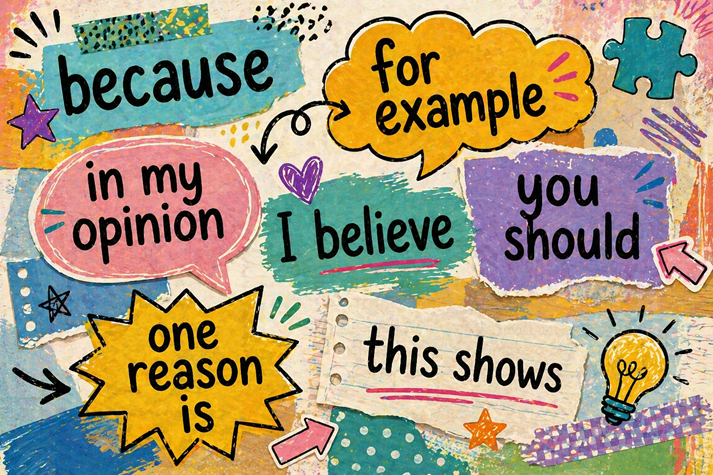
Writers use special words and phrases to help convince others. These words connect ideas and show reasons.
Here are some you can use:
These words help your reader understand your thinking.
A Story That Persuades

Imagine a person about to cut down a huge tree in a rainforest.
Now imagine animals and people speaking up to stop it. Each one gives a reason.
The tree is their home.
The forest helps all living things.
Cutting it down will hurt the environment.
Each reason adds power to the message.
This is how persuasion works. You give strong reasons so others can understand your point of view.
What Makes Persuasion Strong?
Good persuasive writing has three important parts.
Here is a simple example.
Clear Opinion: Pets should be allowed in school.
Strong Reason: Pets help students feel calm.
Helpful Detail: Some classrooms use animals to help students focus and feel safe.
Each part works together to make the idea stronger.

Think Like a Persuader
Image prompt: A child thinking with a speech bubble showing different ideas like a tree house, a pet, and dessert.
Think about something you care about.
Dessert should be allowed every day.
A tree house would be fun to build.
School days should be shorter.

There is no single “right” answer. What matters is how well you explain your thinking.
When you share your ideas with clear reasons, people are more likely to listen.
Get Ready to Practice
Now you know how persuasion works. You understand opinions, reasons, and details. You also know how to use words that help convince others.
Next, it is time to try it yourself. You will look at ideas, decide what you believe, and practice building strong, persuasive statements.
Head to the Got It? section to start practicing your new skills!

Supplies


 FAVORITE
 Like
Like