Sign Up
School Account Sign Up

Lesson ID: 10520
Discover how Ancient Rome still connects to your life through roads, letters, buildings, laws, water systems, and more!




Look at your name.
Now look at these letters:
A B C D E F G
Those letters may feel completely ordinary. You see them in books, on signs, in games, and maybe on your cereal box.
Ancient Rome did not create writing, but the Romans used the Latin alphabet, which helped shape the alphabet many people use today.
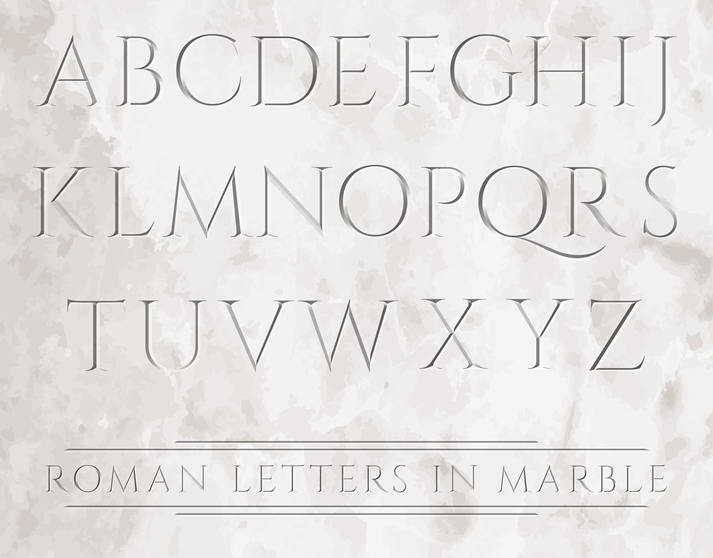
That means you may be connected to Ancient Rome before breakfast. Not bad for a civilization from more than 2,000 years ago.
In this lesson, you will explore daily life in Ancient Rome and discover how Roman ideas still show up in buildings, roads, laws, calendars, language, and more.
What Was Rome Like?
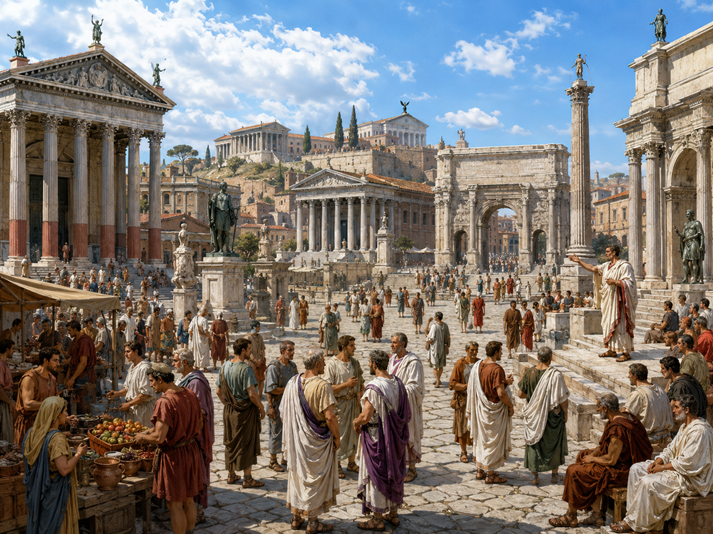
Ancient Rome was busy, crowded, and full of activity.
People might see:
The forum was one of the most important places in Rome. A forum was an open public space where people gathered. Romans could shop, hear speeches, meet others, talk about government, and take care of business there.
Think of it as a town square, mall, courthouse area, and meeting place all rolled into one very Roman location.
Daily Life in Ancient Rome
Daily life depended on who you were.
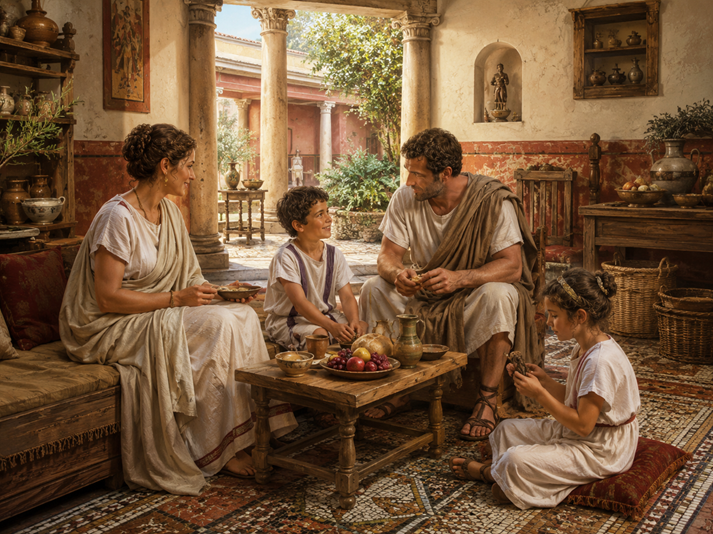
Rich Romans often lived in large homes. Some had gardens, beautiful decorations, and indoor plumbing. Wealthy children might have teachers. Rich adults could spend time at the forum, visit public baths, attend events, or host meals.
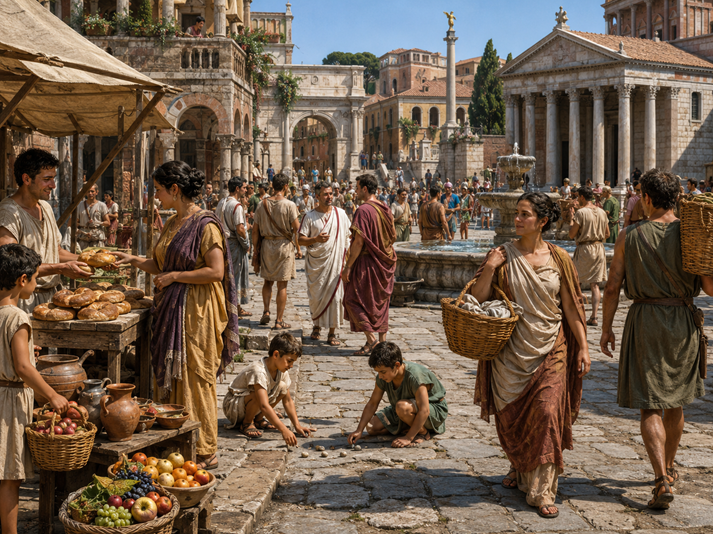
Ordinary Romans usually worked hard. Many were bakers, builders, farmers, traders, carpenters, or metalworkers. Some lived in crowded apartment-style buildings. They bought food at markets and used public fountains or baths.
Enslaved people did many kinds of work. Some worked in homes, shops, farms, mines, or building projects. Their lives were not their own, and many were treated harshly. This is an important part of Roman history, even though it is not an easy part to learn about.
Children in Ancient Rome
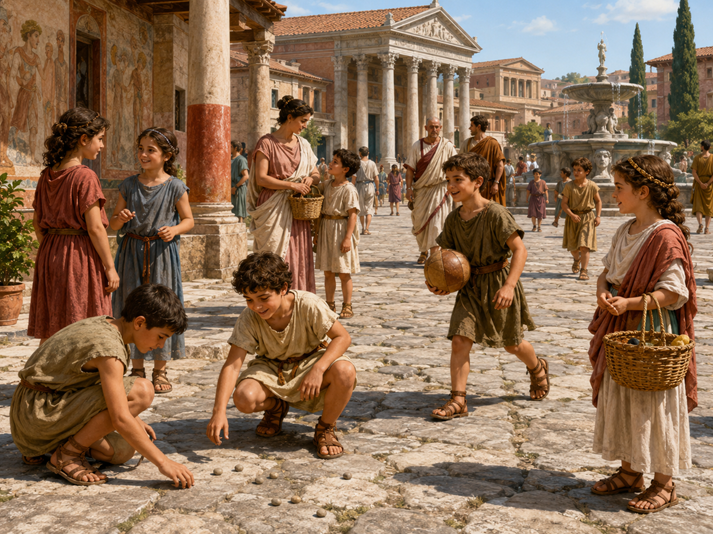
Roman children played games, just like kids today. They used toys, dolls, balls, dice, and nuts or stones for games.
But childhood was not the same for every child.
Children from wealthy families could go to school or have a tutor.
Children from poor families often helped with work.
Some children who were enslaved were forced to work.
So, yes, some Roman kids played games. But no, Ancient Rome was not one giant toga party.
Food in Ancient Rome
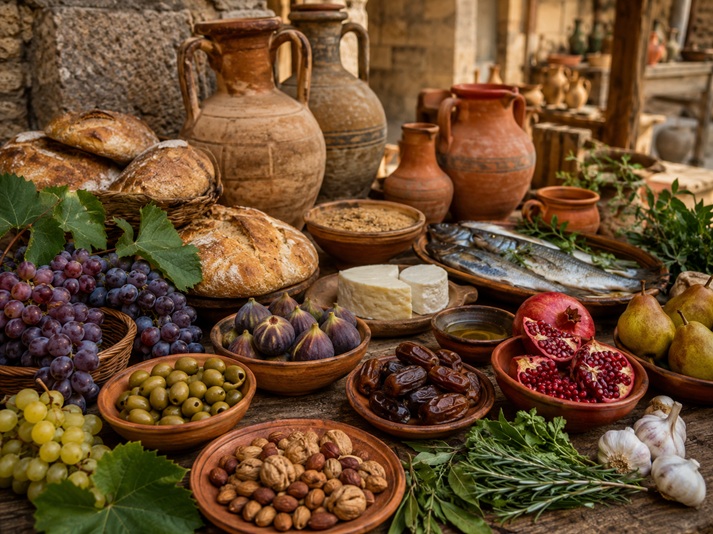
Romans ate foods such as bread, fruit, cheese, fish, vegetables, and meat when they could get it. Wealthy Romans had larger meals with more choices. Poorer Romans ate simpler foods.
Some wealthy Romans ate while reclining, or leaning back, on couches. They often ate with their fingers instead of forks. That may sound fun until you remember there were no paper towels. Ancient dining: fancy, but sticky.
Entertainment in Ancient Rome
Romans enjoyed entertainment.
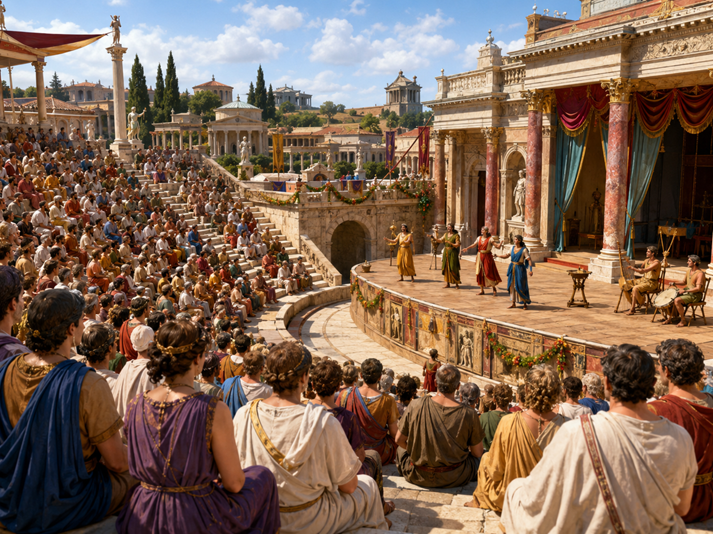
They watched plays, races, sports, and performances. Many people went to the Colosseum, a huge amphitheater that could hold thousands of people. Some events there were violent, including gladiator fights.
Romans also watched chariot races at the Circus Maximus. Chariots were small carts pulled by horses. The races were fast, loud, and dangerous.
Public baths were also popular. People went there to get clean, exercise, talk with friends, and relax. Public baths had hot, warm, and cold areas. They were kind of like a community center, gym, and bathhouse all in one.
Roman Builders
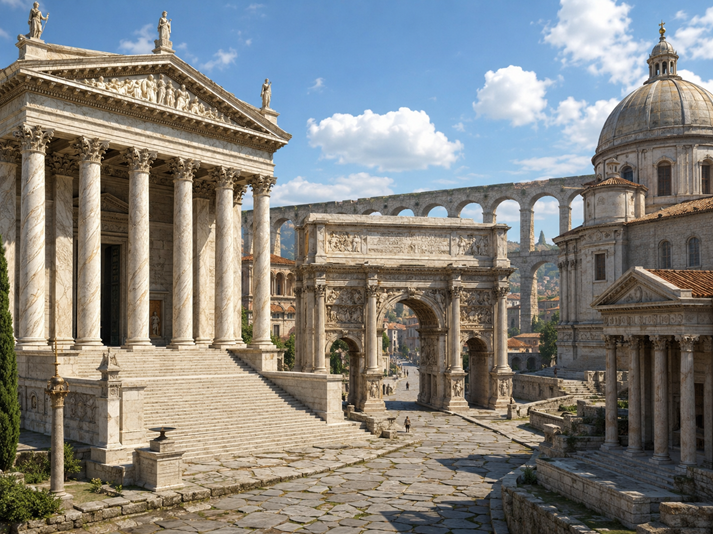
The Romans were excellent builders.
They built:
Aqueducts were stone channels that carried water from one place to another. This helped bring water into cities.
Roman roads helped soldiers, messengers, and traders travel across the empire. Some Roman roads were built so well that parts of them still exist today.
The Romans also used arches and concrete to make strong buildings. Many modern builders still use ideas that Romans helped develop.
Roman Ideas Today
You are connected to Ancient Rome in many ways.
Here are a few examples:
Ancient Rome did not give us everything, but it gave the world a lot. It is one reason history is not just “old stuff.” It is old stuff that keeps showing up in your life wearing a fake mustache.
Compare Ancient Rome and Today
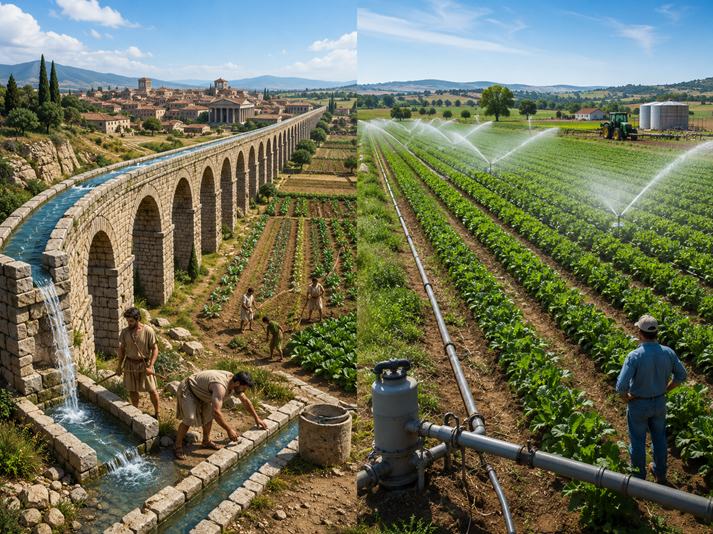
As you learn, think about how Roman life was similar to and different from your life today.
Use this simple chart in your mind or on paper:
| Ancient Rome | Today | Same or Different? |
| Romans used roads to travel and trade. | People still use roads today. |
Same |
| Some Romans visited public baths. | Many people bathe at home today. |
Different |
| Roman children played games. |
Children today play games. |
Same |
| Some Roman children had to work. |
Most children today go to school. |
Different |
| Romans watched chariot races. |
People today watch sports and races. |
Same |
Now think about these questions:
Keep these ideas in mind. In the Got It? section, you will review what you learned about Ancient Rome and how it connects to life today.

Supplies


 FAVORITE
 Like
Like