Sign Up
School Account Sign Up




From Snapshot to Slow-Motion Story
Think about this: You tell someone, “I rode a roller coaster.”
Now imagine saying:
“My stomach flipped as the cart climbed higher and higher. Click. Click. Click. I gripped the bar so tight my hands hurt. Then—WHOOSH!—we dropped, and I screamed so loud my voice disappeared!”
Same moment. Way more exciting.
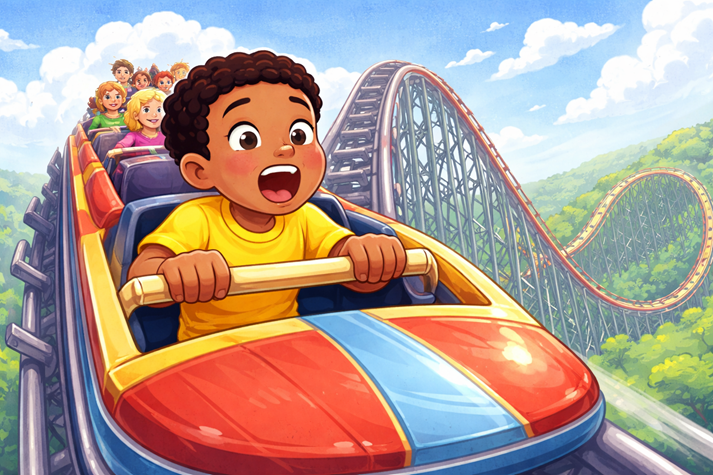
You stretched the moment.
What Does It Mean to “Stretch a Memory”?
Stretching a memory means taking one small moment and slowing it down so you can add details, thoughts, feelings, and actions.
Instead of telling it quickly like a snapshot, you turn it into a slow-motion movie.
Writers do this all the time. They take a moment that might only last a few seconds and stretch it into several sentences or even a whole story.
Snapshot vs. Stretched
Here is a quick comparison.
Snapshot:
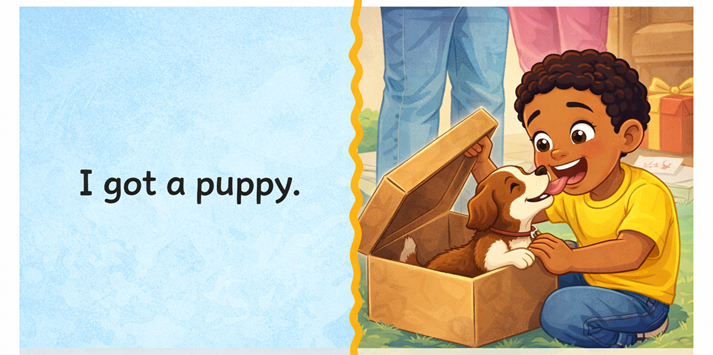
“I got a puppy.”
Stretched:
“My heart pounded as the box moved in my lap. ‘Go ahead, open it,’ my mom said with a smile. I lifted the lid slowly… and a tiny, wiggly puppy popped out and licked my nose!”
See the difference? The stretched version:
Zoom In on One Small Moment
Here is the trick: you do NOT stretch everything.
You choose one small moment and zoom in.
Not this:
“My whole birthday party”
But this:
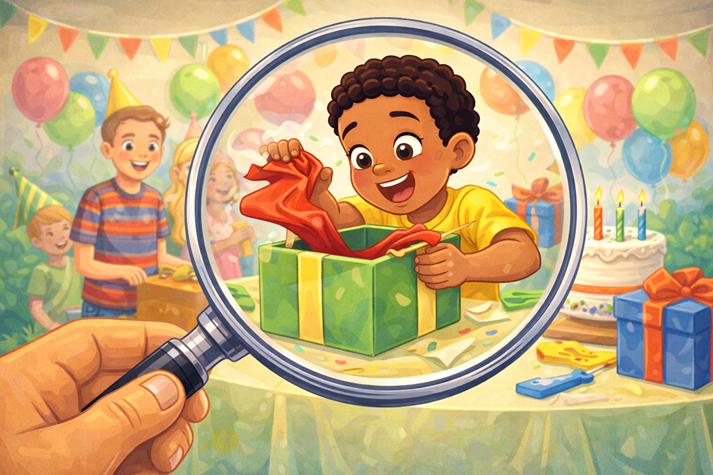
“The moment I opened my biggest present”
When you zoom in, you have space to add details that make your story interesting.
How to Stretch a Memory
You can stretch any moment by adding these five things.

Stretch It Step by Step
Watch how one sentence grows.
Short:
“I went down the slide.”
Stretched:
“I climbed to the top of the tall slide and looked down. My legs froze for a second. ‘You can do it!’ someone called. I took a deep breath, pushed off, and zoomed down so fast the wind rushed past my face!”
Now the reader can see and feel the moment.
Why Writers Stretch Moments
When you stretch a memory:
You are not adding new events—you are making one moment clearer and more exciting.
Your Turn Is Coming
You now know how to take a small moment and turn it into a detailed, exciting story by adding actions, thoughts, feelings, dialogue, and sensory details.
Next, you will practice stretching simple moments step by step and see how your writing grows into something powerful.

Supplies
Related Lessons





 FAVORITE
 Like
Like