Sign Up
School Account Sign Up

Lesson ID: 10390
Learn how to write your own play—from creating characters and dialogue to performing your story on stage or screen!




Lights, Curtain, Action!
The lights dim, the curtain rises, and—suddenly—you’re in a whole new world!
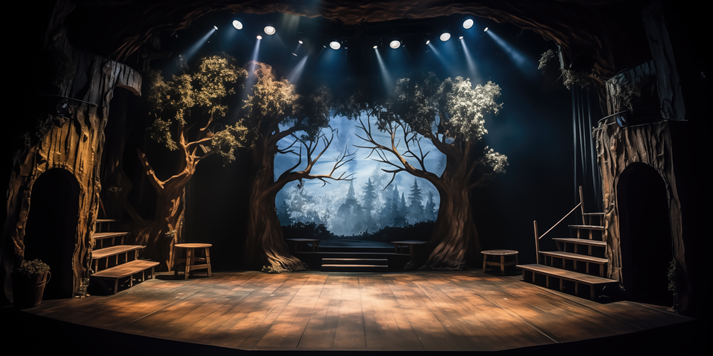
Plays are special because they don’t just tell stories; they show them through action and dialogue.
The actors speak and move to bring characters to life, and the audience gets to experience every laugh, surprise, or mystery right along with them.
Today, you’ll learn how to become the writer who creates that magic—the playwright!
What Is a Play?
A play is a story written to be performed.
Instead of long descriptions or paragraphs like in a story or novel, a play uses dialogue (what the characters say) and stage directions (notes that show how they move or feel).
Plays are divided into scenes and sometimes acts, each showing a part of the story.
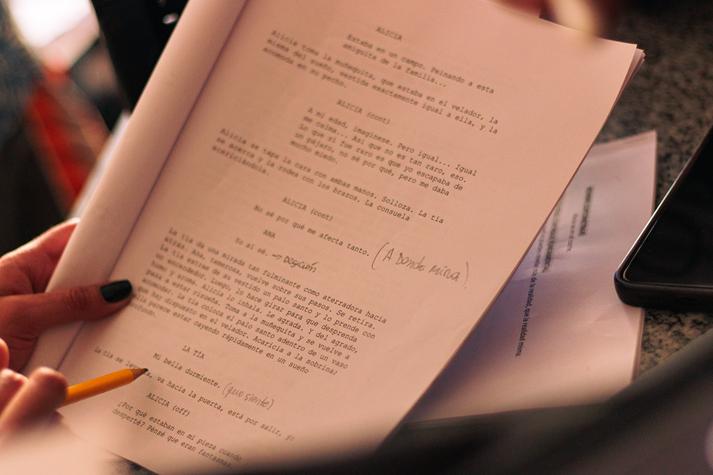
Think of your favorite story—maybe Chicken Little, who thought the sky was falling, or the playful poems from Where the Sidewalk Ends. Those tales could all be turned into plays because they have:
Characters who act and speak.
A problem that must be solved.
A beginning, middle, and end.
Even something scientific, like the Water Cycle Adventure, can become a play—where raindrops, clouds, and sunlight become talking characters that explain the science in a fun way!
The Play’s the Thing!
Every great play follows a simple structure called the story arc.
Exposition – The setup. Introduce your characters, the setting, and the problem.
Example: Chicken Little is in the barnyard when—bonk!—an acorn hits her head.
Rising Action – The tension builds. The characters try to solve the problem, but things get complicated.
Example: She meets her friends, who all panic too!
Climax – The most exciting moment!
Example: The group meets the tricky Foxy-Loxy.
Resolution – The problem is solved (or at least explained).
Example: Chicken Little learns that the sky isn’t falling after all.

Building Your Own Play
Writing a play means turning your imagination into dialogue. Here’s how to start.
Step 1: Create Your Characters
Use the Character Chart in your Writing a Play Graphic Organizer to brainstorm. (Downloadable Resources in the right-hand sidebar.)
Give each character a name, personality, and something they love—or something that gets them into trouble!
Step 2: Choose a Setting
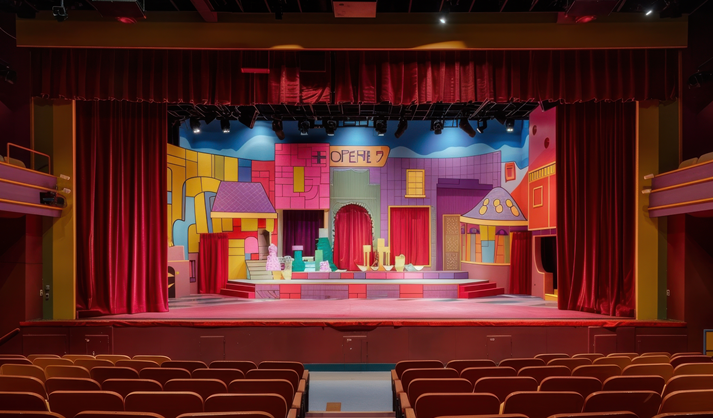
Your setting helps the audience imagine the world your characters live in.
Step 3: Decide on the Problem
Every story needs something to solve. Maybe your character loses something, faces a challenge, or has to make a tough decision.
For example:
In Chicken Little, the problem is fear—believing the sky is falling.
In Water Cycle Adventure, the problem is movement—how water travels and changes.
In Where the Sidewalk Ends, the challenge is curiosity—what happens when imagination takes over?
Step 4: Add Dialogue and Action
This is where your play really comes alive! Each line starts with the character’s name, followed by what they say.
Stage directions are written in parentheses or brackets, like this:
(Chicken Little looks up at the sky, nervously holding her head.)
When you write, imagine your audience watching the story happen right before them.
Make It Real
Once your draft is written, revise and edit it using the checklist in your Writing a Play Graphic Organizer.
Does each sentence end with punctuation?
Are capital letters and quotation marks used correctly?
Do the characters sound natural when they speak?
Read your play out loud. Listening to it helps you hear if the dialogue flows and sounds realistic.
Remember, good plays sound like real conversations—sometimes funny, sometimes serious, but always full of life.

From Script to Stage
Now that you know how to write a play, you’re ready to bring it to life!
In the Got It? section, you’ll use your Writing a Play Graphic Organizer to brainstorm characters, problems, and settings. Then you’ll start writing your own short play—your story told on stage.

Supplies



 FAVORITE
 Like
Like