Sign Up
School Account Sign Up




One Person, A Hundred Jobs?!
Imagine someone who:
runs a business
writes books and jokes people still quote today
invents tools people still use
studies science just for fun
helps start a country
Sounds like a whole team of experts, right?
It’s actually one person.
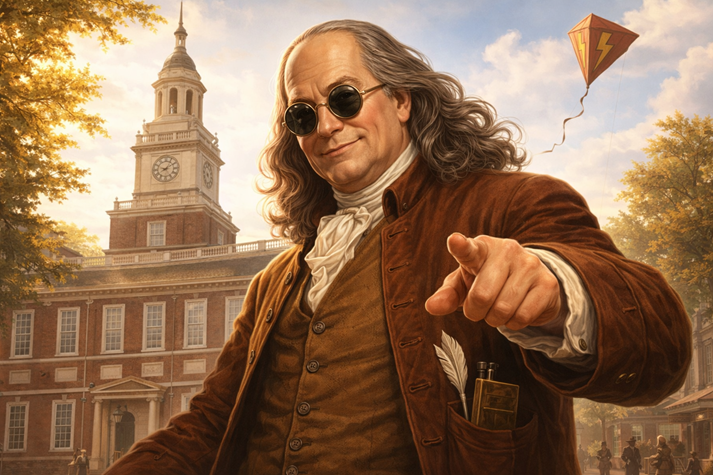
Meet Benjamin Franklin—arguably one of the busiest (and most curious) people in history.
So… Who Was Benjamin Franklin?
Benjamin Franklin was born in 1706 in Boston, in a large family with 17 children. His father made candles and soap, and money was tight. Franklin only went to school until age 10 before he had to start working.
That might sound like a disadvantage, but here’s the twist: Franklin never stopped learning.
Instead of formal school, he taught himself by reading constantly. He read anything he could find—books, newspapers, pamphlets—and turned himself into a skilled writer and thinker.
By age 12, he worked as an apprentice in a print shop. By age 16, he secretly wrote articles for a newspaper under a fake name because his brother wouldn’t publish his work. When his brother found out… it didn’t go well.
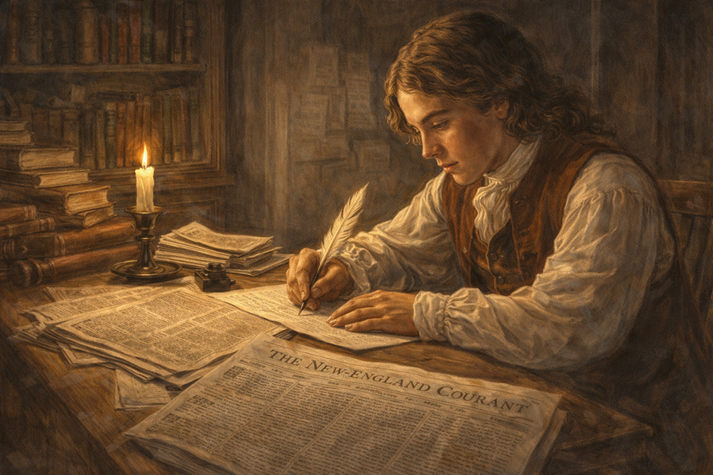
So Franklin made a bold move.
He ran away.
A Fresh Start and Big Ideas
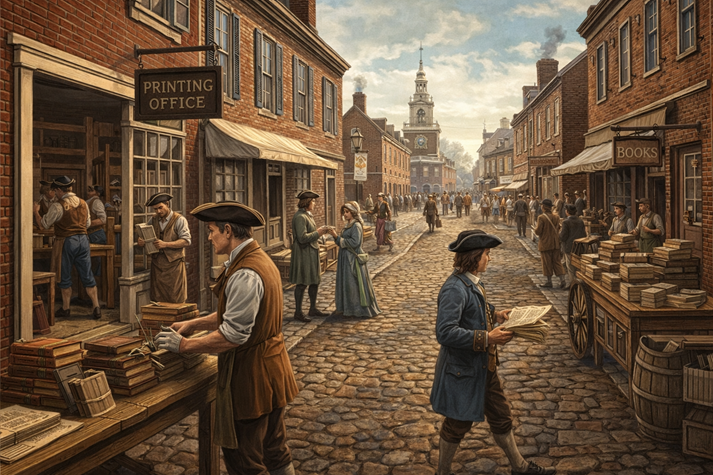
At 17, Franklin arrived in Philadelphia with almost nothing. Within a few years, he built a successful printing business and eventually owned a popular newspaper called the Pennsylvania Gazette.
He also created Poor Richard’s Almanack, a yearly publication filled with advice, humor, and clever sayings like:
“Early to bed and early to rise makes a person healthy, wealthy, and wise.”
Franklin didn’t just want to make money—he wanted to improve his community. He helped start:
one of the first lending libraries
a volunteer fire department
a hospital
a college that later became the University of Pennsylvania
He saw problems and looked for ways to fix them. That pattern shows up again and again in his life.
The Science Guy (Before It Was Cool)
Franklin’s curiosity didn’t stop with writing and business.
He became a scientist and inventor—even though he never had formal training in science.
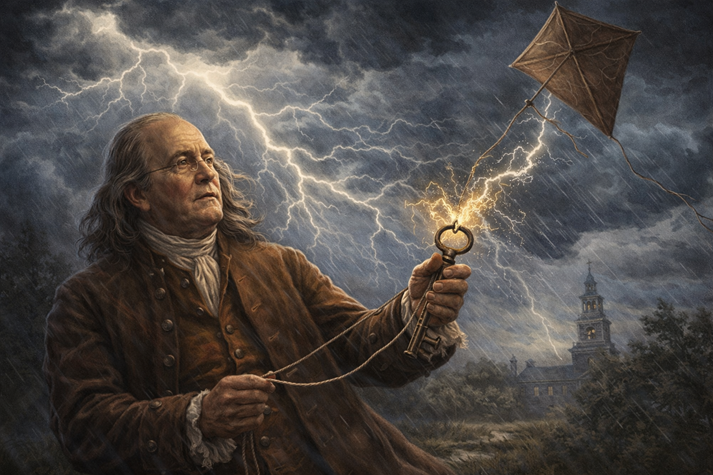
He experimented with electricity and proved that lightning is a form of electricity. His famous kite experiment helped him test this idea.
He invented:
the lightning rod, which protects buildings from lightning strikes
bifocal glasses, so people can see both near and far
the Franklin stove, which heats homes more efficiently
Here’s something unusual: he never patented his inventions. He believed ideas should be shared to help everyone.
The Ultimate Multitasker
Franklin didn’t stick to just one career. He constantly changed roles and added new skills.
At different times in his life, he was:
a printer and writer
a scientist and inventor
a community leader
a politician
a diplomat representing the American colonies
He even improved the postal system, making mail faster and more reliable across the colonies.
Instead of choosing one path, Franklin followed his curiosity—and that made him incredibly influential.
From Colonies to Country
As tensions grew between the American colonies and Great Britain, Franklin tried to help both sides understand each other. At first, he hoped to avoid conflict.
When that failed, he supported independence.
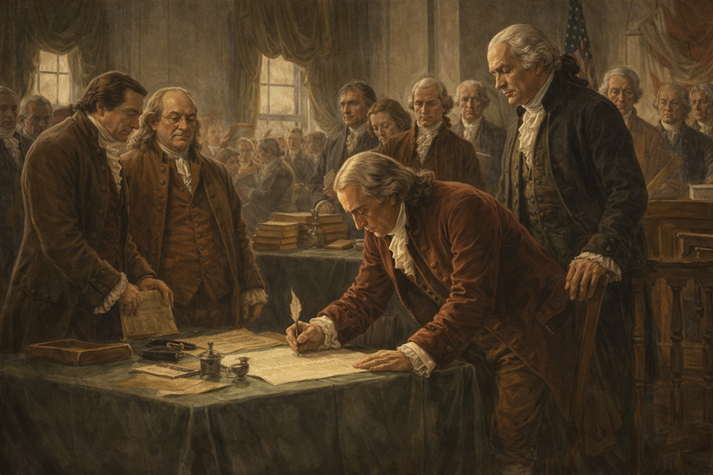
He helped write the Declaration of Independence and later helped create the United States Constitution.
He also served as an ambassador to France, where he convinced the French to support the American colonies. That support helped the colonies win the Revolutionary War.
In fact, Franklin signed four key documents that shaped the United States:
the Declaration of Independence
the Treaty of Alliance with France
the Treaty of Paris (which ended the war)
the Constitution
That’s a résumé most people can’t even dream of.
Why Franklin Still Matters Today
Benjamin Franklin’s life shows that one person can:
keep learning, no matter their background
solve problems in creative ways
make a difference in science, government, and everyday life
He didn’t wait to be told what to do. He noticed problems and took action.
And here’s the key idea to remember:
You don’t have to choose just one thing to be.
You can explore, learn, and grow in many directions—just like Franklin did.
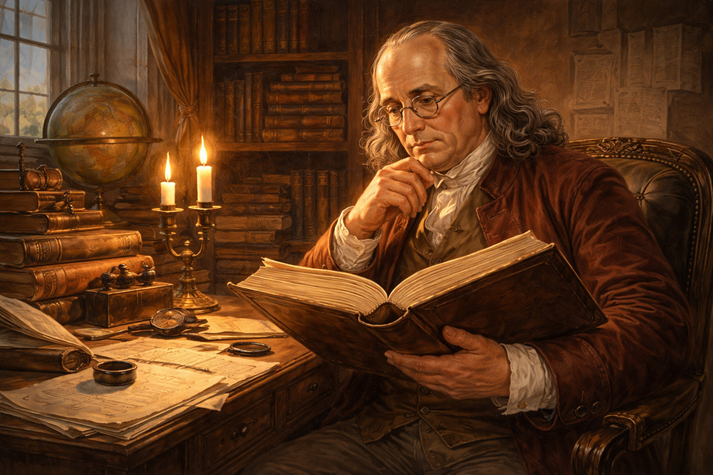
Now that you’ve learned how Benjamin Franklin became one of the most versatile and influential people in history, it’s time to test what you remember and think more deeply about his many roles.

Supplies
Additional Resources
Suggested Reading


 FAVORITE
 Like
Like