Sign Up
School Account Sign Up




Imagine you just finished running, jumping, and playing outside. Now you are thirsty. Very thirsty. Your mouth feels like a desert with sneakers.
Someone offers you two cups of water.
One cup is short and wide.
One cup is tall and skinny.
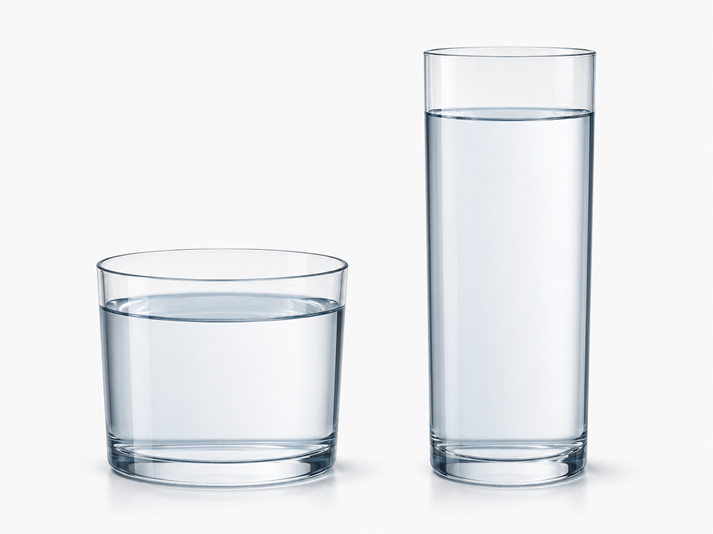
You might think the tall cup holds more because it looks bigger.
Not always!
To know how much a container can hold, you need to think about its capacity.
What Is Capacity?
Capacity means how much a container can hold.
A container is anything that can hold something inside it.
A cup can hold water.
A bowl can hold cereal.
A jar can hold buttons.
A bathtub can hold water.
A backpack can hold books.
Each of these things has capacity because each one can hold something.
A container with a large capacity can hold more.
A container with a small capacity can hold less.
Look at these examples.
A spoon has a small capacity. It can hold a little bit of soup.
A cereal bowl has a larger capacity. It can hold more soup than a spoon.
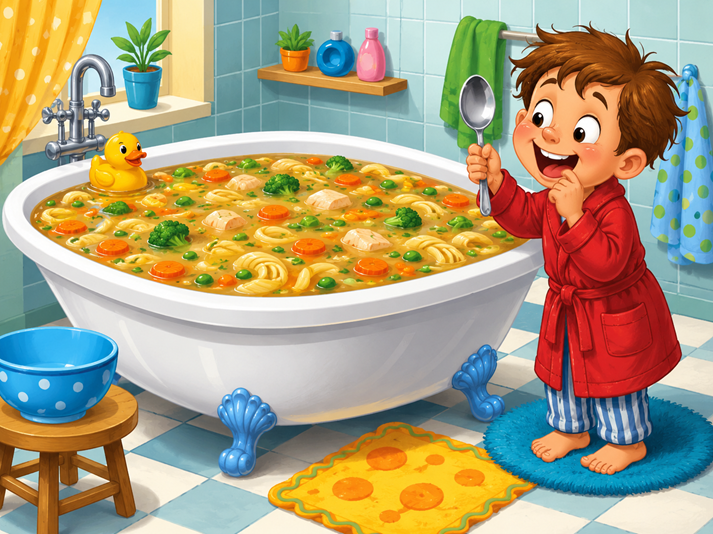
A bathtub has a much larger capacity. It can hold a lot of soup.
Please do not eat soup from a bathtub. That is not the lesson goal.
Capacity Is Not Always About Height
Sometimes a taller container holds more.
Sometimes a shorter container holds more.
That sounds sneaky, but containers can fool your eyes.
A tall, skinny glass may look like it holds a lot.
A short, wide bowl may look smaller.
But the bowl might hold more because it is wider.
To compare capacity, look at the whole container.
Ask yourself:
The space inside the container tells you how much it can hold.
Estimate First
Before you measure capacity, you can estimate.
To estimate means to make a smart guess.
Look at two containers. Ask yourself which one you think will hold more.
You might say:
I estimate the big bowl has a greater capacity than the small cup.
I estimate the little jar has a smaller capacity than the pitcher.
I estimate these two containers have about the same capacity.
Then, you can test your estimate.
Compare Capacity
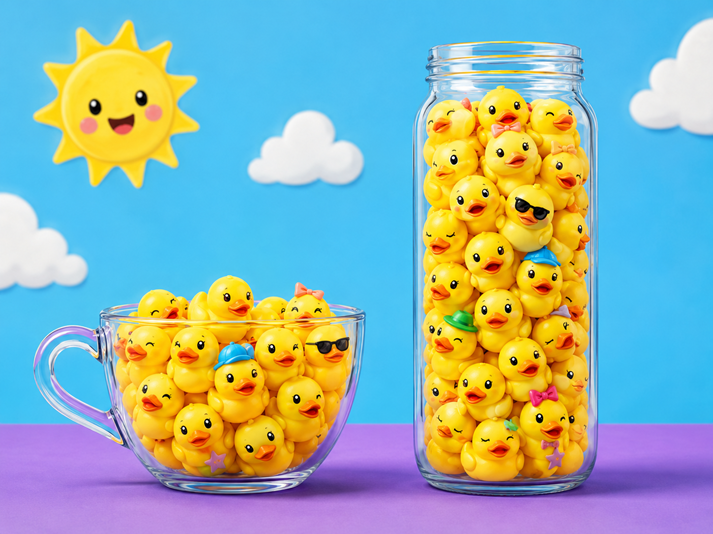
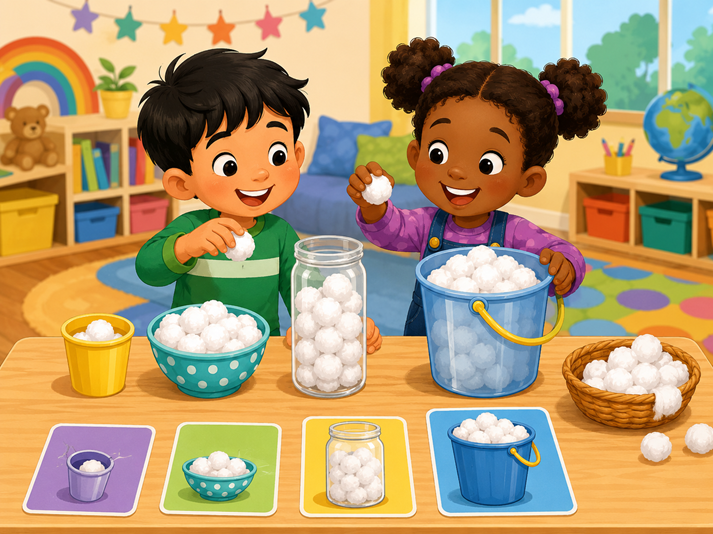
You can compare capacity by filling containers.
You can use water, rice, beans, cereal, cotton balls, or another safe item that pours or fits inside.
Try this.
The container that holds more has the greater capacity.
The container that holds less has the smaller capacity.
If both containers hold about the same amount, they have about the same capacity.
Use Capacity Words
You can use these words when you compare containers.
More capacity means a container holds more.
Less capacity means a container holds less.
Greater capacity means a container can hold more than another container.
Smaller capacity means a container can hold less than another container.
Same capacity means two containers hold about the same amount.
Try saying these sentences aloud.
The pitcher has a greater capacity than the cup.
The spoon has a smaller capacity than the bowl.
The two jars have about the same capacity.
These words help you explain what you notice.
Measure Capacity
Sometimes you do not want to guess. You want to measure.
Measuring capacity tells you how much a container can hold.
Some common capacity units are:
You may see these words on milk jugs, juice bottles, water bottles, measuring cups, food containers, and shampoo bottles.
A measuring cup helps you measure capacity.
For example, you can fill a container and find out how many cups it holds.
If a small bowl holds 2 cups, its capacity is 2 cups.
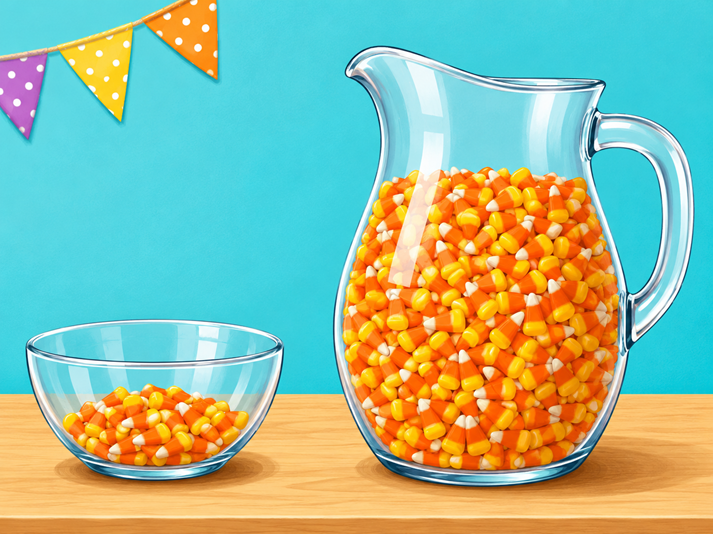
If a pitcher holds 8 cups, its capacity is 8 cups.
Since 8 cups is more than 2 cups, the pitcher has a greater capacity than the bowl.
Capacity Is All Around You
Capacity helps people choose the right container.
You use capacity when you choose a water bottle for a long walk.
You use capacity when you pick a bowl for soup.
You use capacity when you pour juice into a cup.
You use capacity when you help put leftovers into a container.
Capacity also matters in bigger places.
An elevator has a capacity because it can safely hold only a certain number of people.
A theater has a capacity because only a certain number of people can fit inside.
A gas tank has a capacity because it can hold only a certain amount of fuel.
A balloon has a capacity because it can hold only so much air before it pops.
Pop! That balloon learned about capacity the hard way.
Explore Capacity
Now try a capacity investigation.
Try again with two new containers.
As you explore, think about these questions.
Capacity can be tricky, but you can figure it out by estimating, comparing, and measuring.
Next, move to Got It? to practice choosing and comparing containers by capacity.

Supplies


 FAVORITE
 Like
Like