Sign Up
School Account Sign Up

Lesson ID: 10046
When you look at magazine pictures or the television, things seem flat. That's because they are! They lack a dimension called depth. Learn more about solid shapes, and your world won't seem so flat!




Quick Query
You might draw a circle. That works on paper! But a real ball is not flat. You can hold it, roll it, toss it, and chase it when it escapes under the couch. Sneaky ball.
That is the difference between a flat shape and a solid shape.
A flat shape is 2D. It has 2 dimensions: length and width.
A solid shape is 3D. It has 3 dimensions: length, width, and depth.
Look around you.
A piece of paper is flat.
A book is solid.
A drawn circle is flat.
A ball is solid.
A drawn square is flat.
A block is solid.
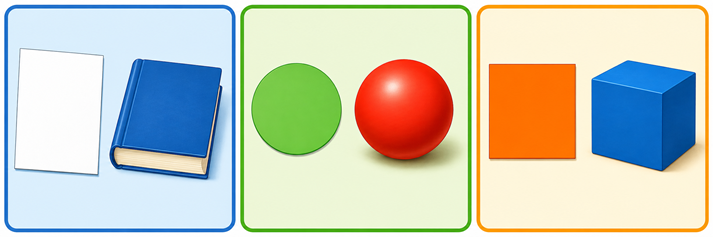
In this lesson, you will learn how to identify solid shapes. Solid shapes are the 3D shapes you can hold, stack, roll, or build with.
Flat Shapes and Solid Shapes
A flat shape is called a plane shape. Plane shapes are 2D.
A plane shape is flat like a drawing on paper.
Examples of plane shapes include:
A solid shape is 3D. Solid shapes are not flat. They take up space.
You can often pick up a solid shape, turn it around, and see different parts of it.
Examples of solid shapes include:
Meet the Solid Shapes
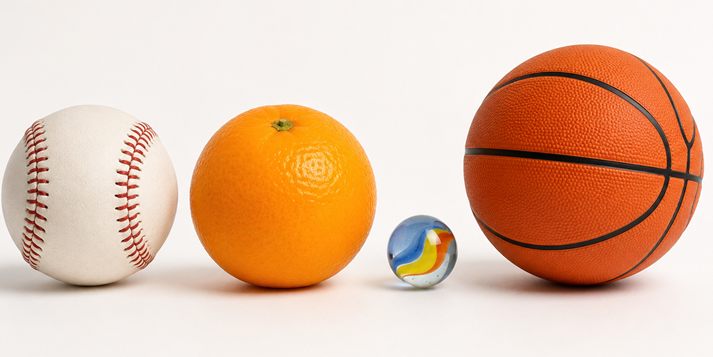
A sphere is round like a ball.
A sphere has no flat faces. It can roll in any direction.
Everyday examples:
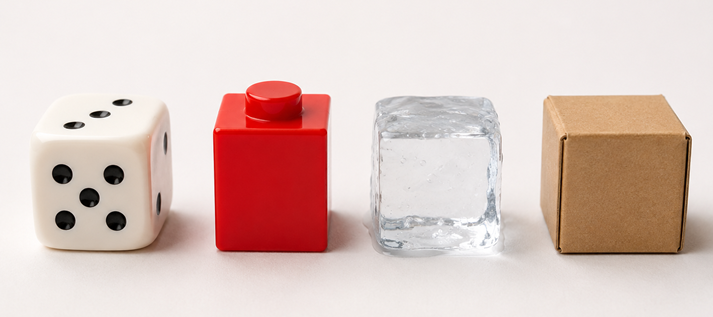
A cube has 6 square faces.
A cube can slide, stack, and sit flat. Each face is the same shape and size.
Everyday examples:
A cone has a circle face and one point.
A cone can roll in a curved path, but it can also stand on its flat circle face.
Everyday examples:

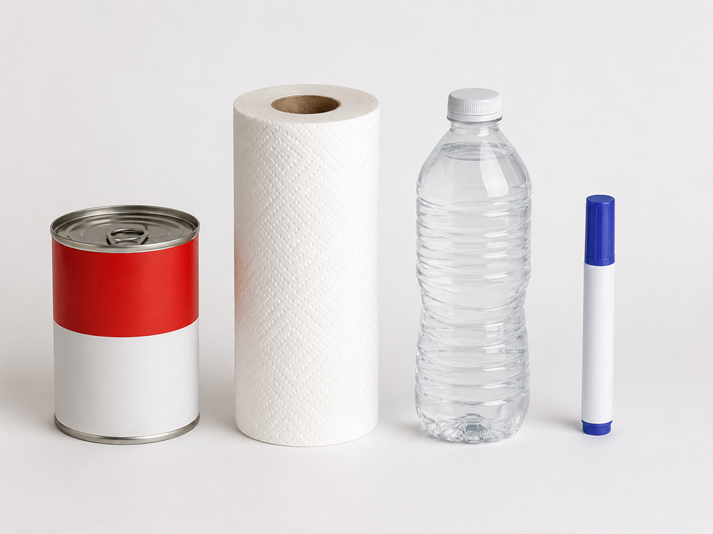
A cylinder has 2 circle faces.
A cylinder can roll on its curved side. It can also stand on one of its flat circle faces.
Everyday examples:
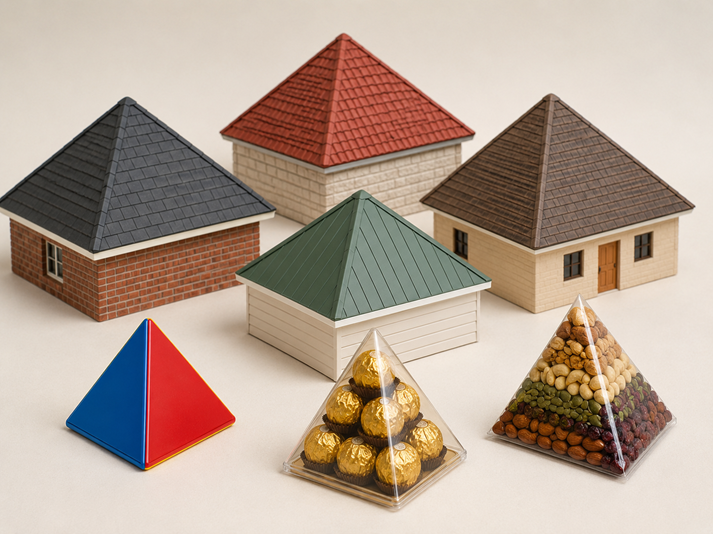
A pyramid has one base and triangle faces that meet at a point.
Many pyramids have a square base, but some pyramids have different base shapes.
Everyday examples:
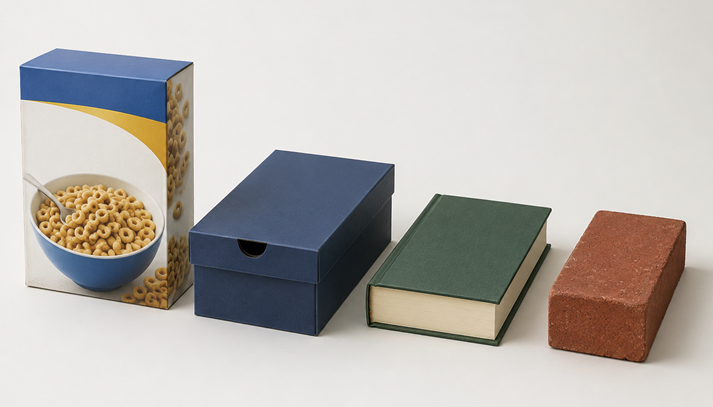
A rectangular prism has 6 rectangle faces.
A rectangular prism looks like a box. Some faces may be squares, but the whole shape is not always a cube.
Everyday examples:
Shape Detective Tip
Ask yourself these questions when you see a shape.
Then it is a 2D plane shape.
Then it is a 3D solid shape.
It is a sphere.
It is a cube.
It is a cylinder.
It is a cone.
It is a pyramid.
It is a rectangular prism.
Try It in Your Space
Look around the room.
Some solid shapes are easy to spot. Others are trickier because real objects can be made of more than one shape.
For example, a pencil can look like a cylinder, but its sharpened tip may look like a cone.
A toy house may have a rectangular prism body and a pyramid roof.
Solid shapes are everywhere. Once you learn their names, your world will look less flat and a lot more buildable.
Now that you know how to identify solid shapes, move to the Got It? section to practice spotting them.

Supplies


 FAVORITE
 Like
Like