Sign Up
School Account Sign Up

Lesson ID: 14078
Anne Frank's words share the extraordinary struggles and hopes of a young girl in hiding during WWII, offering a personal view of history, while teaching about courage and resilience.




Your Words, Your Time Capsule
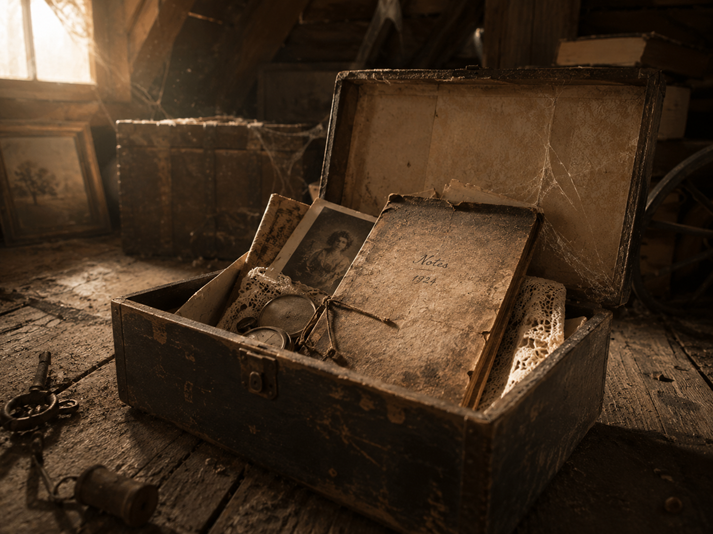
Imagine finding a notebook hidden in an attic, tucked inside an old box. The pages are yellowed, the handwriting looks old-fashioned, and the first entry begins with something simple:
Today was hard, but I do not want to forget it.
Suddenly, that notebook is not just paper. It is a time machine.
A diary can capture what a person sees, fears, hopes, wonders, and survives. It can record ordinary details, such as a favorite food or an argument with a family member. It can also record extraordinary events, such as war, danger, injustice, and loss.
That is why Anne Frank’s diary still matters.
Anne did not write her diary because she expected millions of people to read it one day. She wrote because she needed a place for her thoughts. Her diary became one of the most important personal records from World War II and the Holocaust.
A Girl With a Pen and a Powerful Voice
Anne Frank was born in 1929 in Frankfurt, Germany. She was Jewish, which means she belonged to the Jewish faith and culture.
When Adolf Hitler and the Nazi Party gained power in Germany in 1933, they promoted antisemitism, or hatred and discrimination against Jewish people.
To escape danger, Anne’s family moved to Amsterdam in the Netherlands. For a while, life seemed safer there.
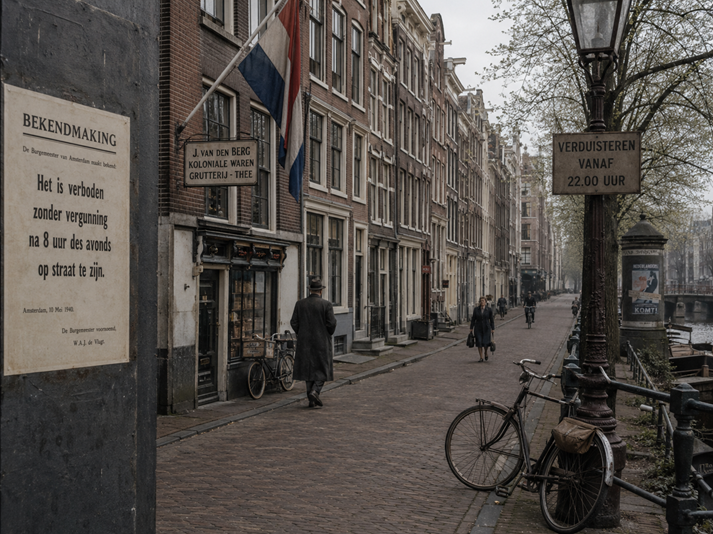
Then, in 1940, Germany invaded the Netherlands during World War II. Life became more dangerous for Jewish families. The Nazis created harsh laws that took away Jewish people’s rights and freedoms.
Jewish people could not go to many public places, use many services, attend the same schools as other children, or move freely in their own communities. They were forced to wear a yellow star so others could identify them as Jewish.
Anne was still a young teenager, but the world around her had changed quickly.
The Diary Begins
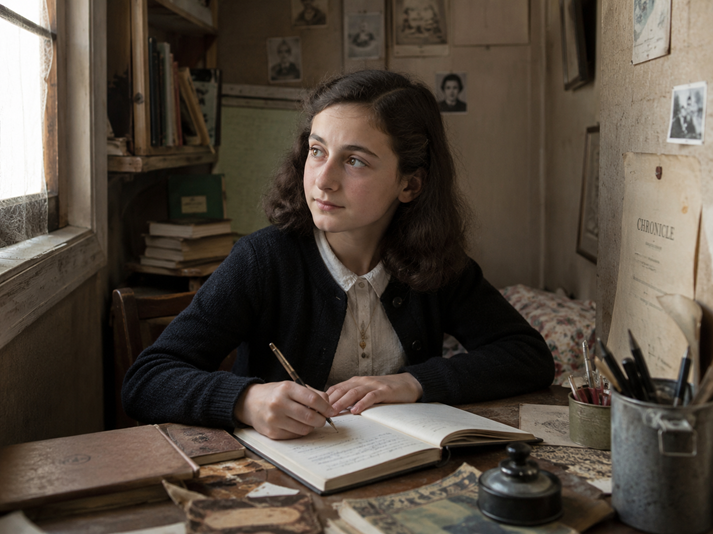
On Anne’s thirteenth birthday, she received a diary as a gift. Like many teens, she wrote about everyday thoughts, friendships, frustrations, family, and feelings.
She gave her diary a name, Kitty, and wrote to it as if she were writing to a trusted friend.
That detail matters.
Anne’s diary is powerful because it does not only describe history from far away. It shows history through the eyes of one real person. Anne was not a symbol when she began writing. She was a girl trying to understand her life.
Her words remind you that history happened to individual people with families, jokes, fears, talents, and dreams.
Life in the Secret Annex
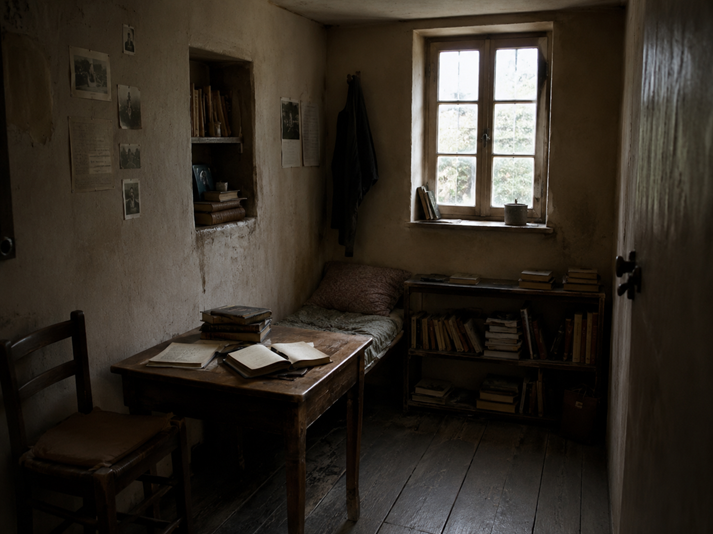
In July 1942, Anne’s family went into hiding. They moved into hidden rooms above and behind the business where Anne’s father, Otto Frank, had worked. This hiding place became known as the Secret Annex.
The Frank family did not hide alone. Another family, the van Pels family, and a man named Fritz Pfeffer also lived there. Eight people shared a small space for more than two years.
They could not go outside.
They had to stay quiet during the day so workers in the building would not hear them.
They depended on trusted helpers, including Miep Gies and others, who brought food, supplies, and news.
They lived with the constant fear of being discovered.
That kind of fear is hard to imagine. A dropped object, a loud footstep, or an unexpected noise could feel dangerous. Anne’s diary describes that pressure, but it also shows her humor, curiosity, anger, hope, and honesty.
What Was the Holocaust?
To understand Anne’s diary, you need to understand the Holocaust.
The Holocaust was the systematic persecution and murder of six million Jewish people by Nazi Germany and its collaborators during World War II. The Nazis also targeted other groups, including Roma people, people with disabilities, Polish and Soviet civilians, prisoners of war, and people who opposed Nazi rule.
Anne Frank’s diary does not tell the whole story of the Holocaust. No single book can do that. However, it gives a deeply personal view of what Nazi persecution meant for one young person and her family.
Instead of only seeing dates, numbers, and laws, you hear Anne’s voice. You see how hatred and unfair rules affected daily life.
You understand that history is not just something written in textbooks. It is something people lived through one day at a time.
A Diary Anne Never Planned to Publish
In August 1944, the Secret Annex was discovered. The people hiding there were arrested and sent to concentration camps.
Anne and her sister Margot later died at the Bergen-Belsen concentration camp in 1945. Anne was only fifteen years old.
Otto Frank, Anne’s father, was the only person from the Secret Annex who survived the war. After he returned to Amsterdam, Miep Gies gave him Anne’s diary and other papers she had saved after the arrest.
Otto read Anne’s words and understood their importance. Her diary was first published in Dutch in 1947. It later became known around the world as Anne Frank: The Diary of a Young Girl.
Today, Anne’s diary remains one of the most widely read firsthand accounts connected to the Holocaust.
Why Anne’s Diary Still Matters
Anne Frank’s diary matters because it shows both history and humanity.
It shows how quickly rights can be taken away when prejudice becomes law.
It shows how fear can shape everyday life.
It shows how writing can help a person think, question, and hold on to hope.
It shows that young people’s voices matter.
Anne did not write like a historian looking back after the danger had passed. She wrote from inside the danger. That makes her diary honest, immediate, and unforgettable.
As you read Anne’s words, pay attention to what she describes and how she describes it. Look for details about fear, hope, unfair treatment, family life, and survival.
Her diary can help you understand the Holocaust not only as a major historical event, but also as a human experience lived by real people.
Next, you will read excerpts from Anne Frank’s diary and practice identifying what her words reveal about life in hiding, discrimination, and resilience.

Supplies


 FAVORITE
 Like
Like