Sign Up
School Account Sign Up

Lesson ID: 14384
Travel back to ancient Rome for Saturnalia—the festival of fun, feasts, and flipped roles! Discover how Roman celebrations inspired many of today’s winter traditions.




Party Like It’s 100 B.C.!
Imagine this: you wake up one December morning in ancient Rome, and everything is upside down. Your teachers give you candy instead of homework. Your parents let you stay up late. Even your boss (if you had one) gives you the day off—and might even serve you dinner!
Welcome to Saturnalia, the biggest, loudest, and most unpredictable festival in the ancient Roman calendar.
It was part holiday, part carnival, part chaos—and surprisingly, it inspired some of the winter traditions we still celebrate today.
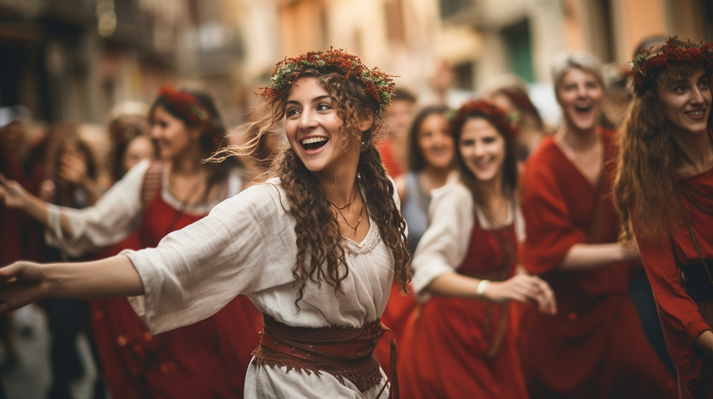
Who Was Saturn, and What’s the Big Deal?
Saturn was one of Rome’s most important gods—the god of agriculture and time. The Romans believed that long ago, Saturn ruled over a “golden age” when everyone lived in peace and plenty.
So, each December, Romans threw a massive festival in his honor, thanking him for the year’s harvest and hoping for good crops in the year ahead.
It usually began on December 17 and could last up to a whole week. Think of it as the ancient world’s version of a winter break—but with way more togas.
The Festival of Reversal
During Saturnalia, the normal rules of society were turned upside down—literally!
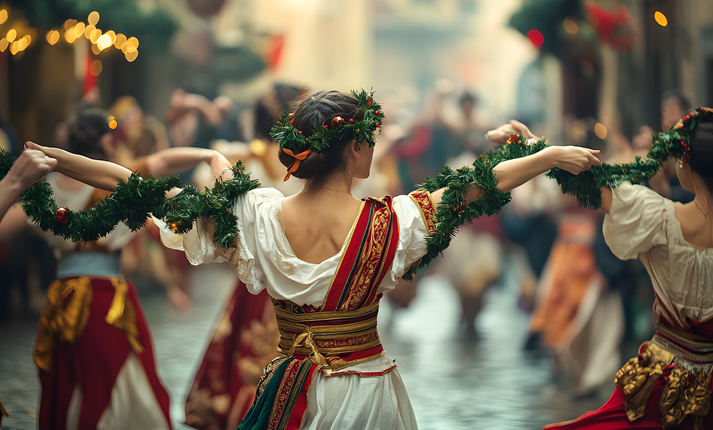
Slaves and masters traded places. Slaves got to relax, feast, and sometimes even be served by their masters.
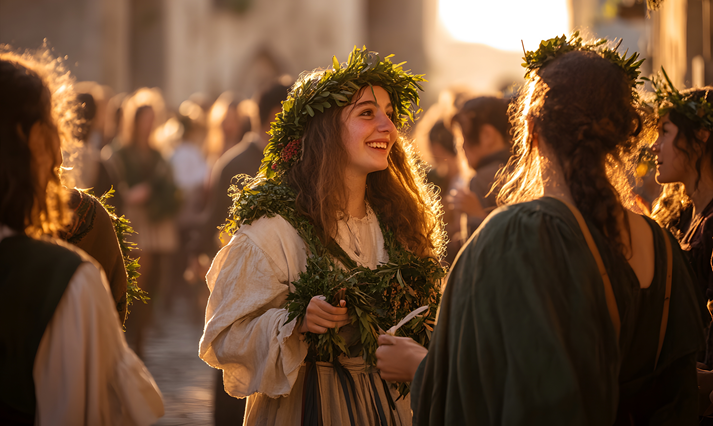
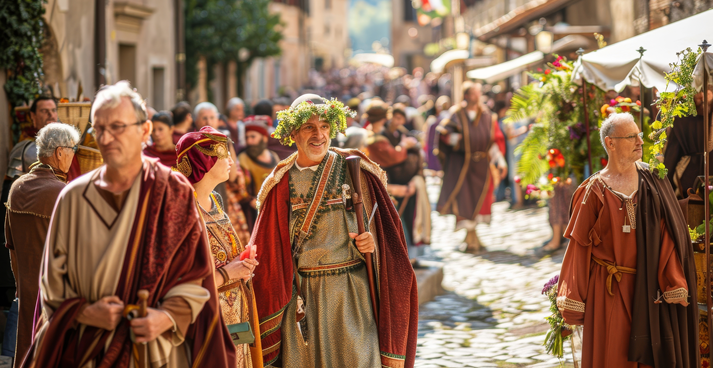
Everyone wore bright, silly clothes. Instead of their serious Roman togas, people wore colorful tunics and cone-shaped hats called pileus, symbols of freedom.
Work stopped. Schools, courts, and shops closed so everyone could celebrate.
People played games, sang songs, and shouted “Io Saturnalia!” (That’s like yelling “Happy Holidays!” in Latin.)
It was a time when laughter replaced laws and people could let loose before the serious start of a new year.
Gifts, Candles, and Good Cheer
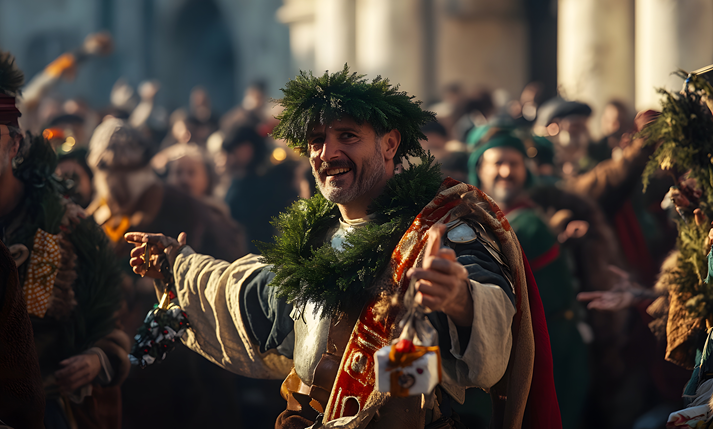
One of the most famous parts of Saturnalia was gift giving. Romans exchanged small presents like candles (symbolizing light during the darkest days of winter), figurines, or sweets.
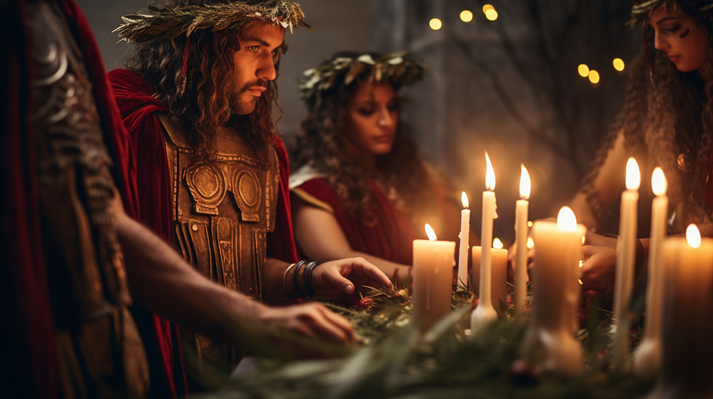
Homes were decorated with greenery and garlands, another tradition that found its way into later winter celebrations. Feasts were huge, tables overflowed with food, and neighbors shared in the merriment.
It was also a season of goodwill—a time to forgive, be generous, and remember that joy and kindness mattered more than status or power.
From Saturnalia to Today
When Christianity spread through the Roman world, some of Saturnalia’s joyful customs were adapted into new celebrations that honored Christ instead of Roman gods. Traditions like decorating with greenery, exchanging gifts, and gathering for festive meals remained—but their meaning changed.
Instead of celebrating Saturn’s golden age, early Christians and others living in the Roman world developed new winter traditions that focused on faith, family, and hope rather than honoring Roman gods.
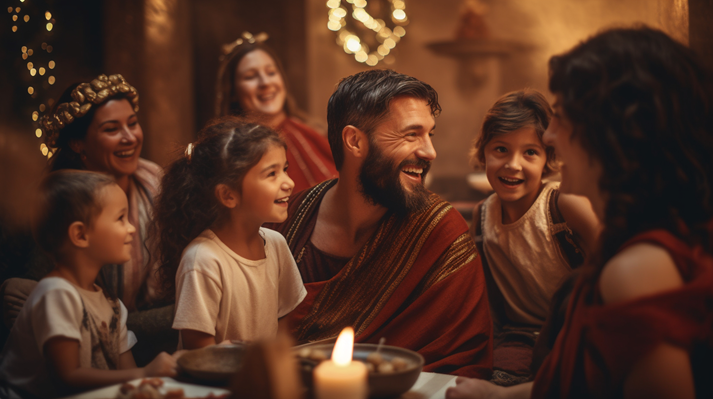
December became a season of both reflection and rejoicing, with familiar echoes of those ancient Roman festivities.
So while Saturnalia was filled with wild parties and pagan rituals, many of its fun and family-centered traditions—like sharing food, kindness, and gifts—live on in new, faith-filled ways today.
The Spirit of Celebration
Saturnalia reminds us that people across history have always wanted to celebrate during the darkest part of the year. The Romans celebrated harvest and hope; today, many people still gather to celebrate light, love, generosity, and the joy of new beginnings.
The need for connection, generosity, and joy is timeless—it just takes different forms in different eras.
Now that you’ve peeked behind the garlands and feasts of ancient Rome, it’s time to test your knowledge!
In the Got It? section, you’ll match ancient customs to their modern counterparts, explore what has changed, and what remains—because history has a funny way of wrapping the past into the present.

Supplies


 FAVORITE
 Like
Like