Sign Up
School Account Sign Up

Lesson ID: 13837
The Hanging Gardens of Babylon, built around 600 B.C., are one of the world's ancient wonders, famed for their massive scale and innovative water transportation system thousands of years ago.




Look at the map of present-day Iran below.
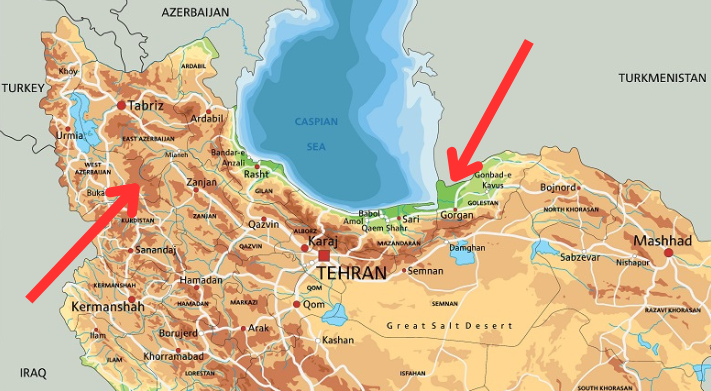
That striking difference is a clue to the mystery of the Hanging Gardens!
Dive in and uncover the secret!
King Nebuchadnezzar II and the Hanging Gardens
Nebuchadnezzar II ruled over the Neo-Babylonian Empire during a period of incredible architectural and cultural achievement.
While the Babylonian Empire had thrived a thousand years earlier, invasions had ended its dominance. Once again, the Neo-Babylonian Empire, led by Mesopotamians, emerged as a powerful successor.
However, not everyone in Nebuchadnezzar's royal household was Babylonian. His wife, Queen Amuhia, came from the lush, green lands of northwestern Iran—a stark contrast to the dry plains of Babylon.
Look at these images of her homeland.

Imagine leaving such a verdant paradise for Babylon's arid landscape. Queen Amuhia longed for the beauty of her homeland, and her longing inspired Nebuchadnezzar to create one of history's most famous wonders: the Hanging Gardens of Babylon.
The gardens, built around 600 B.C., were a testament to Nebuchadnezzar's ambition and love. The greenery wasn't just decorative—it was a complex engineering marvel.
Water had to be lifted high into the structure, defying gravity. Early artwork and modern recreations give us an idea of the gardens' grandeur.
How Did They Lift Water?
The most famous theory involves the Archimedes screw, a pump capable of moving water uphill. Although traditionally credited to the Greek mathematician Archimedes, some experts believe similar devices were used long before his time.
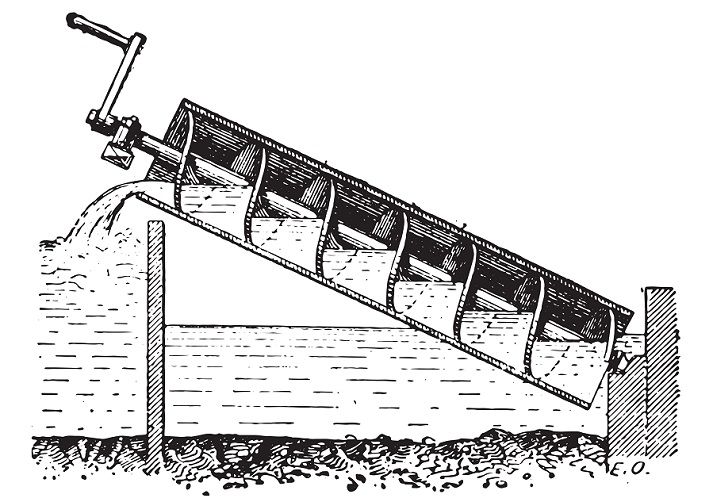
The Archimedes screw works using a spiral tube inside a cylinder. When the device is turned, water trapped in the spiral is carried upward as the screw rotates. Each turn lifts the water a little higher until it reaches the top.
This type of system would have allowed workers to raise water from the Euphrates River to the upper terraces of the gardens. Once the water reached the top, it could flow downward through channels, watering the plants on each level.
Even if the Babylonians did not use this exact device, they clearly understood how to move water against gravity using clever engineering. Irrigation canals, pumps, and lifting devices were already common in Mesopotamia.
While the exact mechanism remains a mystery, the gardens demonstrate how ancient engineers solved real-world challenges through innovation.
A Different Theory
The traditional story of Nebuchadnezzar building the Hanging Gardens for his wife isn't the only explanation.
Dr. Stephanie Dalley, a leading scholar, has proposed a counternarrative: the gardens weren't in Babylon at all—they were in Nineveh, the capital of the Neo-Assyrian Empire, built by King Sennacherib nearly a century earlier.
The Neo-Assyrian Empire was a massive power with extensive resources, stretching from Mesopotamia to Egypt. Dr. Dalley's research uncovered inscriptions describing a grand garden in Nineveh that matches descriptions of the Hanging Gardens.
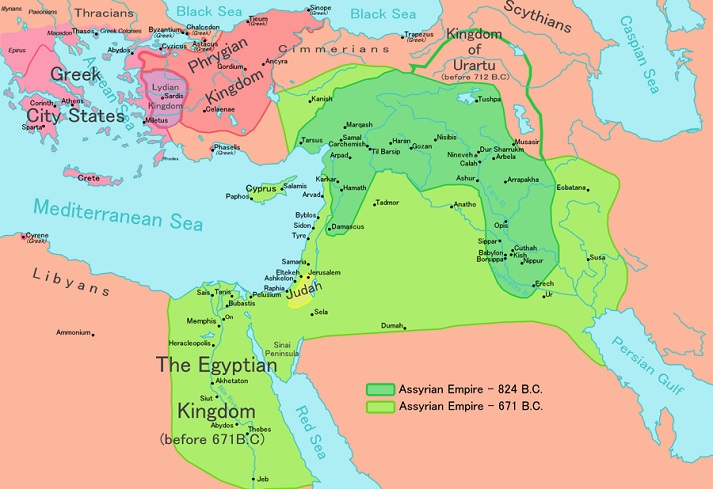
Ancient Assyrian texts describe a palace surrounded by terraced gardens filled with trees and plants. These records also mention an advanced system of canals and water-lifting machines designed to keep the gardens green.
Archaeologists have also found carvings showing gardens built on rising levels, with water flowing through channels. These details look remarkably similar to the descriptions written by later Greek historians.
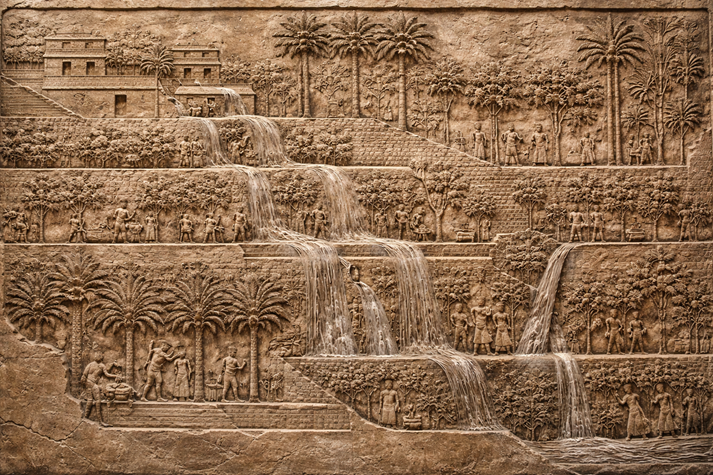
If this theory is correct, the Hanging Gardens may have been part of Sennacherib's royal complex in Nineveh rather than Nebuchadnezzar's Babylon.
As you move into the next section, consider the evidence in each narrative.

Supplies


 FAVORITE
 Like
Like