Sign Up
School Account Sign Up

Lesson ID: 13394
Can the point of view from which a story is told make it more or less suspenseful? What is point of view? What is suspense? Find all the answers here!




Whatever it was, it can't be good.
While I go investigate that noise, you should stay here and learn how a character's point of view is a crucial part of creating suspense in a story.
When reading stories, you may have noticed that some narratives are told from different perspectives or points of view.
The points of view most often used by authors are:
Understanding Point of View
Point of view determines who tells a story and how much information the reader receives.
Consider three versions of the same scene: Romeo stands in a garden while Juliet looks down from a balcony.

Third-person observant:
Romeo stood below the balcony. Juliet stepped outside and looked down at him. Neither spoke for several moments.
The narrator reports only what can be seen or heard. The reader does not know what either character is thinking. This point of view works like a camera recording the scene.
Third-person omniscient:
Romeo looked toward the balcony and thought Juliet seemed as bright as the sun. Juliet saw him below and wondered whether speaking to him would place them both in danger.
The narrator knows the thoughts and feelings of more than one character. This narrator can reveal information that the characters do not share with one another.
First person:
I looked up and saw Juliet standing above me. My heart raced, but I did not know whether she was happy to see me.
The narrator is Romeo, a character in the story. The reader knows what he sees, thinks, and feels, but not what Juliet is thinking.
Each point of view changes the scene.
First person brings the reader close to one character. Third-person omniscient reveals more information. Third-person observant keeps thoughts hidden and leaves the reader to interpret actions.
Explain what information the reader would gain—or lose—from your choice.

Point of View and Suspense
The suspense of a story is what causes readers to hold their breath waiting to see what happens next.
If the intensity of the suspense is great enough, the reader will not be able to put the book down until the outcome is revealed.
A first-person narrative creates a bond between the reader and the main character. We are right there with this character asking the same questions.
Whenever a revelation occurs, the reader is just as surprised as the character. This creates suspense.
Jot down your prediction before continuing to read.
Dramatic Irony and Suspense
Third-person narration can create suspense by controlling what the reader knows.
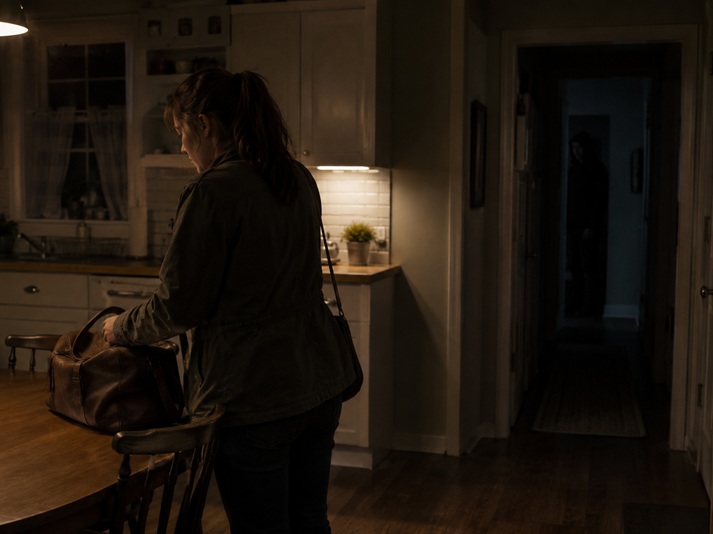
Imagine this scene:
A person enters a quiet house and sets a bag on the kitchen table. Earlier, however, the reader saw an intruder hide in the hallway. The person in the house does not know anyone else is there.
This situation is called dramatic irony. Dramatic irony occurs when the reader or audience knows something that a character does not.
The extra knowledge does not remove the suspense. It often increases it.
The reader may wonder:
Third-person observant can create this effect by showing the reader an event that one character does not witness.
Third-person omniscient can make the suspense even more complicated. The narrator might reveal that one character senses something is wrong while another character confidently walks into danger.
Point of view creates suspense by controlling the flow of information. Sometimes the reader knows only what one character knows. At other times, the reader knows more than the character and must wait nervously for the character to catch up.
The key is not simply how much information the narrator reveals. Suspense also depends on when the narrator reveals it—and what remains uncertain.
Head over to the Got It? section to review what you have learned so far.

Supplies


 FAVORITE
 Like
Like