Sign Up
School Account Sign Up

Lesson ID: 12499
What makes some elements unstable and radioactive? Explore alpha, beta, and gamma radiation and how they change atoms—and us!




Would You Glow in the Dark?
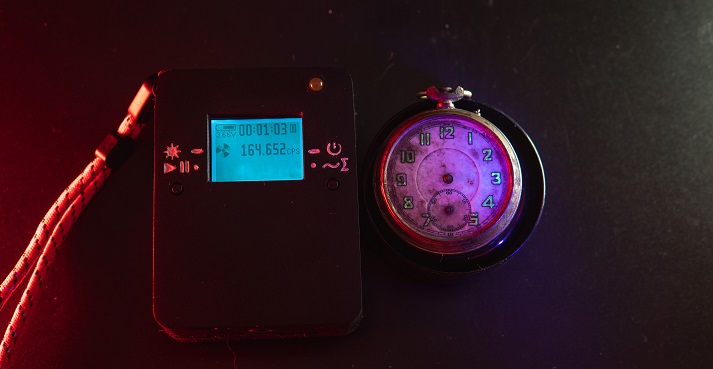
Imagine cracking open an old watch and finding it still glowing, even after decades. That eerie glow once came from a radioactive element called radium.
Now imagine holding something that, while it looks ordinary, is quietly shooting out invisible energy that can pierce your body, damage your DNA, and even cause serious health problems.
But it’s not. It’s nuclear science.
Explore the invisible but powerful world of radioactive elements.
What Are Radioactive Elements?
All atoms have a center called a nucleus, made of protons and neutrons.
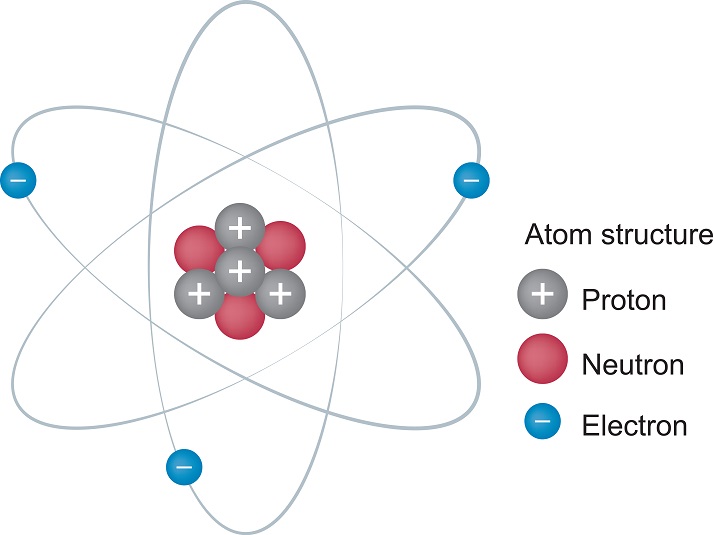
Most elements have stable nuclei that stay the same over time. But radioactive elements have nuclei that are too big or unbalanced, so they break down over time.
This process is called radioactive decay.
When a radioactive nucleus decays, it gives off energy and particles. That energy is what we call radiation.
Which Elements Are Radioactive?
Most radioactive elements are found at the bottom of the periodic table.

Any atom with more than 83 protons in its nucleus is naturally radioactive.
Radon, for example, has 86 protons.

Some elements with fewer protons can still be radioactive if they have an unusual number of neutrons—these are called radioactive isotopes.
Example: Carbon typically has 6 neutrons, but Carbon-14 has 8. That tiny difference makes it unstable and radioactive.

How Radiation Is Released
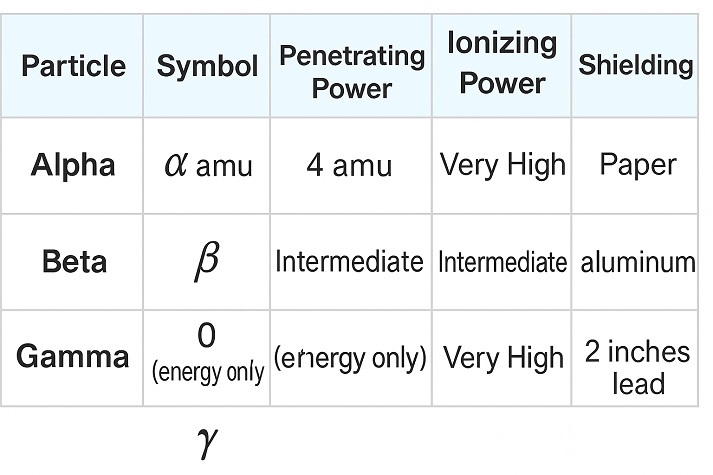
Radioactive decay releases three main types of radiation.
Alpha particles (α): These are made of 2 protons and 2 neutrons (like a tiny helium nucleus).
Ionizing Power: Very high—can cause serious damage if inside the body
Penetration: Very low—stopped by skin, paper, or clothing
Any real danger? Only if inhaled, ingested, or enters a wound
Beta particles (β): These are fast-moving electrons released when a neutron changes into a proton.
Ionizing Power: Medium
Penetration: Medium—stopped by thin aluminum
Any real danger? Still dangerous if the source is inside you
Gamma rays (γ): These are not particles. They are powerful waves of energy.
Ionizing Power: Low
Penetration: Extremely high—only thick lead or concrete can block them
Any real danger? Very high if exposed, since they pass through most materials
What Happens to the Atom?
When an atom gives off one of these types of radiation, it transforms into a different element.
Alpha decay decreases the atomic number by 2 and mass by 4.
Ex: Uranium-238 → Thorium-234 + α
Beta decay increases the atomic number by 1 but keeps the mass the same.
Ex: Thorium-234 → Protactinium-234 + β
Gamma decay doesn't change the atom’s identity but releases a huge burst of energy.
These changes are shown using nuclear equations—a way to keep track of what’s lost and gained.
Why It Matters
Radiation is everywhere. It’s used in medicine, energy, agriculture, and research. But it can also be dangerous.
Exposure to too much radiation can damage or kill cells, disrupt DNA, and cause long-term health problems like cancer.
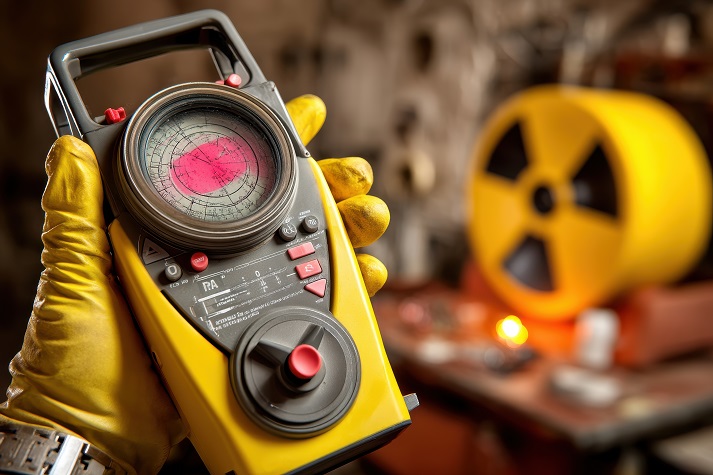
That’s why shielding, distance, and time limits are key to radiation safety. Lead aprons, thick walls, and Geiger counters (which detect radiation) are all tools used to protect people from overexposure.
Now that you know what radioactive elements are and how they behave, dig into the details of the three types of radioactive decay and how each affects atoms in different ways.
Head to the Got It? section.

Supplies
Additional Resources


 FAVORITE
 Like
Like