Sign Up
School Account Sign Up

Lesson ID: 12340
Learn how to explain any topic clearly using expository writing skills you can use in every subject—and in real life.




The World Runs on Explanations
Picture yourself as the person everyone turns to when they want to understand something—how lightning forms, why a math trick works, how a plant grows, or even how to level up in a game.
Being able to explain things clearly gives you a kind of quiet power. It helps you teach, solve problems, share ideas, and make the world easier for someone else to navigate.
Expository writing is the key that unlocks that power.

This style of writing shows up everywhere: in science labs, in history books, in math class, on recipe cards, in how-to guides, and in everyday conversations.
Any time someone explains information, breaks down steps, or teaches a new idea, they’re using expository writing—even if they don’t call it that.
Today, you’re going to learn how to use expository writing to explain anything, in any subject, with confidence.
Expository Writing: Your All-Purpose Tool
Expository writing has one main goal: to explain information clearly so the reader understands it without confusion.
That means:
Sharing facts
Giving clear examples
Breaking down steps
Showing how or why something works
Staying organized
Leaving out anything unrelated
It’s writing that puts the spotlight on knowledge—not opinions, not stories, not dramatic flair. Just solid, clear explanation.
But here’s the exciting part: once you know how expository writing works, you can use it anywhere. It’s like having a Swiss Army knife for your brain.

Where You Already Use Expository Writing (Without Realizing It)
You’ve read expository writing in places like:
Science diagrams
Articles about animals or space
Instructions for games or tools
Math explanations
Safety guides
Museum displays
Step-by-step recipes
How-to books
Nonfiction texts of all kinds
You’ve probably written it too—any time you’ve explained how something works or how to do something.
This lesson takes that skill and turns up the volume.

The Three Ways Expository Writing Helps You Explain Anything
To explain information well, your writing needs three things: clarity, organization, and accuracy. Let’s look at how those work in real life.
Clarity means writing so plainly that your explanation can’t be misunderstood.
In any subject:
A scientific explanation uses precise terms (evaporation, energy, friction).
A historical explanation uses exact facts (dates, events, people).
A math explanation uses the correct vocabulary (fraction, denominator, product).
A real-world explanation uses steps in the right order.
Clarity removes confusion. It helps the reader think, “Ah, now I get it.”
Strong expository writing is neatly structured.
The reader should be able to follow your thinking step-by-step—like walking across stepping stones.

A solid explanation usually includes:
A topic sentence — Introduces what you’re about to explain.
Supporting details — Facts, descriptions, steps, or examples that build understanding.
Logical order — Ideas arranged so the explanation makes sense—chronologically, by importance, or by categories.
A closing sentence — Wraps up the idea.
Organization keeps your writing from becoming a pile of random facts. Instead, it becomes a clear path your reader can follow from beginning to end.
Expository writing depends on true, reliable information. That means:
Use correct facts about science, history, or math.
Only include details that relate to your main idea.
Avoid personal opinions unless the assignment allows them.
Double-check specific steps or explanations.
Readers trust expository writing because it teaches without guessing.

Using Expository Writing Across Different Subjects
Now that you know the “why,” look at the “how.”
Here’s how expository writing shows up in common school subjects—and how you can use it to explain anything.
Science: Explain How Something Works
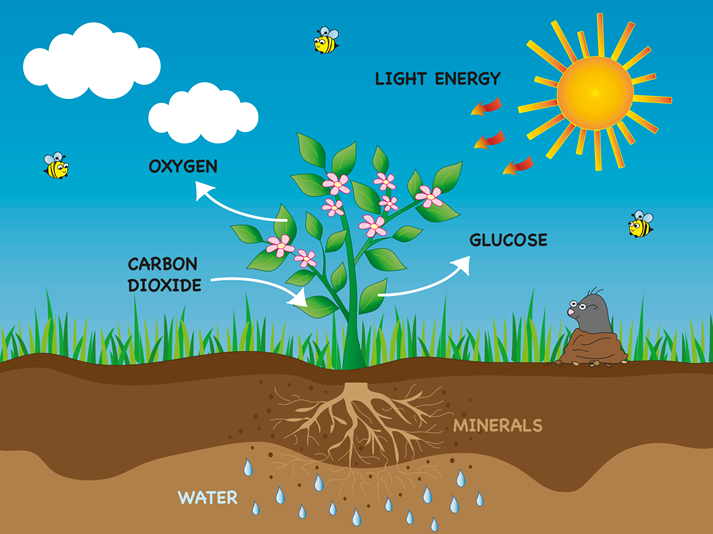
Science is full of processes: photosynthesis, erosion, circuits, forces, weather patterns, and animal adaptations.
To explain a science idea well:
Name the scientific concept clearly.
Break down the process step-by-step.
Use accurate vocabulary.
Give real examples from nature or experiments.
Explain the cause-and-effect relationships.
Example:
Instead of saying “Plants grow tall,” you explain how plants use sunlight, water, and carbon dioxide to make their own food.
Math: Explain How to Solve or Understand a Problem
Math explanations are everywhere—just hidden behind numbers.
To explain a math concept:
Identify the idea (fractions, multiplication, area, variables).
Break the steps down logically.
Show how you know the steps work.
Use visuals or examples if needed.
Example:
Instead of saying “I got the answer 12,” you explain, “I multiplied 3 × 4 because each group had 4 in it.”

Social Studies: Explain Events, Cultures, and Reasons
In history and geography, expository writing organizes information into understandable pieces.
To explain a social studies idea:
Introduce the event or topic
Use facts (dates, people, countries, reasons)
Describe cause and effect
Group information by category (government, culture, economy, environment)
Example:
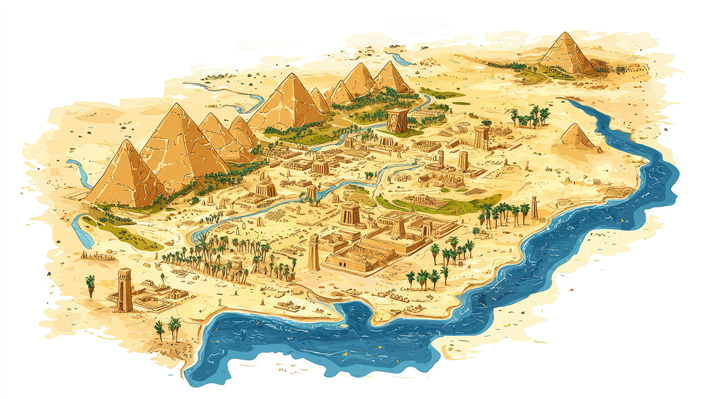
Explaining why ancient civilizations settled near rivers requires facts—not opinions.
Real Life: Explain Everyday Tasks
Expository writing also appears in everyday situations:
Writing instructions
Telling someone how to bake something
Explaining game rules
Teaching a younger sibling how to tie shoes
Walking someone through a craft
Describing how a device works
Anytime you break down steps or explain a process, you’re using expository writing.

The Big Goal: Explain Anything With Confidence
When you put all these skills together—clarity, organization, and accuracy—you become someone who can take complex information and make it understandable.
That’s an incredibly valuable skill, and you’re about to practice it.
Take everything you’ve learned and put it to work.
Move on to the Got It? section to start practicing how to explain information clearly in any subject.

Supplies
Additional Resources



 FAVORITE
 Like
Like