Sign Up
School Account Sign Up

Lesson ID: 12265
The War of 1812 is not one of the Top Five wars we think about. Most Americans know little if anything about it, although the White House was burned and "The Star Spangled Banner" was written then!




You have heard of the Revolutionary War, known as the war for independence.
The War of 1812 is often called the second war for independence because it was another conflict between the United States and Great Britain, happening not long after the Revolutionary War.
Before learning more, grab a separate piece of paper and write down everything already known about the War of 1812.
That is completely normal—even many adults do not know much about this war! The War of 1812 is often overlooked because it did not dramatically change the long-term direction of either the United States or Great Britain.
One of the most famous events of the war was the bombardment of Fort McHenry.

Now, explore the key questions below. Read each short summary and build a list of important facts along the way.

Next, read the passage below to learn more about the War of 1812 and the burning of Washington, D.C. As you read, continue adding interesting facts to your list.
In 1814, during the War of 1812, British forces attacked Washington, D.C. At the time, the city was still young and not fully developed. After defeating American troops nearby, British soldiers marched into the capital and set fire to several important buildings, including the Capitol and the White House.
President James Madison and other leaders were forced to flee the city. First Lady Dolley Madison stayed behind long enough to save important items, including a famous portrait of George Washington.
Soon after, British troops entered the White House, ate a meal that had been prepared for the president, and then burned the building.
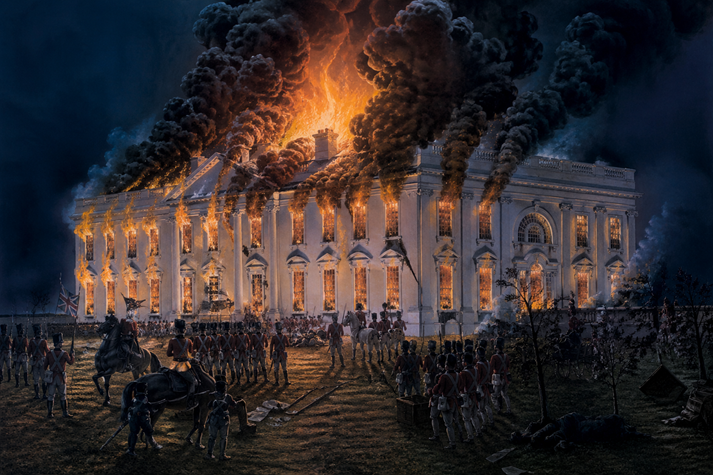
The destruction was severe. Government buildings were left in ruins, and many Americans feared that the country might not survive the war.
However, the British did not stay long. They left the city after about a day, and the United States began rebuilding.
Even though this attack was one of the most difficult moments in the war, it did not end the conflict. The war continued until 1815, when both sides agreed to a peace treaty. In the end, neither side gained much territory, but the United States proved it could defend itself against a powerful nation.
The War of 1812 also led to a stronger sense of national pride in the United States and encouraged the country to grow and develop more independently.
After learning, think about these questions.
Move on to the Got It? section, and keep that list of interesting facts nearby. It will be useful for an upcoming interactive timeline activity.

Supplies


 FAVORITE
 Like
Like