Sign Up
School Account Sign Up

Lesson ID: 12233
Discover how rhythm, marches, anthems, and group singing can shape emotions, strengthen messages, and influence crowds.




Tap a steady beat on your desk:
Tap. Tap. Tap. Tap.
Now imagine hundreds of people stepping together to that beat while brass instruments play a bold melody and drums grow louder.

Music can entertain, comfort, energize, or unite people. It can also be used to influence what people feel, believe, and do.
Throughout history, political leaders have used music to build loyalty, promote national pride, prepare people for war, and discourage disagreement.
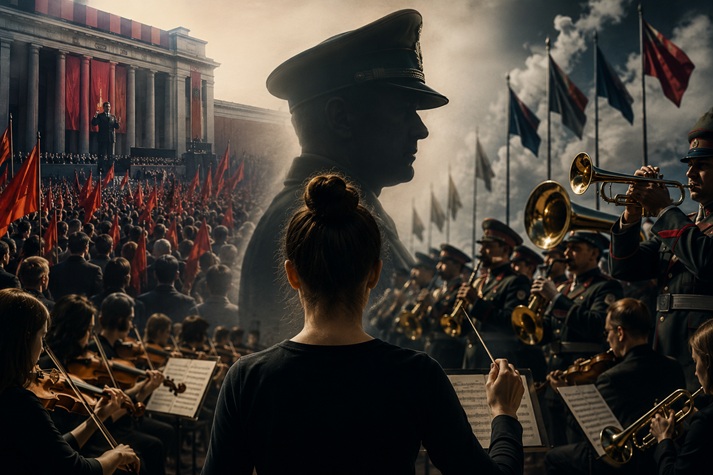
In this lesson, you will examine how dictators and other authoritarian governments have used music as propaganda. You will also learn how tempo, instruments, lyrics, melody, and performance style can help create a powerful message.
Music has been connected to military life for thousands of years. Long before radio and electronic communication, armies used musical signals to convey instructions across noisy battlefields.
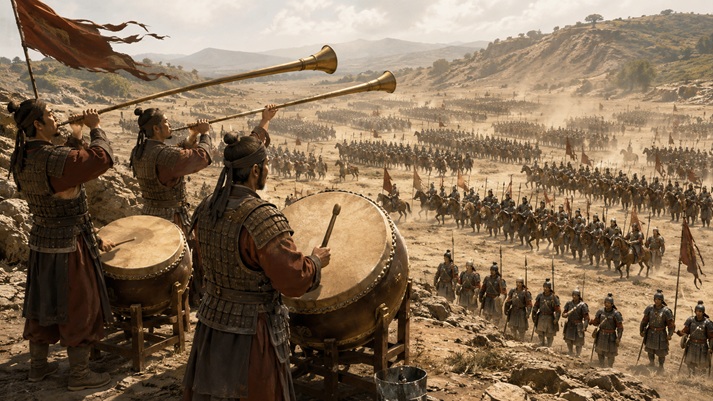
Trumpets, horns, drums, fifes, bagpipes, and other loud instruments could be heard over marching feet, shouting, and weapons. Different patterns told soldiers when to advance, retreat, gather, wake up, or prepare for an attack. Drums also helped large groups maintain the same marching pace.
Music served more than one purpose.
Communication
A recognizable trumpet call or drum pattern could deliver an order quickly. Soldiers learned these signals as part of their training.
Coordination
A steady rhythm helped troops march, turn, and move together. When people matched the same beat, they could operate more like a single unit.
Motivation
Loud music and strong rhythms could increase energy and confidence. Music could remind soldiers of their country, their group, or earlier victories.
Intimidation
The sound of horns, drums, or large military bands could make an approaching army seem more powerful and frightening.
Identification
Military groups and nations developed recognizable marches. A signature march could help soldiers identify a distant force, even when flags were hidden by smoke or distance.
These musical symbols helped lead to the modern use of national anthems.
From Battlefield Music to Political Propaganda
Propaganda is information designed to influence people’s attitudes or behavior. It often presents only one side of an issue and uses emotion more than careful evidence.
During the twentieth century, dictators gained control of countries facing war, poverty, political conflict, or social unrest. These leaders often promised order, safety, strength, and national greatness.
After taking power, many controlled newspapers, radio stations, theaters, schools, films, and public performances.
Music became part of that control.
Authoritarian governments used music to:
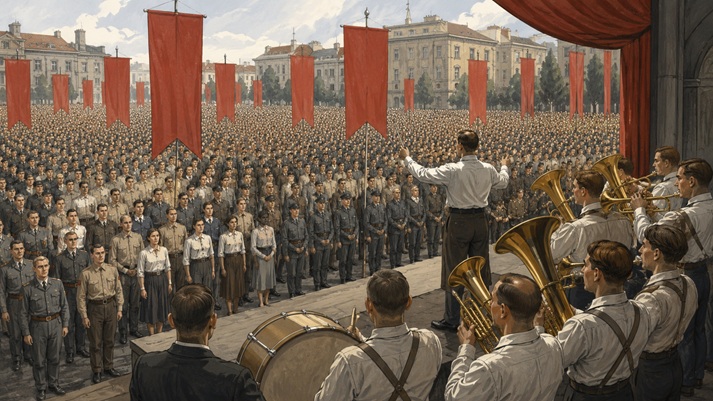
Some musicians willingly supported these governments. Others cooperated to protect their careers or families. Some were forced to perform or compose. Others resisted, escaped, or had their work banned.
Under Nazi rule in Germany, for example, government officials promoted music that supported their political image while banning works by many Jewish composers and other artists they rejected.
Concert halls, orchestras, radio broadcasts, and public ceremonies came under government control.
How Music Builds a Message
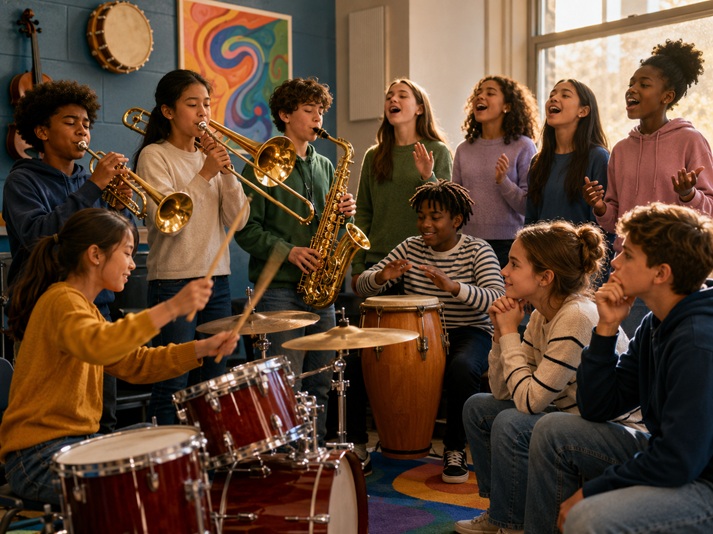
Political music does not rely only on lyrics. Its musical features can shape the listener’s response before a single word is understood.
Tempo
Tempo is the speed of music.
A steady marching tempo can suggest discipline, movement, and control. A faster tempo may create a sense of urgency or excitement. A slower tempo can make a ceremony feel serious or grand.
Rhythm
A strong, repeated rhythm is easy to follow. It can help people clap, march, chant, or move together.
Instrumentation
Instrumentation refers to the instruments used in a musical work.
Brass instruments such as trumpets and trombones can produce bright, forceful sounds. Drums can emphasize the beat and create a sense of approaching movement. Large orchestras or bands can make government sponsorship of them appear powerful.
Volume
Music that gradually becomes louder can build suspense or suggest that a powerful force is drawing closer. Sudden loud sounds may command attention.
Melody and Harmony
A simple melody can be easily remembered and repeated. Broad, rising melodies may sound triumphant. Darker harmonies can create tension, danger, or seriousness.
Lyrics
Propaganda lyrics often use repeated words and simple messages. They may praise loyalty, courage, unity, sacrifice, victory, or the leader. They may also describe another group as dangerous or inferior.
Group Singing
Choirs and crowds can create the impression that everyone shares the same belief. Group singing may make an individual feel part of something larger, but it can also create pressure to conform.
Setting
The same music may feel more powerful when paired with uniforms, flags, speeches, marching crowds, films, or carefully planned ceremonies.
Listen Critically
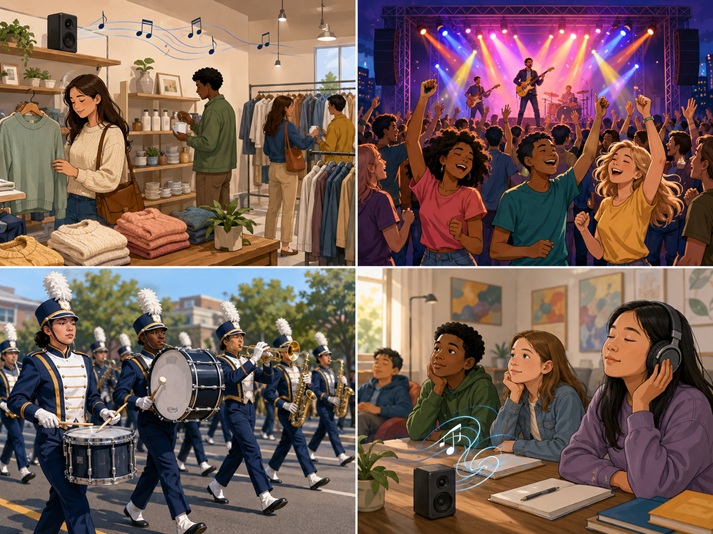
A march is not automatically propaganda, and strong music is not automatically harmful. Marches are also performed at parades, sporting events, graduations, memorials, and community celebrations.
The purpose depends on the setting, the message, the people controlling the performance, and the choices listeners are allowed to make.
When examining political music, ask:
Music can bring people together, but unity is not always harmless. A song may build courage and community, or it may encourage obedience, fear, hatred, or aggression.
Careful listeners look beyond the catchy tune and examine who is using the music—and for what purpose.
In the Got It? section, you will analyze descriptions of political and military music to determine how specific musical choices can shape mood and influence an audience.

Supplies


 FAVORITE
 Like
Like