Sign Up
School Account Sign Up

Lesson ID: 12189
Watch particles move without effort! Explore diffusion, osmosis, and how your cells stay balanced every second.




Why Does That Smell Travel So Fast?
Someone sprays perfume across the room. Within seconds, you can smell it—even if you’re nowhere near them.
No one carried those scent particles to you. They spread out on their own.
Now imagine that same idea happening inside your body… constantly.
Your cells rely on this kind of movement to survive.

What Is Passive Transport?
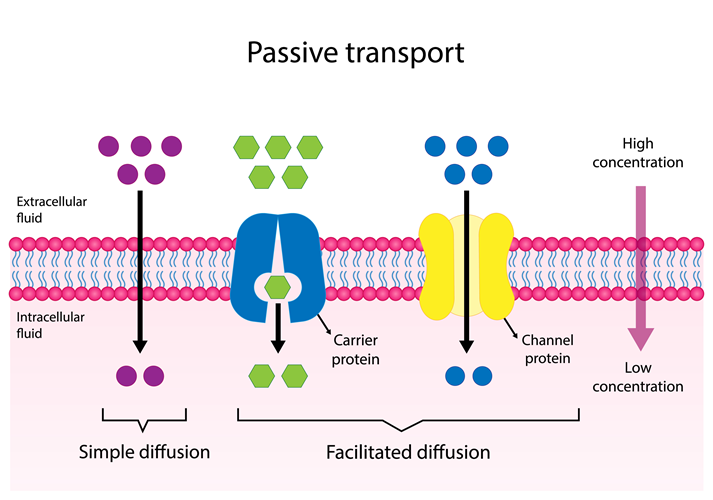
Passive transport is the movement of substances across the cell membrane without using energy.
That’s the key idea: no energy required.
Particles move naturally from areas where there are more of them to areas where there are fewer of them. This movement continues until things are more evenly spread out.
This process is driven by something called a concentration gradient.
High concentration = crowded with particles
Low concentration = fewer particles
Particles naturally move from crowded areas to less crowded areas until a balance is reached.
The cell membrane acts like a filter during this process. It does not push particles or decide their direction—it simply allows or blocks movement based on structure. The direction is always from high to low concentration.
Diffusion: Spreading Out Naturally
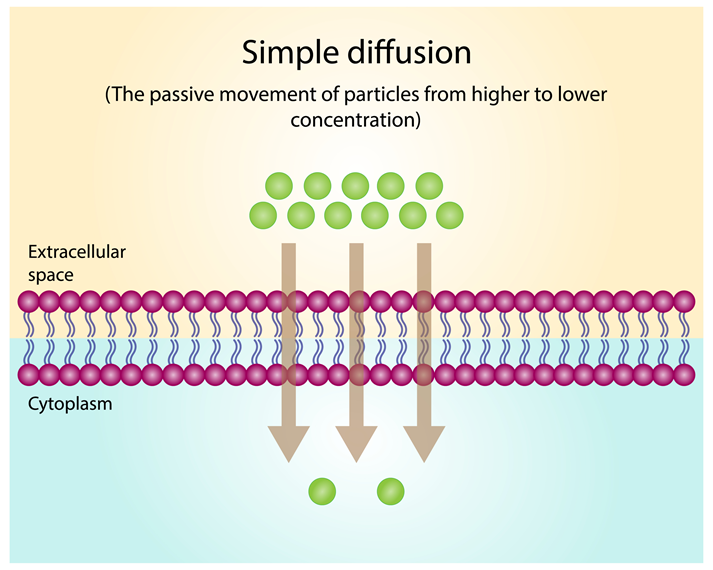
Diffusion is the basic form of passive transport.
It happens when particles spread out evenly over time.
Examples you see every day:
In cells, diffusion allows small molecules such as oxygen and carbon dioxide to move directly across the membrane.
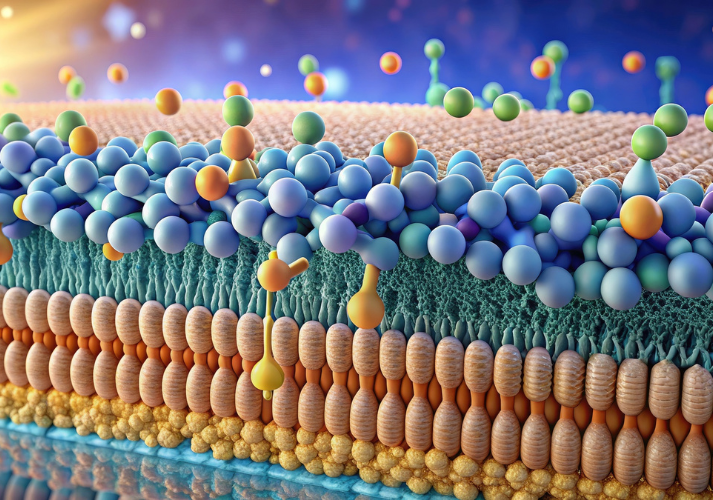
These molecules are small enough and compatible with the membrane structure to pass straight through the phospholipid bilayer.
Osmosis: When Water Moves
Osmosis is a special type of diffusion that only involves water.
Water moves across the cell membrane to balance concentrations on both sides.
If one side of the membrane has more dissolved substances (like salt or sugar), water moves toward that side to balance the concentration.
This movement helps cells:
The membrane is selectively permeable, meaning water can move through it, but not all substances can.
Facilitated Diffusion: Getting a Little Help
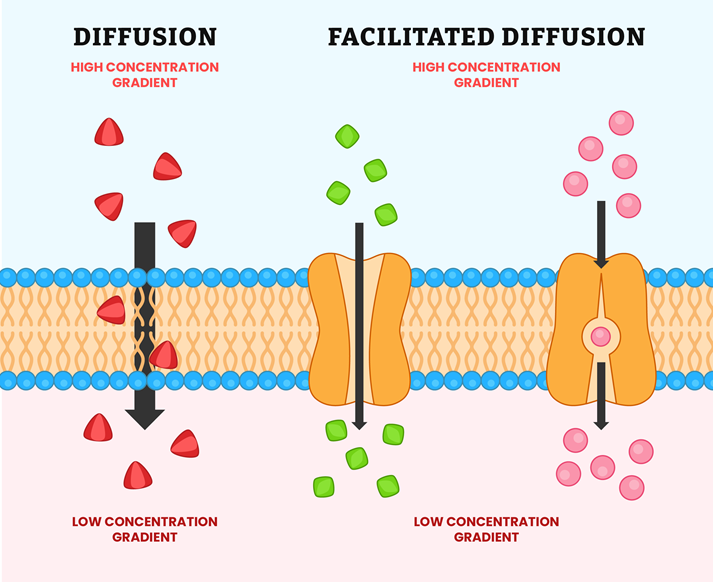
Not all particles can slip through the membrane easily.
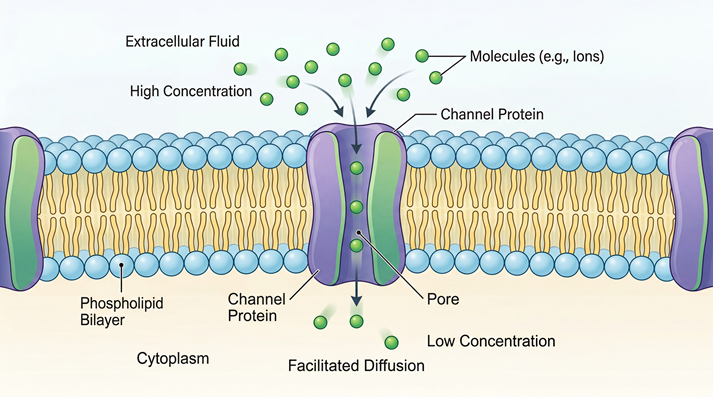
Larger or charged particles—like glucose or ions (sodium, potassium, calcium)—need assistance.
That’s where facilitated diffusion comes in.
In this process:
These proteins are highly selective. Each one only allows certain substances to pass through.
Even though proteins are involved, no energy is used. Movement still follows the concentration gradient—from high to low.
What Affects How Fast Things Move?
Not all diffusion happens at the same speed.
The rate of movement depends on:
This is why some substances move quickly across membranes, while others take longer or need help.
Three Types, One Big Idea
All forms of passive transport share one rule:
No energy. Movement happens naturally.
The three main types are:
Together, these processes keep cells balanced and functioning properly.
From Learning to Doing
You’ve seen how substances move into and out of cells without any energy at all.
Now it’s time to test that understanding by predicting how particles move and explaining what’s happening step by step.

Supplies
Additional Resources


 FAVORITE
 Like
Like