Sign Up
School Account Sign Up

Lesson ID: 11823
If you can't get to an art gallery, perhaps the gallery can come to you! Pakistan has movable art that can hardly be called still. Travel the road to this unique art form and design your own!




It means to customize a vehicle, and some people go to the extreme!

Many people take pride in their vehicle. For some, however, a vehicle is a way to get from one point to another or to transport goods from place to place.
More Than Just a Paint Job
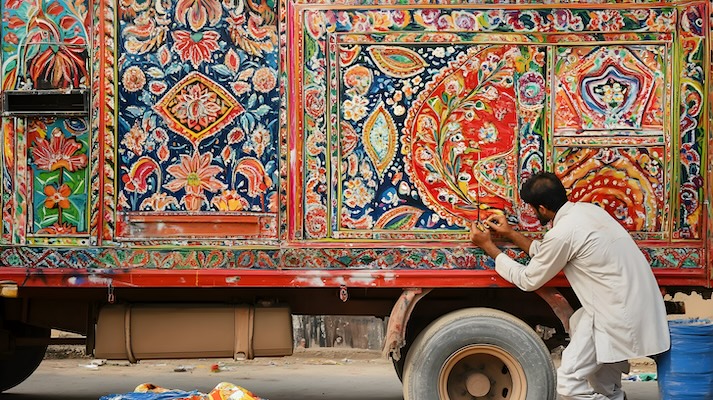
Many people spend money on keeping their vehicles extra clean, waxing them, and even getting fancy paint jobs like the ones shown above.
A Tradition on Wheels
However, truck drivers in Pakistan have taken this concern with appearances to a whole other level! What they do isn't just for show — it's rooted in tradition.
Truck art is more than just decoration. It's part of their culture.
The Origins of Truck Art
Truck art began in the 1920s when Bedford trucks were introduced to Pakistan during British rule. Drivers wanted their trucks to stand out and attract more customers, so they began painting the wooden panels and adding decorative elements.
Over time, what started as a business strategy turned into a full-blown art tradition. A tradition is something that people pass along over time, such as stories, customs, or ways of doing things.
Pakistani truck art is one such tradition.
Investing in Expression
Even though many of these drivers don't earn a ton, they save up (sometimes for years!) to turn their trucks into something stunning. They might spend thousands of dollars, more than the truck is worth, because the artwork tells a story.
The designs they choose mean something; every flower, bird, symbol, or swirl has a story behind it. Some are there for protection on the road, some honor family, and some simply express who they are.
Symbols and Meaning
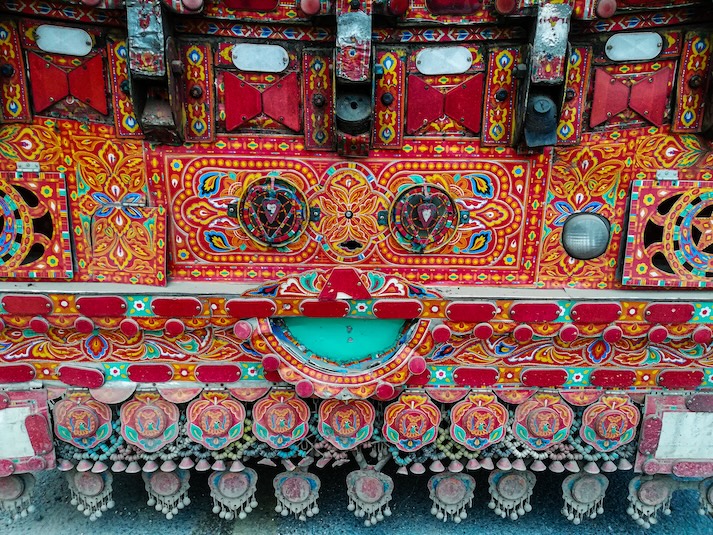
Artists use vivid colors, mirrors, carvings, metal, and poetic phrases to make each truck a showstopper. None of it's random; it's all carefully chosen to showcase beauty, pride, and identity.
Drivers might choose symbols from their region, family history, religious beliefs, or personal values. Some examples are below.
Peacocks and eagles may represent grace and strength.
The evil eye offers protection.
Bright flowers and swirling patterns are signs of joy and beauty.
Portraits of famous poets show admiration.
A Moving Masterpiece
No two trucks are alike; each is a customized piece of art.
Pakistani truck art is crafted with bright enamel paints, shiny mirrors, jingling chains and bells, carved wood, metal panels, and personal touches such as calligraphy, poetry, and stickers.
All these materials work together to turn these plain trucks into moving art.
Art With a Purpose
This isn't just art, this is folk art, which refers to people creating art that reflects on everyday lives. It creates connections for drivers to their communities, adds color to the roads, and passes down cultural traditions through visual storytelling.
It brings beauty to public spaces and gives people something to smile about, even during traffic jams.
Rolling Traditions
Even with modern roads and highways, this tradition remains strong. These jingle trucks — named for the bells and chains that jingle from the bumpers as they drive — aren't just moving goods. They're storytelling machines.
Keep On Truckin’
This tradition is full of culture and character. Cruise ahead to examine the artwork more closely and reflect on its meaning in the Got It? section.

Supplies




 FAVORITE
 Like
Like