Sign Up
School Account Sign Up

Lesson ID: 11525
Descend into the mysterious abyssal plain to uncover how life thrives in Earth’s darkest, deepest places—and why this hidden world keeps our planet alive.




Into the Abyss: Earth’s Deepest Mystery

Imagine standing on a mountain taller than Everest—but instead of reaching for the sky, you’re sinking deep below the waves.
Welcome to the abyssal plains—vast, dark seafloor deserts that cover more than half of Earth’s surface. These places stretch for thousands of miles beneath the ocean, at depths ranging from 3,000 to 6,000 meters (approximately 2 to 4 miles).
That’s so deep that sunlight never reaches them.
Down there, pressure is crushing, temperatures hover just above freezing, and yet—life thrives.
Life Where the Sun Never Shines
For centuries, people thought the deep ocean was lifeless. In the 1600s, scientists called it “azoic,” meaning “without life.”
Then explorers began hauling up strange creatures from the depths—basket stars, sea cucumbers, and jelly-like animals that seemed to defy logic.
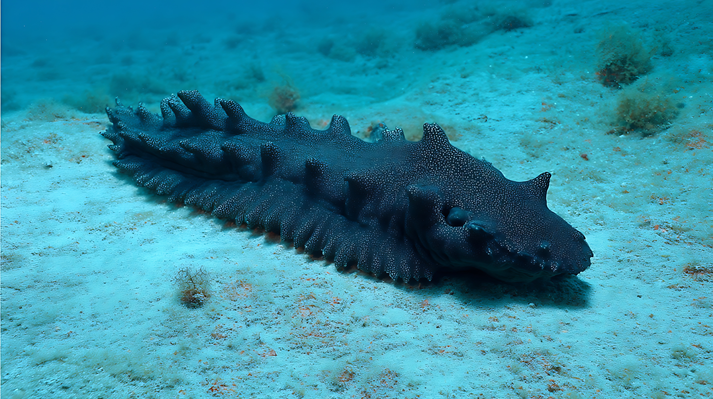
Modern submersibles and underwater robots have revealed that the deep sea is bursting with life. It’s a world where sunlight doesn’t rule—adaptation does.
Without light, deep-sea creatures depend on the “marine snow”—a steady rain of tiny, dead plants, animals, and waste drifting down from above. That slow, constant fall of organic debris is the base of the abyssal food web.
A Changing Deep: Watching the Ocean Breathe
For a long time, scientists believed the deep ocean never changed. But new technology has proven otherwise.
The video below—Our Ever-Changing Deep Sea—shows how even the deepest, darkest parts of the ocean are full of movement and surprise.
Watch as researchers study the abyssal plain off California’s coast. Over 24 years, they’ve discovered that the seafloor isn’t static—it shifts with what’s happening above.
In some years, the bottom is covered with sponges and filter-feeders, patiently waiting for bits of food. In others, it’s suddenly crawling with sea cucumbers that move in like slow-motion vacuum cleaners.
These changes happen when food from the surface—bits of plankton and other organic matter—drifts down in waves. When the ocean above is rich with life, it “rains” more food into the deep, sparking population booms in animals below.
One of the most dramatic examples came in 2012, when a salp bloom—a massive group of small, gelatinous animals floating near the surface—died and sank to the abyss. The sudden feast changed everything.
Species that could quickly use the new food, like sea cucumbers, flourished, while others, such as sponges, died off. The deep sea, once thought to be calm and unchanging, turned out to be a dynamic, living system—one that mirrors the rhythms of the surface world.
This discovery was made possible by autonomous robots such as the Benthic Rover, which travels the seafloor like a slow, steady explorer. It measures how much food reaches the bottom, how much gets eaten, and how the deep-sea community shifts over time.
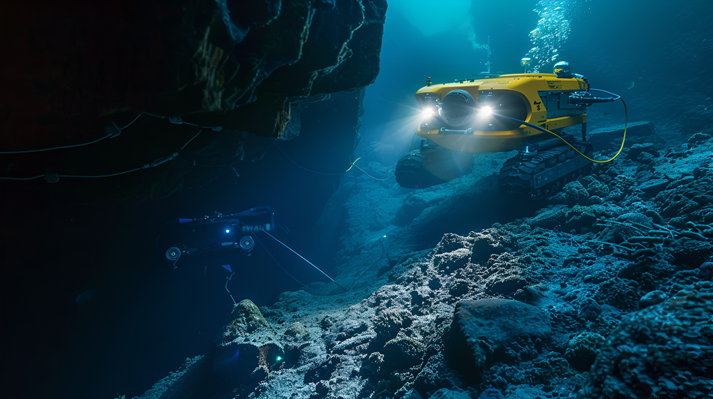
Time-lapse cameras can now capture months of change in the blink of an eye, helping scientists understand how life far below is connected to climate, seasons, and global ocean health.
Creatures From the Abyss
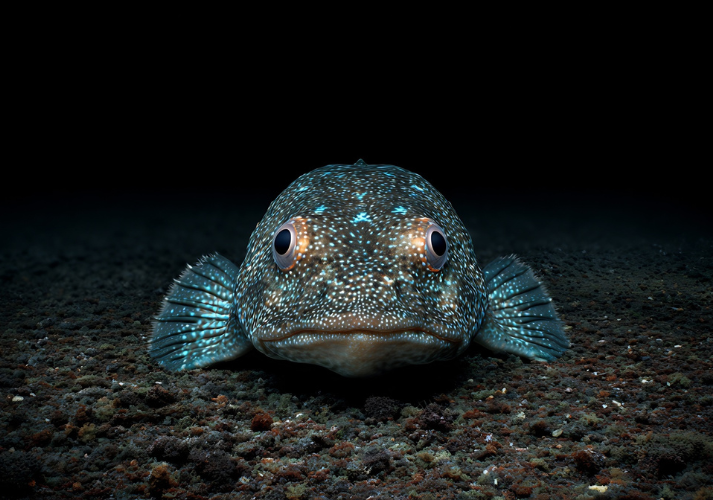
Life in the abyss is tough, so animals here have evolved some of Earth’s strangest survival tricks.
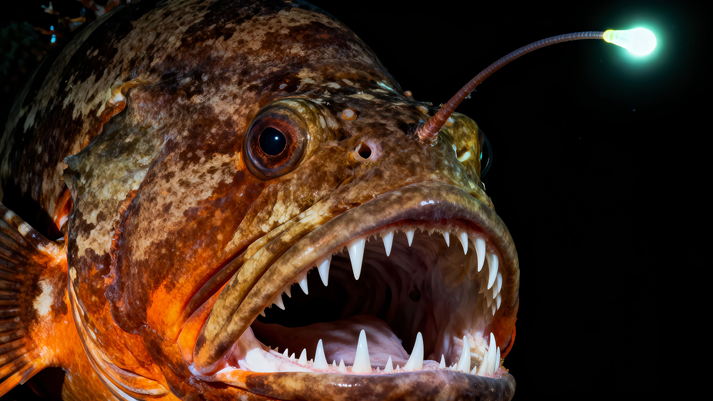
Anglerfish carry glowing lures made by bacteria to attract prey.
Vampire squid, despite the name, are tiny scavengers that use sticky threads to collect falling debris.
Hagfish defend themselves by producing slime so thick it can choke predators.
Ghost sharks and giant isopods prowl the mud, scavenging meals in pitch-black water.
Each species is a living experiment in endurance, proving that life can adapt to nearly any condition.
Exploring the Unknown
Most abyssal plains remain unvisited by humans. Every dive reveals something new—a species, a chemical reaction, or a mystery that deepens rather than answers.
Scientists now understand that this immense, silent world is not isolated; it’s tied to the health of the entire planet.
Changes in ocean temperature, pollution, or surface productivity ripple downward, affecting the creatures that live miles beneath us. The abyss may seem remote, but it’s an essential part of Earth’s living system.
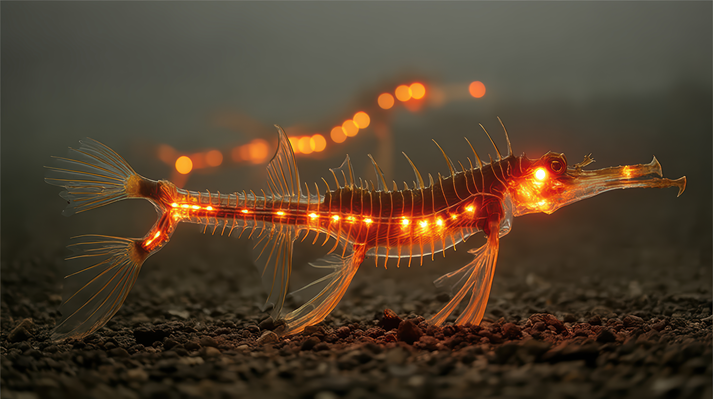
You’ve now traveled across the largest and least explored habitat on Earth—one that’s more alien than any place in our solar system.
In the Got It? section, you’ll investigate how deep-sea creatures survive in such a hostile environment and practice recognizing the incredible adaptations that make life in the abyss possible.

Supplies
Additional Resources



 FAVORITE
 Like
Like