Sign Up
School Account Sign Up

Lesson ID: 11445
Explore lakes and ponds, discover their zones, and learn how they change over time!




Dive In: What’s Really Happening Beneath the Water?
It might look calm on the surface, but a lot is happening underneath. Lakes and ponds are full of life, layers, and movement.
Some are huge and deep, like the Great Lakes. Others are small and quiet, like a pond in a park. Even though they look different, they share important features that help living things survive.
Get ready to explore what makes lakes and ponds special—and what makes them different.
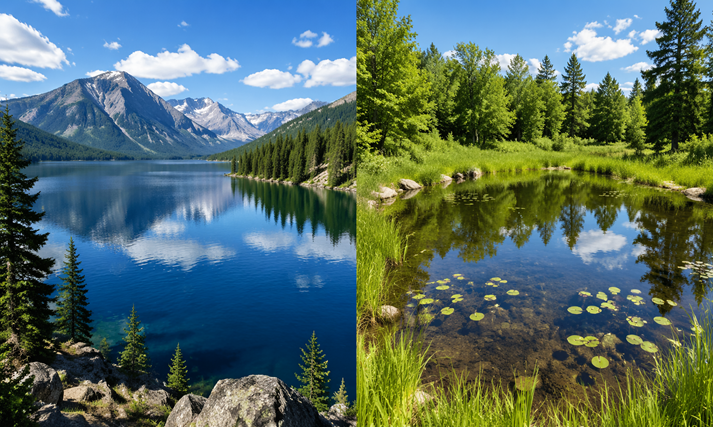
Lake or Pond? Spot the Difference
A lake and a pond might look similar, but they are not exactly the same.
A lake is a large body of water. Many lakes are deep, which means sunlight cannot reach the very bottom. Lakes often get water from rivers, streams, or melting snow and ice.
A pond is smaller and usually much shallower. Sunlight can often reach the bottom of a pond. Because of this, plants can grow across most of the pond floor.
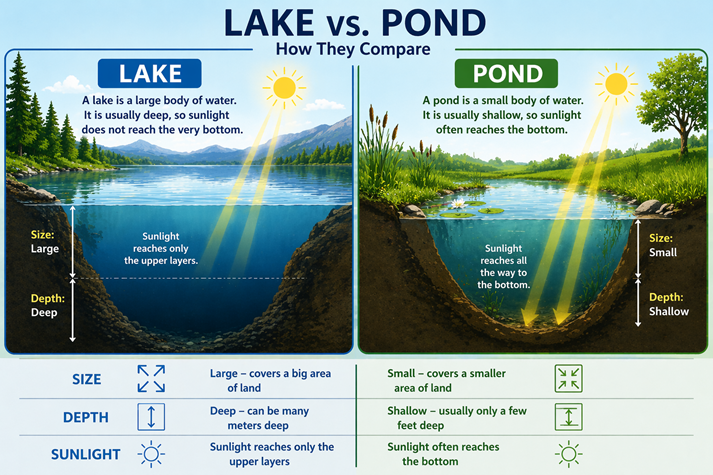
Here’s a simple way to tell the difference.
Lakes are bigger and deeper.
Ponds are smaller and shallower.
That depth changes everything. It affects how warm the water is, how much light reaches different areas, and what kinds of plants and animals can live there.
Layers of Life: The Four Zones
Lakes and ponds are not the same from top to bottom. Scientists divide them into four zones based on light and depth.
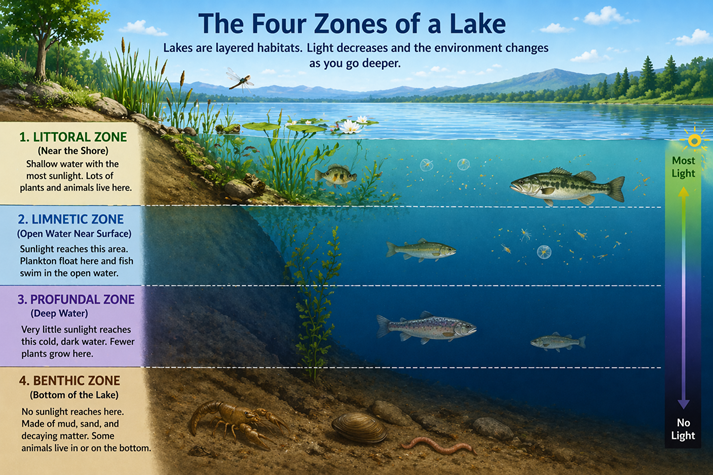
The littoral zone is the shallow area near the shore. This zone gets the most sunlight. Plants grow here, and many animals live in this space.
The limnetic zone is the open water near the surface, away from the shore. Sunlight still reaches this area, so small plants and animals can live here.
The profundal zone is deeper and darker. Only a little light reaches this zone, so fewer plants grow here.
The benthic zone is the very bottom. No sunlight reaches this area. It is made of mud, sand, and sediment. Some animals live here, but they must survive without light.
Each zone creates a different habitat. That means different living things can survive in each part of the water.
Lakes Are Always Changing
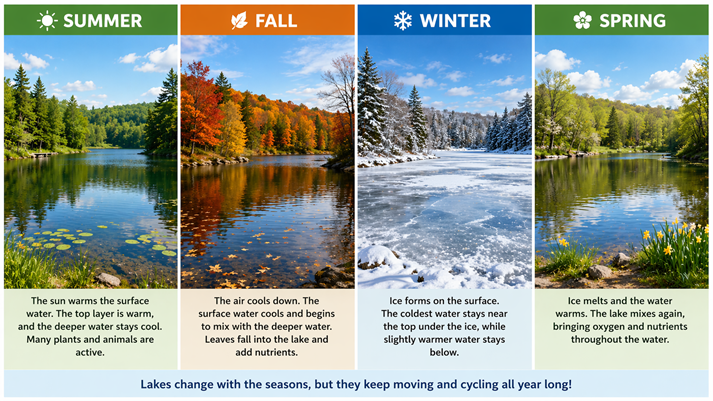
Lakes and ponds are not the same all year long.
In summer, the sun warms the top layer of water. The deeper water stays cooler. This creates layers of warm and cold water.
In fall, the air cools down. The water at the surface cools and begins to mix with deeper water.
In winter, ice may form on top. The coldest water stays near the surface, while slightly warmer water stays below.
In spring, the ice melts, and the water mixes again.
This mixing helps move oxygen and nutrients throughout the water. Without it, many living things would not survive.
Lakes Don’t Last Forever
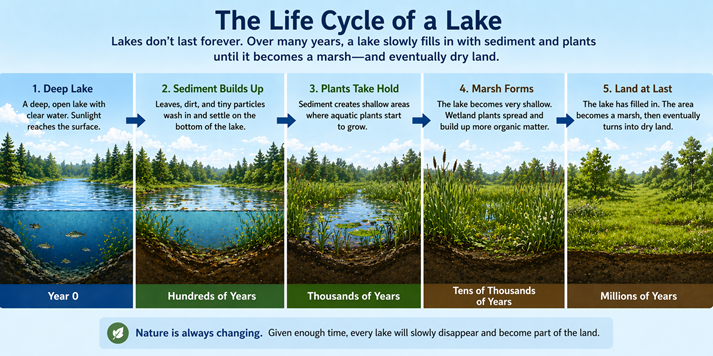
It might sound surprising, but lakes and ponds do not last forever.
Over time, leaves, dirt, and tiny pieces of material sink to the bottom. This builds up layer by layer. Slowly, the water becomes shallower.
After many years, a lake can turn into a marsh or even dry land.
That means every lake or pond is always changing—even if it looks the same to you.
You just explored how lakes and ponds are built, how they are divided into zones, and how they change over time.
Now it’s time to put that knowledge to work and see how well you can recognize these features in action.

Supplies
Additional Resources


 FAVORITE
 Like
Like